Rockefeller Foundation Identifies 8,700 TWh Green Energy Deficit

The Rockefeller Foundation points to an energy deficit of 8,700 TWh to be bridged by 2050 in 72 countries to meet climate and development goals.

Share:

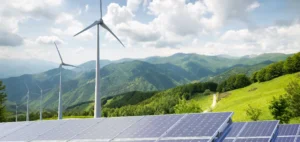
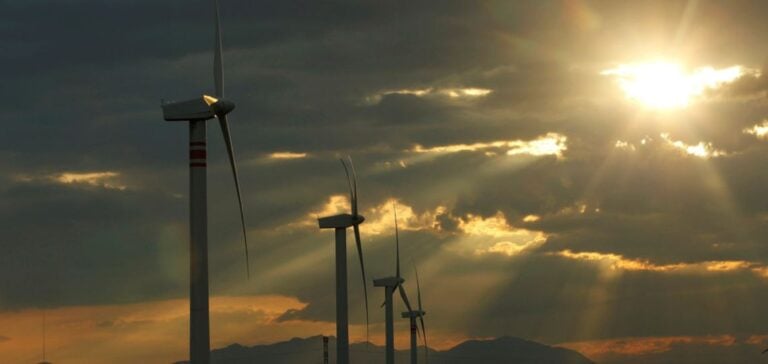
Illustration éoliennes

Comprehensive energy news coverage, updated nonstop

Annual subscription

8.25$/month*

*billed annually at 99$/year for the first year then 149,00$/year ​

Unlimited access • Archives included • Professional invoice

OTHER ACCESS OPTIONS

Monthly subscription

Unlimited access • Archives included

5.2$/month*
then 14.90$ per month thereafter

FREE ACCOUNT

3 articles offered per month

FREE

*Prices are excluding VAT, which may vary depending on your location or professional status

Since 2021: 35,000 articles • 150+ analyses per week

The Rockefeller Foundation has published a report highlighting a significant renewable energy deficit, referred to as the “Green Power Gap”.
This deficit, representing 8,700 TWh, concerns 72 countries across Africa, Asia, Latin America and the Middle East. The report highlights the urgent need for these nations to transform their current, often inefficient, energy systems to achieve sustainable energy abundance. These countries need to increase their clean energy production capacity by 2050 to meet global climate targets and development needs.
Currently, they use less than 1,000 kWh per capita each year, a level insufficient to lift their populations out of energy poverty and stimulate economic growth.

Analysis of countries and regions concerned

The countries identified in the report include Asian nations such as Afghanistan, Bangladesh, India and Indonesia, as well as numerous African and Latin American countries such as Bolivia, Guatemala, Haiti and Nicaragua.
In Africa, countries such as Micronesia and Myanmar are also concerned.
The analysis reveals that only eight countries are in Latin America and the Middle East, while 44 are in Africa and 20 in Asia.
These countries, described as “energy poor”, not only need to increase their production of clean energy, but also improve their energy infrastructure to reach modern minimum energy standards, defined by an average annual use of 1,000 kWh per capita.
Four countries, although having exceeded this threshold, have significant population segments below this level.

Calculate the Green Power Gap

The Rockefeller Foundation has classified UN countries into three categories: “advanced economies”, “energy-poor countries” and “emerging economies”.
Advanced and emerging economies must achieve net zero emissions by 2050 and 2060 respectively.
The report calculates that the remaining global carbon budget of 207 gigatons allows for some growth in energy-poor countries, provided that the share of fossil fuels declines over the long term.
By 2040, the share of fossil fuels in these countries must fall to 30%, with a target of zero net emissions by 2070.
This transformation requires an approach tailored to the specific resources and needs of each country.

Strategies for Energy Abundance

The report identifies several strategies for achieving green energy abundance.
One is to progressively green the grid, a path particularly suited to countries with developed grids such as India.
Another strategy calls for a shift to mixed renewable energies, which is appropriate for countries like Nigeria with limited grid capacity but high population density.
Other countries, such as Burkina Faso, should focus on decentralized solar storage, taking advantage of their excellent solar resources despite limited grid development.
Finally, a decentralized renewable mix would be ideal for countries like the Democratic Republic of Congo, which have diversified, high-quality renewable resources.
These strategies show that there is no single solution, but rather green opportunities based on the available resources and energy assets specific to each country.
The Rockefeller Foundation plans to explore these avenues in detail in future analyses to better understand how each nation can close this energy gap and achieve green energy abundance.
Future prospects include exploring these pathways in detail to better understand how each nation can close this energy gap and achieve an abundance of green energy.

A key scientific report by the United Nations Environment Programme failed to gain state approval due to deep divisions over fossil fuels and other sensitive issues.
RTE warns of France’s delay in electrifying energy uses, a key step to limiting fossil fuel imports and supporting its reindustrialisation strategy.
India’s central authority has cancelled 6.3 GW of grid connections for renewable projects since 2022, marking a tightening of regulations and a shift in responsibility back to developers.
The Brazilian government has been instructed to define within two months a plan for the gradual reduction of fossil fuels, supported by a national energy transition fund financed by oil revenues.
The German government may miss the January 2026 deadline to transpose the RED III directive, creating uncertainty over biofuel mandates and disrupting markets.
Italy allocated 82% of the proposed solar and wind capacities in the Fer-X auction, totalling 8.6GW, with competitive purchase prices and a strong concentration of projects in the southern part of the country.
Amid rising public spending, the French government has tasked two experts with reassessing the support scheme for renewable electricity and storage, with proposals expected within three months.
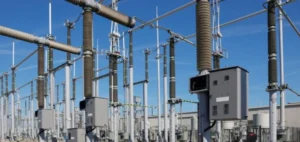
National operator PSE partners with armed forces to protect transformer stations as critical infrastructure faces sabotage linked to foreign interference.
The Norwegian government establishes a commission to anticipate the decline of hydrocarbons and assess economic options for the country in the coming decades.
Kazakhstan plans to allocate 3 GW of wind and solar projects by the end of 2026 through public tenders, with a first 1 GW tranche in 2025, amid efforts to modernise its power system.
Hurricanes Beryl, Helene and Milton accounted for 80% of electricity outages recorded in 2024, marking a ten-year high according to federal data.
The French Energy Regulatory Commission introduces a temporary prudential control on gas and electricity suppliers through a “guichet à blanc” opening in December, pending the transposition of European rules.
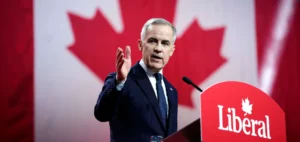
The Carney–Smith agreement launches a new pipeline to Asia, removes oil and gas emission caps, and initiates reform of the Pacific north coast tanker ban.
The gradual exit from CfD contracts is turning stable assets into infrastructures exposed to higher volatility, challenging expected returns and traditional financing models for the renewable sector.
The Canadian government introduces major legislative changes to the Energy Efficiency Act to support its national strategy and adapt to the realities of digital commerce.
Quebec becomes the only Canadian province where a carbon price still applies directly to fuels, as Ottawa eliminated the public-facing carbon tax in April 2025.
New Delhi launches a 72.8 bn INR incentive plan to build a 6,000-tonne domestic capacity for permanent magnets, amid rising Chinese export restrictions on critical components.
The rise of CfDs, PPAs and capacity mechanisms signals a structural shift: markets alone no longer cover 10–30-year financing needs, while spot prices have surged 400% in Europe since 2019.
Germany plans to finalise the €5.8bn ($6.34bn) purchase of a 25.1% stake in TenneT Germany to strengthen its control over critical national power grid infrastructure.
The Ghanaian government is implementing a reform of its energy system focused on increasing the use of local natural gas, aiming to reduce electricity production costs and limit the sector's financial imbalance.

All the latest energy news, all the time

Annual subscription

8.25$/month*

*billed annually at 99$/year for the first year then 149,00$/year ​

Unlimited access - Archives included - Pro invoice

Monthly subscription

Unlimited access • Archives included

5.2$/month*
then 14.90$ per month thereafter

*Prices shown are exclusive of VAT, which may vary according to your location or professional status.

Since 2021: 30,000 articles - +150 analyses/week.