US imposes 50% tariffs on Indian solar modules, disrupting export flows
US tariff measures shake up Indian solar module exports, exposing the industry to structural overcapacity risks and forcing New Delhi to redirect its industrial strategy.
| Sectors | Solar Energy, Photovoltaic |
|---|---|
| Themes | Policy & Geopolitics, Energy Security |
Indian exports of photovoltaic modules dropped to their lowest annual level in September, reaching approximately $80mn, according to trade data. This sharp 40% decline from August follows the imposition of US tariffs totalling around 50%, combining antidumping (AD) and countervailing duties (CVD).
Washington’s central role in shaping PV trade regulation
The US Department of Commerce (DoC) has launched a formal investigation into solar imports originating from India, Indonesia and Laos. The initiative is backed by a coalition of domestic manufacturers alleging these countries receive large public subsidies and engage in dumping practices. In parallel, the US International Trade Commission (USITC) is assessing whether these practices harm the domestic solar industry.
A recent decision by the US Court of International Trade (CIT) to invalidate the presidential moratorium suspending the collection of AD/CVD duties for several ASEAN countries has further heightened scrutiny of Asian solar exports. These measures are supported by US Customs and Border Protection (CBP), which enforces strict traceability requirements on the origin of inputs, particularly in relation to forced labour in the Xinjiang region.
Indian industry highly dependent on the US export market
Up to 99% of India’s solar modules exported in 2024 were destined for the United States, according to Indian customs figures. This extreme reliance on a single outlet leaves the industry vulnerable to regulatory shifts. Companies such as Waaree Energies, Adani Solar and Vikram Solar are particularly exposed, while their supply chains remain partly dependent on Chinese components.
The growing number of US investigations, including one into alleged duty circumvention involving Chinese cells, weakens the credibility of Indian exporters among Western buyers. This climate of distrust could impact financing prospects and long-term contracting for Indian manufacturers.
Domestic overcapacity intensifies market tensions
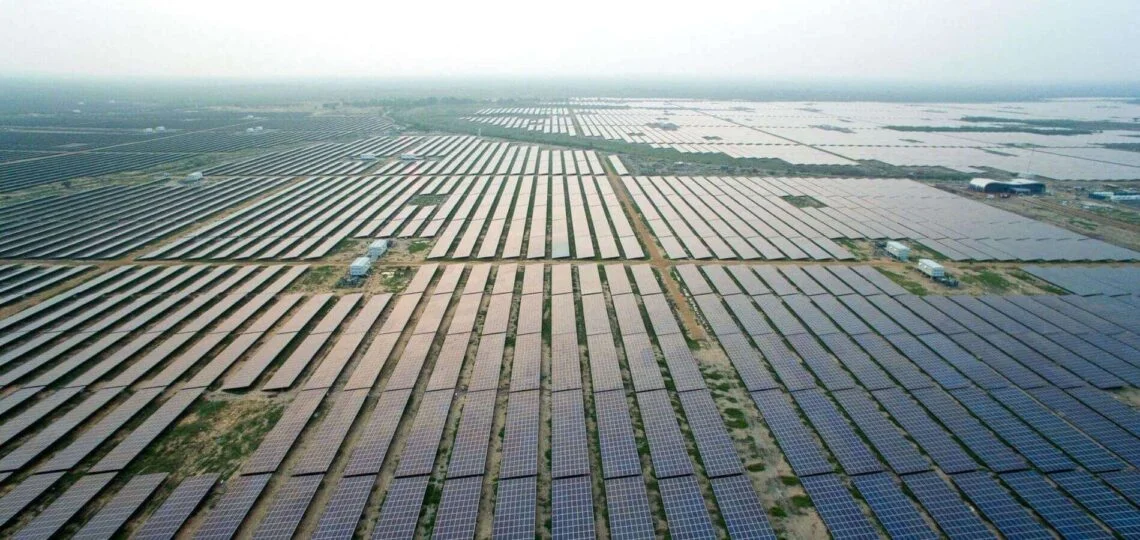
India has installed over 100 GW of module production capacity, with projections reaching 165 GW by 2027. However, annual solar deployments remain below the 45 GW needed to meet 2030 targets. The domestic market’s inability to absorb volumes previously destined for export heightens risks of price wars and forced consolidation.
Several mid-sized players are considering reducing their module output to focus on cell or wafer segments, which are viewed as less exposed to tariff volatility. Meanwhile, Indian lenders are adopting a more cautious stance towards non-integrated solar manufacturing projects.
Global trade flows and PV value chain under pressure
Partial closure of the US market to Indian modules is reshaping trade routes. Shipments to Europe, the Middle East and Africa are rising, but FOB prices in these markets are significantly lower, impacting exporter margins.
Globally, this redistribution of volumes is tightening prices. While CIF rates to the US remain supported, FOB prices in India face continued downward pressure. Analysts are warning of a potential “PV price shock” centred on India if the excess capacity fails to find viable alternative outlets.
Geopolitical stakes between industrial reshoring and energy sovereignty
The US administration seeks to safeguard IRA-related investments while building a solar sector independent from China. In this context, India is no longer seen as a priority partner but as a potential channel for Chinese components.
New Delhi may need to reposition its industrial strategy towards alternative markets while strengthening input traceability systems. Upcoming rulings from the Department of Commerce and USITC will be key in determining the viability of Indian exporters in the US market.