Philippines freeze LNG terminal projects despite rising demand

The Philippine government is suspending the expansion of LNG regasification infrastructure, citing excess capacity and prioritising public investment in other regions of the country.

Share:

Comprehensive energy news coverage, updated nonstop

Annual subscription

8.25€/month*

*billed annually at 99€/year for the first year then 149,00€/year ​

Unlimited access • Archives included • Professional invoice

OTHER ACCESS OPTIONS

Monthly subscription

Unlimited access • Archives included

5.2€/month*
then 14.90€ per month thereafter

FREE ACCOUNT

3 articles offered per month

FREE

*Prices are excluding VAT, which may vary depending on your location or professional status

Since 2021: 35,000 articles • 150+ analyses per week

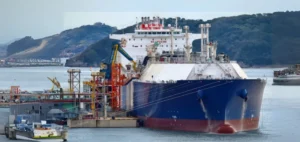
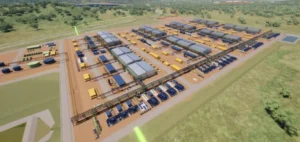
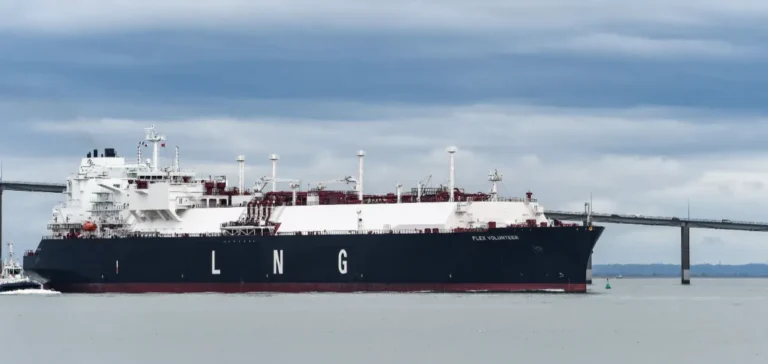
The Philippine government does not plan to invest in new liquefied natural gas (LNG) regasification terminals before the end of the decade. The decision is based on a utilisation rate of just 60% at existing facilities, according to Energy Secretary Sharon Garin. Two terminals, both located on the island of Luzon, currently meet the country’s LNG needs.

While interest in LNG continues to grow, the Department of Energy is redirecting public resources to underserved regions. “We may eventually install a regasification terminal in the Visayas or in Mindanao,” Garin said, referring to the country’s central and southern island groups. Authorities have ruled out any new projects in Luzon for now, as the region is already covered by existing infrastructure.

Excess capacity and island logistics

The country’s fragmented geography makes the construction of interconnected pipeline networks challenging, leading the government to explore alternative solutions. These include small-scale LNG power plants with customised logistical setups. Although LNG terminal development is currently unregulated, the administration is favouring targeted territorial planning over an uncoordinated liberal approach.

In 2023, the Philippines imported approximately 0.6 million tonnes of LNG. This first year of importation was followed by an increase in volume, reaching 1.58 million tonnes in 2025, according to data from analytics firm Kpler. Despite growing demand, it remains below available capacity, limiting further public investment in the sector.

National coordination and long-term investment

Some companies are calling for a consolidation of gas needs at the national level to support long-term supply contracts. “We need to aggregate our LNG requirements as a country,” said Jay Joel L. Soriano, Vice President of Strategy and Planning at First Gen Corporation. He called for stronger government involvement to make demand more visible and credible to suppliers.

So far, First Gen has sourced LNG exclusively from the spot market. The company is open to longer-term commitments if its electricity supply contracts are renewed. LNGPH, a company integrating South Premiere Power Corporation and Excellent Energy Resources Inc, is currently the only player in the country with a long-term supply contract, signed with energy trading firm Vitol.
Venture Global denies Shell’s claims of fraud in an LNG cargo arbitration and accuses the oil major of breaching arbitration confidentiality.
The Valera LNG carrier delivered a shipment of liquefied natural gas (LNG) from Portovaya, establishing a new energy route between Russia and China outside Western regulatory reach.
South Stream Transport B.V., operator of the offshore section of the TurkStream pipeline, has moved its headquarters from Rotterdam to Budapest to protect itself from further legal seizures amid ongoing sanctions and disputes linked to Ukraine.
US LNG exports are increasingly bypassing the Panama Canal in favour of Europe, seen as a more attractive market than Asia in terms of pricing, liquidity and logistical reliability.
Indian Oil Corporation has issued a tender for a spot LNG cargo to be delivered in January 2026 to Dahej, as Asian demand weakens and Western restrictions on Russian gas intensify.
McDermott has secured a major engineering, procurement, construction, installation and commissioning contract for a strategic subsea gas development offshore Brunei, strengthening its presence in the Asia-Pacific region.
The partnership between Fluor and JGC has handed over LNG Canada's second liquefaction unit, completing the first phase of the major gas project on Canada’s west coast.
Northern Oil and Gas and Infinity Natural Resources invest $1.2bn to acquire Utica gas and infrastructure assets in Ohio, strengthening NOG’s gas profile through vertical integration and high growth potential.
China has received its first liquefied natural gas shipment from Russia’s Portovaya facility, despite growing international sanctions targeting Russian energy exports.
Brazil’s natural gas market liberalisation has led to the migration of 13.3 million cubic metres per day, dominated by the ceramics and steel sectors, disrupting the national competitive balance.
Sasol has launched a new gas processing facility in Mozambique to secure fuel supply for the Temane thermal power plant and support the national power grid’s expansion.
With the addition of Nguya FLNG to Tango, Eni secures 3 mtpa of capacity in Congo, locking in non-Russian volumes for Italy and positioning Brazzaville within the ranks of visible African LNG exporters.
Japan’s JERA has signed a liquefied natural gas supply contract with India’s Torrent Power for four cargoes annually from 2027, marking a shift in its LNG portfolio toward South Asia.
The merger of TotalEnergies and Repsol’s UK assets into NEO NEXT+ creates a 250,000 barrels of oil equivalent per day operator, repositioning the majors in response to the UK’s fiscal regime and basin decline.
Climate requirements imposed by the European due diligence directive are complicating trade relations between the European Union and Qatar, jeopardising long-term gas supply as the global LNG market undergoes major shifts.
A report forecasts that improved industrial energy efficiency and residential electrification could significantly reduce Colombia’s need for imported gas by 2030.
Falling rig counts and surging natural gas demand are reshaping the Lower 48 energy landscape, fuelling a rebound in gas-focused mergers and acquisitions.
The Nigerian government has approved a payment of NGN185bn ($128 million) to settle debts owed to gas producers, aiming to secure electricity supply and attract new investments in the energy sector.
Riley Exploration Permian has finalised the sale of its Dovetail Midstream entity to Targa Northern Delaware for $111 million, with an additional conditional payment of up to $60 million. The deal also includes a future transfer of equipment for $10 million.
Stanwell has secured an exclusive agreement with Quinbrook for the development of the Gladstone SDA Energy Hub, combining gas turbines and long-duration battery storage to support Queensland’s electricity grid stability.

All the latest energy news, all the time

Annual subscription

8.25€/month*

*billed annually at 99€/year for the first year then 149,00€/year ​

Unlimited access - Archives included - Pro invoice

Monthly subscription

Unlimited access • Archives included

5.2€/month*
then 14.90€ per month thereafter

*Prices shown are exclusive of VAT, which may vary according to your location or professional status.

Since 2021: 30,000 articles - +150 analyses/week.