India signs major US LPG deal under diplomatic pressure

New Delhi secures 2.2 million tonnes of liquefied petroleum gas annually from the United States, a state-funded commitment amid American sanctions and shifting supply strategies.
Share:

Comprehensive energy news coverage, updated nonstop

Annual subscription

8.25$/month*

*billed annually at 99$/year for the first year then 149,00$/year ​

Unlimited access • Archives included • Professional invoice

OTHER ACCESS OPTIONS

Monthly subscription

Unlimited access • Archives included

5.2$/month*
then 14.90$ per month thereafter

FREE ACCOUNT

3 articles offered per month

FREE

*Prices are excluding VAT, which may vary depending on your location or professional status

Since 2021: 35,000 articles • 150+ analyses per week

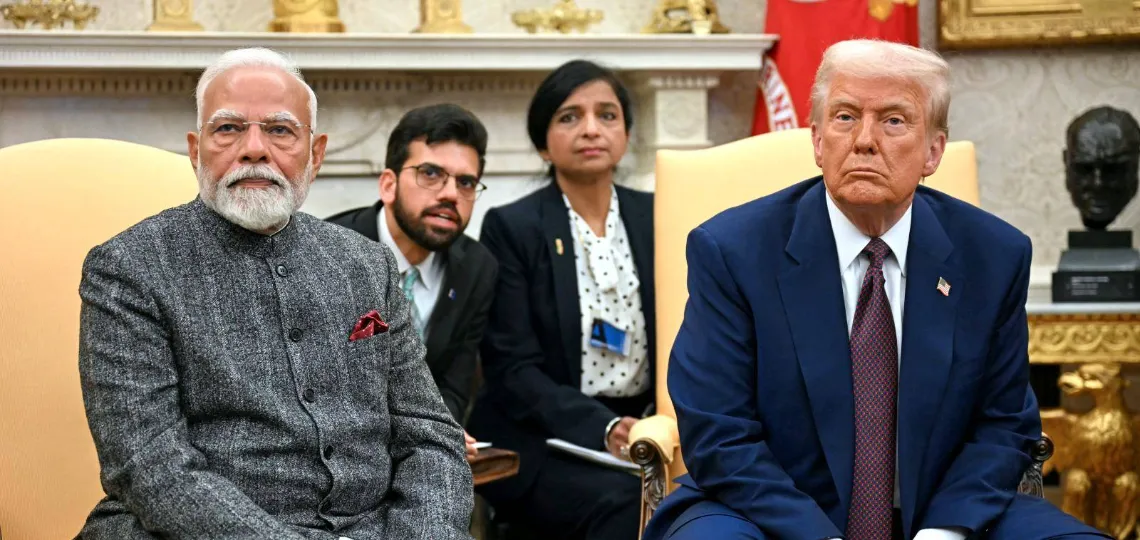
India has formalised the annual purchase of 2.2 million tonnes of liquefied petroleum gas (LPG) from the United States, representing 10% of its current imports. The announcement by Indian Minister of Petroleum and Natural Gas Hardeep Singh Puri reflects a publicly financed strategy aimed at strengthening the country’s energy security in response to growing US pressure.

A deal concluded in a tense diplomatic climate

This new agreement follows Washington’s decision to impose a 50% surcharge on all Indian products entering the US. The American administration attributed the measure to India’s continued imports of Russian oil, which it considers indirect support for Moscow’s military operations in Ukraine. This context has forced New Delhi to re-evaluate its supply policy.

US President Donald Trump has repeatedly stated that Indian Prime Minister Narendra Modi agreed to reduce reliance on Russian oil. However, Indian authorities have not confirmed any such commitment, maintaining a cautious stance in light of complex energy and trade considerations.

Indian companies adjust crude oil procurement

The diplomatic pressure is already evident in corporate responses. Semi-public company HPCL-Mittal Energy has suspended its Russian crude oil purchases, while Reliance Industries announced a strategic review of its procurement policy. These moves highlight the direct impact of US sanctions on India’s energy sector purchasing strategies.

Import diversification, backed by state funding, has now become a priority. In his statement, Hardeep Singh Puri described the LPG deal with the United States as a first step towards securing stable access to a vital household fuel in a geopolitically volatile market.

Trade talks strained despite economic growth

Meanwhile, negotiations between India and the United States for a free trade agreement remain stalled, particularly over the issue of opening India’s agricultural market. This has created an uncertain trade environment despite ongoing dialogue between both governments.

India’s economy continues to post robust growth, with gross domestic product rising 7.8% year-on-year in the April to June quarter, supported by high public spending and improved consumer confidence. However, analysts expect a 0.6 to 0.8 point slowdown if the US surcharge remains in place, further highlighting the importance of monitoring this state-backed energy deal.
Gasunie Netherlands and Gasunie Germany have selected six industrial suppliers under a European tender to supply pipelines for future natural gas, hydrogen and CO₂ networks.
The ban on Russian liquefied natural gas requires a legal re-evaluation of LNG contracts, where force majeure, change-in-law and logistical restrictions are now major sources of disputes and contractual repricing.
The US House adopts a reform that weakens state veto power over gas pipeline projects by strengthening the federal role of FERC and accelerating environmental permitting.
Morocco plans to commission its first liquefied natural gas terminal in Nador by 2027, built around a floating unit designed to strengthen national import capacity.
An explosion on December 10 on the Escravos–Lagos pipeline forced NNPC to suspend operations, disrupting a crucial network supplying gas to power stations in southwestern Nigeria.
At an international forum, Turkmenistan hosted several regional leaders to discuss commercial cooperation, with a strong focus on gas and alternative export corridors.
The Australian government has launched the opening of five offshore gas exploration blocks in the Otway Basin, highlighting a clear priority for southeast supply security amid risks of shortages by 2028, despite an ambitious official climate policy.
BlackRock sold 7.1% of Spanish company Naturgy for €1.7bn ($1.99bn) through an accelerated bookbuild managed by JPMorgan, reducing its stake to 11.42%.
The British company begins the initial production phase of Morocco's Tendrara gas field, activating a ten-year contract with Afriquia Gaz amid phased technical investments.
The Energy Information Administration revises its gas price estimates upward for late 2025 and early 2026, in response to strong consumption linked to a December cold snap.
Venture Global denies Shell’s claims of fraud in an LNG cargo arbitration and accuses the oil major of breaching arbitration confidentiality.
The Valera LNG carrier delivered a shipment of liquefied natural gas (LNG) from Portovaya, establishing a new energy route between Russia and China outside Western regulatory reach.
South Stream Transport B.V., operator of the offshore section of the TurkStream pipeline, has moved its headquarters from Rotterdam to Budapest to protect itself from further legal seizures amid ongoing sanctions and disputes linked to Ukraine.
US LNG exports are increasingly bypassing the Panama Canal in favour of Europe, seen as a more attractive market than Asia in terms of pricing, liquidity and logistical reliability.
Indian Oil Corporation has issued a tender for a spot LNG cargo to be delivered in January 2026 to Dahej, as Asian demand weakens and Western restrictions on Russian gas intensify.
McDermott has secured a major engineering, procurement, construction, installation and commissioning contract for a strategic subsea gas development offshore Brunei, strengthening its presence in the Asia-Pacific region.
The partnership between Fluor and JGC has handed over LNG Canada's second liquefaction unit, completing the first phase of the major gas project on Canada’s west coast.
Northern Oil and Gas and Infinity Natural Resources invest $1.2bn to acquire Utica gas and infrastructure assets in Ohio, strengthening NOG’s gas profile through vertical integration and high growth potential.
China has received its first liquefied natural gas shipment from Russia’s Portovaya facility, despite growing international sanctions targeting Russian energy exports.
Brazil’s natural gas market liberalisation has led to the migration of 13.3 million cubic metres per day, dominated by the ceramics and steel sectors, disrupting the national competitive balance.

All the latest energy news, all the time

Annual subscription

8.25$/month*

*billed annually at 99$/year for the first year then 149,00$/year ​

Unlimited access - Archives included - Pro invoice

Monthly subscription

Unlimited access • Archives included

5.2$/month*
then 14.90$ per month thereafter

*Prices shown are exclusive of VAT, which may vary according to your location or professional status.

Since 2021: 30,000 articles - +150 analyses/week.