Philippines connect their first 4.99 MW floating solar power plant
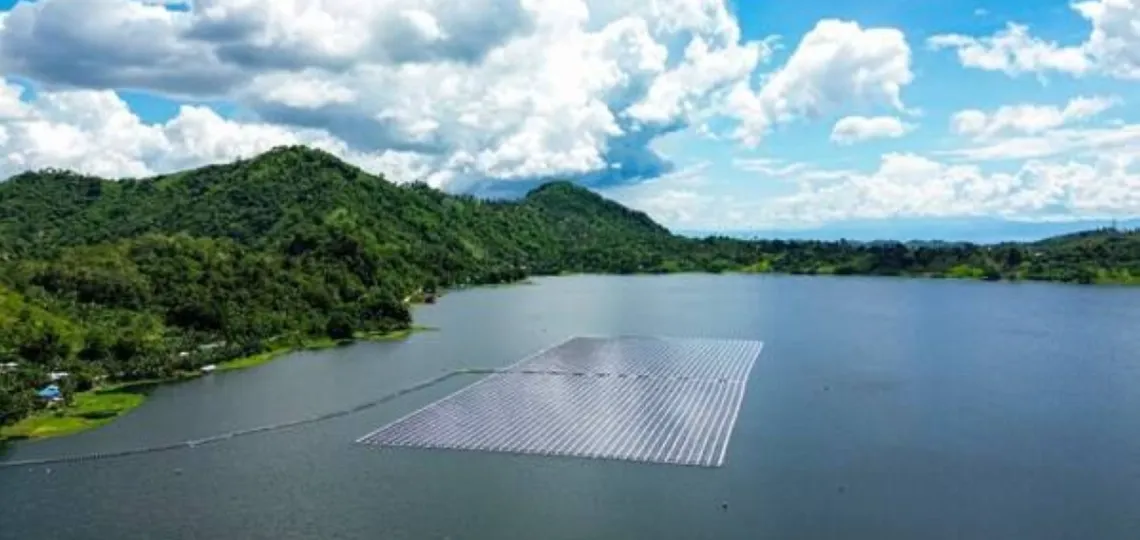
The 4.99 MW floating solar power plant in Cebu supplies the Carmen Copper mining site, covering about 10% of its energy needs, with connection to the national grid now effective.
| Sectors | Solar Energy, Floating Solar |
|---|---|
| Themes | Commissioning, Project Development |
| Companies | Black & Veatch |
| Countries | China, Philippines |
The Philippines’ first megawatt-scale floating solar power plant has been connected to the national grid. Located on the Malubog Reservoir in Cebu province, this facility with a total capacity of 4.99 megawatts was developed by engineering and construction company Black & Veatch, in partnership with Sungrow Floating PV (Sungrow FPV). The electricity generated is entirely dedicated to self-consumption by the Carmen Copper mining site, covering around 10% of its energy demand.
A project designed for extreme conditions
The facility was engineered to withstand particularly severe weather conditions. Sungrow FPV’s floating system is based on an anti-wind and anti-wave structure designed to handle a maximum wind speed of 75 meters per second, providing shock resistance 50% higher than industry standards. The system underwent more than one million fatigue test cycles, compared with the industry average of 100,000, ensuring reinforced durability for the project.
Two other technical elements were added to strengthen the plant’s stability. An elastic mooring system absorbs wave energy and reduces mechanical stress, while a composite anti-corrosion coating was applied to exposed materials. According to laboratory results, the structure withstood 4,200 hours of tests in extreme CX-class environmental conditions and showed no degradation after 18,000 hours of real-world marine exposure.
A strategic contribution to the mining sector
The plant’s connection enables Carmen Copper to diversify its electricity supply and reduce dependence on external sources. This approach aims to secure a stable power supply in a zone where energy demand is closely tied to mining operations. The entire output is consumed locally, with no injection into the grid, reducing risks associated with electricity market fluctuations.
Black & Veatch managed the project from design to commissioning. The integration of Sungrow FPV’s system enabled faster connection and testing phases, supported by on-site technical assistance from the Chinese company’s teams. This partnership highlights the growing interest of mining companies in localized power generation solutions adapted to demanding environments.
Outlook for the Philippine market
With this commissioning, the Philippines mark a symbolic step in diversifying their electrical infrastructure. The project demonstrates the mining sector’s ability to invest in tailored energy systems capable of directly meeting operational needs. The performance of the Cebu plant will be closely monitored, as it could serve as a reference for other projects of similar scale in the country.
The decision to use floating technology also stems from land constraints and the need to preserve terrestrial areas for high-value economic activities. Implementing this model could therefore represent a viable alternative for other industrial sites facing similar energy supply challenges.