NextDecade initiates FERC process for Train 6 at Rio Grande LNG

NextDecade has launched the pre-filing procedure to expand Rio Grande LNG with a sixth train, leveraging a political and commercial context favourable to US liquefied natural gas exports.

Share:

Comprehensive energy news coverage, updated nonstop

Annual subscription

8.25$/month*

*billed annually at 99$/year for the first year then 149,00$/year ​

Unlimited access • Archives included • Professional invoice

OTHER ACCESS OPTIONS

Monthly subscription

Unlimited access • Archives included

5.2$/month*
then 14.90$ per month thereafter

FREE ACCOUNT

3 articles offered per month

FREE

*Prices are excluding VAT, which may vary depending on your location or professional status

Since 2021: 35,000 articles • 150+ analyses per week

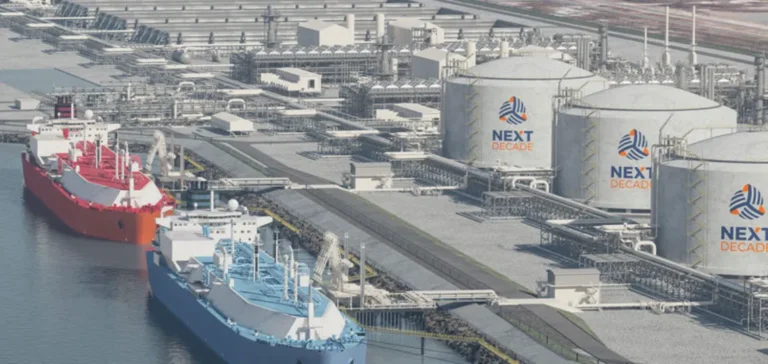
NextDecade has officially initiated a pre-filing process with the Federal Energy Regulatory Commission (FERC) for the development of a sixth liquefaction train at its Rio Grande LNG terminal, located in Brownsville, Texas. This preliminary submission also includes a request for a second export berth and comes as the site is already expanding toward a 27 million tonnes per annum (MTPA) capacity through its first five trains.

Regulatory framework and market dynamics

The current US administration lifted earlier this year the suspension on liquefied natural gas export authorisations to non-free trade agreement countries, paving the way for project expansion. This regulatory shift secures NextDecade’s long-term strategy, amid global supply chain reconfiguration triggered by sanctions targeting Russian gas.

The Rio Grande LNG site received FERC authorisation in 2019 for its first five trains. Despite several legal challenges over the project’s environmental impact, US courts upheld the original permits in 2025. The Train 6 filing aims to build on this existing regulatory framework while preparing for future Commission requirements.

Strategic shareholding and contracting

NextDecade structured the project around a consortium including Abu Dhabi National Oil Company (ADNOC), TotalEnergies and Global Infrastructure Partners (GIP), participating both in train equity and long-term offtake agreements. Train 4 was fully funded for $1.8bn, with a structure allowing GIP to hold up to 50% of the asset.

Commercially, the project relies on long-term offtake contracts with investment-grade counterparties. Significant volumes have already been contracted by ADNOC, Aramco, TotalEnergies, JERA, EQT and ConocoPhillips, reducing commercial uncertainties for Train 5 and laying groundwork for Train 6.

Industrial optimisation and financial outlook

The development of Train 6 follows a logic of integrated site operation, leveraging existing infrastructure such as tanks, port facilities and pipeline connections. This setup enables a lower marginal cost per tonne produced and improves logistics efficiency for exports.

By structuring each train as a distinct financial entity, NextDecade enhances cash flow transparency and attracts dedicated financing while managing risks associated with scaling. This strategy could strengthen the company’s long-term valuation and appeal to infrastructure-focused energy investors.

Risk factors and timeline

The FERC pre-filing process opens a regulatory consultation phase addressing environmental issues, particularly the cumulative impacts alongside the first five trains. Local organisations have already raised concerns about the absence of a carbon capture system, a point that could fuel additional legal challenges in the coming months.

NextDecade expects to submit a complete application to FERC in 2026. If regulatory timelines are met, Train 6 could enter service around 2030, aligning with a projected surge in non-Russian LNG demand across Europe and Asia.
The ban on Russian liquefied natural gas requires a legal re-evaluation of LNG contracts, where force majeure, change-in-law and logistical restrictions are now major sources of disputes and contractual repricing.
The US House adopts a reform that weakens state veto power over gas pipeline projects by strengthening the federal role of FERC and accelerating environmental permitting.
Morocco plans to commission its first liquefied natural gas terminal in Nador by 2027, built around a floating unit designed to strengthen national import capacity.
An explosion on December 10 on the Escravos–Lagos pipeline forced NNPC to suspend operations, disrupting a crucial network supplying gas to power stations in southwestern Nigeria.
At an international forum, Turkmenistan hosted several regional leaders to discuss commercial cooperation, with a strong focus on gas and alternative export corridors.
The Australian government has launched the opening of five offshore gas exploration blocks in the Otway Basin, highlighting a clear priority for southeast supply security amid risks of shortages by 2028, despite an ambitious official climate policy.
BlackRock sold 7.1% of Spanish company Naturgy for €1.7bn ($1.99bn) through an accelerated bookbuild managed by JPMorgan, reducing its stake to 11.42%.
The British company begins the initial production phase of Morocco's Tendrara gas field, activating a ten-year contract with Afriquia Gaz amid phased technical investments.
The Energy Information Administration revises its gas price estimates upward for late 2025 and early 2026, in response to strong consumption linked to a December cold snap.
Venture Global denies Shell’s claims of fraud in an LNG cargo arbitration and accuses the oil major of breaching arbitration confidentiality.
The Valera LNG carrier delivered a shipment of liquefied natural gas (LNG) from Portovaya, establishing a new energy route between Russia and China outside Western regulatory reach.
South Stream Transport B.V., operator of the offshore section of the TurkStream pipeline, has moved its headquarters from Rotterdam to Budapest to protect itself from further legal seizures amid ongoing sanctions and disputes linked to Ukraine.
US LNG exports are increasingly bypassing the Panama Canal in favour of Europe, seen as a more attractive market than Asia in terms of pricing, liquidity and logistical reliability.
Indian Oil Corporation has issued a tender for a spot LNG cargo to be delivered in January 2026 to Dahej, as Asian demand weakens and Western restrictions on Russian gas intensify.
McDermott has secured a major engineering, procurement, construction, installation and commissioning contract for a strategic subsea gas development offshore Brunei, strengthening its presence in the Asia-Pacific region.
The partnership between Fluor and JGC has handed over LNG Canada's second liquefaction unit, completing the first phase of the major gas project on Canada’s west coast.
Northern Oil and Gas and Infinity Natural Resources invest $1.2bn to acquire Utica gas and infrastructure assets in Ohio, strengthening NOG’s gas profile through vertical integration and high growth potential.
China has received its first liquefied natural gas shipment from Russia’s Portovaya facility, despite growing international sanctions targeting Russian energy exports.
Brazil’s natural gas market liberalisation has led to the migration of 13.3 million cubic metres per day, dominated by the ceramics and steel sectors, disrupting the national competitive balance.
Sasol has launched a new gas processing facility in Mozambique to secure fuel supply for the Temane thermal power plant and support the national power grid’s expansion.

All the latest energy news, all the time

Annual subscription

8.25$/month*

*billed annually at 99$/year for the first year then 149,00$/year ​

Unlimited access - Archives included - Pro invoice

Monthly subscription

Unlimited access • Archives included

5.2$/month*
then 14.90$ per month thereafter

*Prices shown are exclusive of VAT, which may vary according to your location or professional status.

Since 2021: 30,000 articles - +150 analyses/week.