
Asian Development Bank opens nuclear energy financing to developing countries
Asian Development Bank has amended its energy policy to enable funding for civil nuclear projects in developing member countries across the Asia-Pacific region.
| Sector | Carbone, Énergie Nucléaire, Fission, Captage |
|---|---|
| Theme | Investissements & Transactions, Financement, Développement de projets |
The Asian Development Bank (ADB) has approved a revision of its energy policy allowing the financing of nuclear energy projects in its developing member countries. This strategic shift marks a new direction for the multilateral institution, which has supported infrastructure needs since 1966 for its 69 members, including 50 from the Asia-Pacific region.
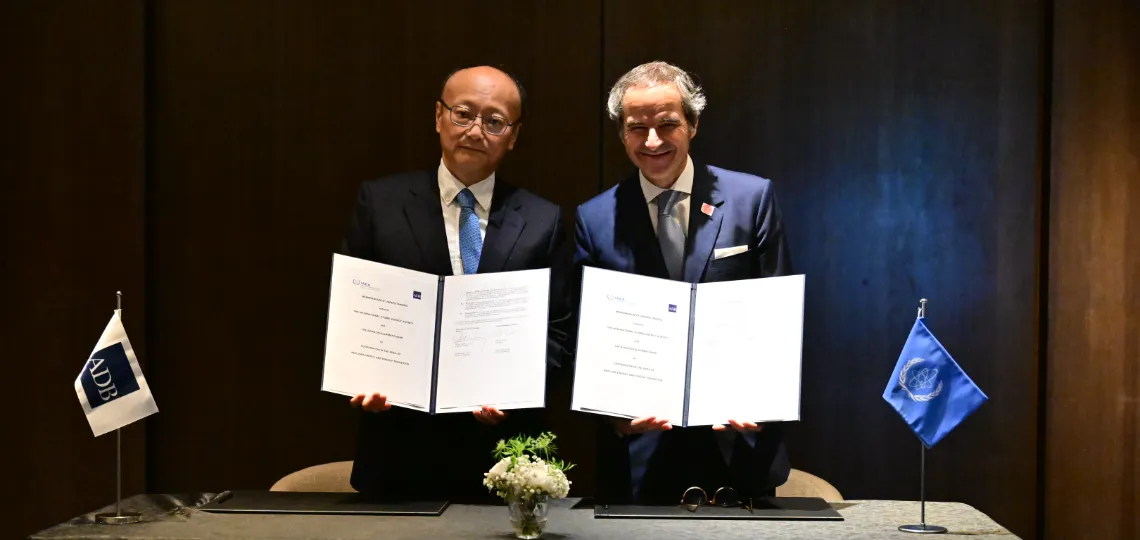
A structuring partnership with the IAEA
As part of this new approach, the ADB has signed an agreement with the International Atomic Energy Agency (IAEA) to support countries seeking to integrate nuclear energy into their national development strategies. The partnership will offer technical assistance throughout the full nuclear life cycle, including energy planning, fuel and radioactive waste management, and facility oversight.
ADB President Masato Kanda stated that “nuclear power is an important technology option for countries looking for reliable baseload electricity”. The institution says this policy shift is intended to address surging energy demand while ensuring strong governance and safety standards.
Reinforced international momentum
The decision comes just months after a similar move by the World Bank, further reinforcing international support for nuclear power in emerging economies. The IAEA estimates that 37 countries are currently considering or preparing to include nuclear power in their energy mix. The agreement with ADB also aims to facilitate the deployment of small modular reactors in certain states.
IAEA Director General Rafael Mariano Grossi stated that teams from both institutions will begin developing concrete initiatives focused on technical support, security, and stakeholder engagement.
Policy expansion to other technologies
Beyond nuclear, ADB has expanded its scope to include methane emissions management and financing for carbon capture, utilisation and storage (CCUS) projects, including those using depleted oil and gas wells for carbon dioxide storage. In 2024, the bank had already committed $3.8bn to energy projects across the Asia-Pacific region.
These developments reflect a broader effort to adapt financing mechanisms to the evolving global energy sector while offering member countries a wider range of options to meet economic and infrastructure objectives.





Comments
Sign in to leave a comment.