G7: a call to expand nuclear power for the climate

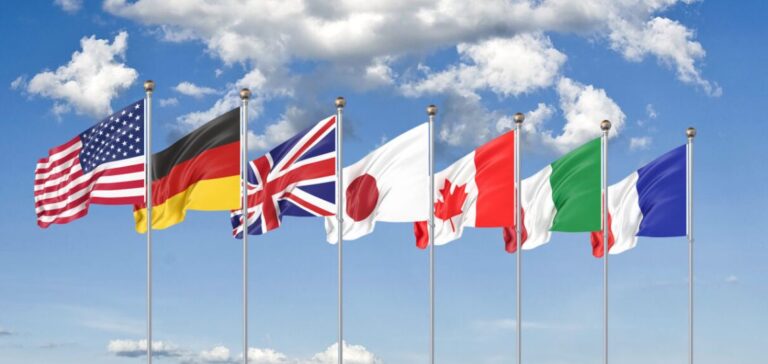
At the G7 summit in Turin, a strategic agreement was reached to triple the world's nuclear capacity by 2050 to combat global warming.

Share:

Les dirigeants du G7 s'engagent à renforcer l'énergie nucléaire dans le but de tripler la capacité globale pour une économie décarbonée.

Comprehensive energy news coverage, updated nonstop

Annual subscription

8.25$/month*

*billed annually at 99$/year for the first year then 149,00$/year ​

Unlimited access • Archives included • Professional invoice

OTHER ACCESS OPTIONS

Monthly subscription

Unlimited access • Archives included

5.2$/month*
then 14.90$ per month thereafter

FREE ACCOUNT

3 articles offered per month

FREE

*Prices are excluding VAT, which may vary depending on your location or professional status

Since 2021: 35,000 articles • 150+ analyses per week

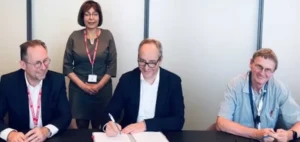
The leaders of the world’s major nuclear associations presented a joint statement at the G7 Ministerial Meeting on Climate, Energy and the Environment in Turin, affirming their commitment to securing, expanding and prioritizing the use of nuclear power over coal and gas. An energy described as crucial for providing clean, affordable, low-carbon electricity, complementing renewable energies to achieve net-zero emissions targets.

Concrete actions and ambitious goals

The communiqué underlines the unanimous agreement at COP28 on the vital role of nuclear energy in mitigating climate change. More than 30 countries, including six G7 members, reiterated at the Nuclear Energy Summit in Brussels the essential role of nuclear power in reducing greenhouse gas emissions, ensuring energy security and supporting industrial competitiveness.

Strengthening nuclear infrastructures and technologies

The associations call on G7 governments to accelerate the deployment of new nuclear facilities using proven technologies, and to promote the development of small, advanced modular reactors. These efforts are aimed at decarbonizing hard-to-kill off-grid sectors such as hydrogen production and synthetic fuels.

Policies and financing for a sustainable future

The press release highlights the need to establish optimal conditions through coherent, long-term policies to extend the life of existing reactors and facilitate the mass deployment of nuclear technologies. It is imperative to provide investors with guarantees on financing and payback mechanisms, and to ensure that multilateral financial institutions include nuclear energy in their investment portfolios.
The G7 meeting in Turin could mark a decisive step forward in the adoption of nuclear energy as a strategic priority for the next decade, underlining its indispensable role in the fight against climate change and the promotion of deep decarbonization of the global economy.
The South African government has officially lifted the PBMR reactor out of inactivity, launching a public investment programme and transferring the strategic nuclear asset from Eskom to Necsa.
The French Court of Auditors values EDF’s grand carénage at over €100bn, while EPR2 reactors already exceed €67–75bn. The State simultaneously directs regulation, financing, and industrial strategy, raising the risk of conflict of interest.
Belarus commits major public investment to add a third reactor at the Ostrovets plant and initiates studies for a second nuclear site to support national energy demand.
Framatome’s accident-tolerant fuel prototype has completed a second 24-month cycle in a commercial nuclear reactor in the United States, paving the way for a third phase of industrial testing.
The Wylfa site in Wales will host three Rolls-Royce small modular reactors from 2026, marking a strategic investment in the UK’s nuclear expansion.
EDF confirmed that the Flamanville EPR has reached a major milestone, while planning a nearly year-long shutdown in 2026 for extensive regulatory inspections and key component replacement.
EDF is opening access to its long-term nuclear supply contracts to companies consuming more than 7 GWh per year, an adjustment driven by the gradual end of the Arenh mechanism.
South Korean authorities have approved the continued operation of the Kori 2 reactor for an additional eight years, marking a key milestone in the national nuclear strategy.
A public-private consortium is developing a 5 MW thermal microreactor designed to operate without refuelling for ten years, marking a strategic step in Brazil's nuclear innovation efforts.
EDF has announced that the Flamanville EPR reactor is now operating at 80% of its capacity. The target of reaching full output by the end of autumn remains confirmed by the utility.
The accelerated approval of the Aurora facility’s nuclear safety plan marks a strategic milestone in rebuilding a domestic nuclear fuel production line in the United States.
The Industrikraft consortium will invest SEK400mn ($42.2mn) to become a shareholder in Videberg Kraft, marking a new phase in Sweden’s nuclear project led by Vattenfall on the Värö Peninsula.
MVM Group has signed an agreement with Westinghouse to secure VVER-440 fuel supplies from 2028, reducing its reliance on Russia and strengthening nuclear cooperation between Budapest and Washington.
The delivery of nuclear fuel by Russian subsidiary TVEL to the Da Lat research reactor marks a key step in strengthening the nuclear commercial partnership between Moscow and Hanoi.
US supplier X-energy has formalised a graphite supply contract with Japan's Toyo Tanso for the construction of its first four small modular reactors, in partnership with Dow and backed by the US Department of Energy.
US-based Enveniam has signed an agreement with LIS Technologies Inc. to oversee the design and construction of a new laser-based uranium enrichment facility on American soil.
Faced with shorter approval timelines, several European nuclear firms, including Newcleo, Orano and Urenco, are considering relocating key industrial investments to the United States.
A consortium led by Swedish giants such as ABB, SSAB and Volvo will invest SEK400mn to support the development of small modular nuclear reactors through a strategic partnership with Vattenfall.
Russia and India are preparing an expanded agreement for the construction of VVER-1200 reactors and modular nuclear power plants, while accelerating work at the strategic Kudankulam site.
Fusion Fuel Cycles has begun work on its UNITY-2 facility, a unique test bench designed to validate the full tritium fuel cycle under fusion conditions, marking a key step toward fusion energy.

All the latest energy news, all the time

Annual subscription

8.25$/month*

*billed annually at 99$/year for the first year then 149,00$/year ​

Unlimited access - Archives included - Pro invoice

Monthly subscription

Unlimited access • Archives included

5.2$/month*
then 14.90$ per month thereafter

*Prices shown are exclusive of VAT, which may vary according to your location or professional status.

Since 2021: 30,000 articles - +150 analyses/week.