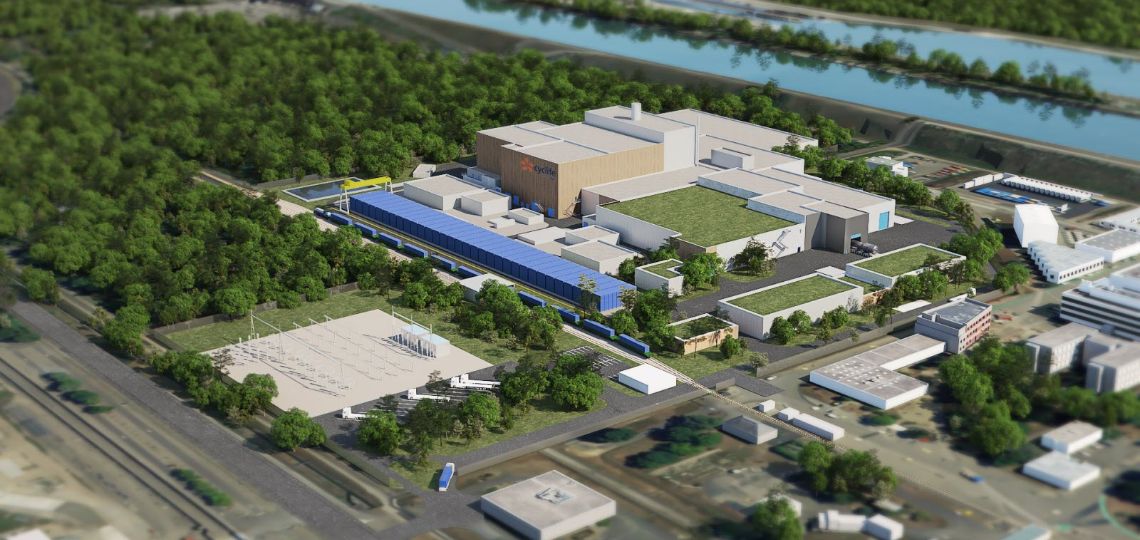
EDF launches its nuclear Technocentre in Fessenheim, estimated investment of €450 million
EDF confirms the continuation of its industrial project in Fessenheim for recycling very low-level radioactive metals, a first in France requiring specific regulatory authorizations, following a public debate concluded last February.
| Sectors | Nuclear Energy, Decommissioning |
|---|---|
| Themes | Project Development, Permits & Authorizations |
| Countries | Switzerland, Spain, France, United Kingdom, Sweden |
EDF (Électricité de France) has officially announced the continuation of its industrial project named Technocentre, aimed at recycling very low-level radioactive metals resulting from nuclear decommissioning. The French energy company intends to enhance value from a portion of metallic waste generated by national nuclear installations, converting it into recycled metal ingots. The estimated cost of this industrial project is €450 million. At present, no official date has been announced for the start of industrial operations, with the next steps primarily administrative and regulatory.
A Project Born from National Public Debate
The Technocentre project was subjected to public debate under the supervision of the National Commission for Public Debate (Commission nationale du débat public – CNDP) between October 10, 2024, and February 7, 2025. EDF stated that the majority of the contributions received during the debate were favorable to the project. However, the CNDP also noted significant concerns from some participants regarding uncertainties about potential health risks associated with regular contact with these recycled metals. Nonetheless, the company has no legal obligation to explicitly incorporate recommendations issued by the CNDP into its final decision.
Upcoming Regulatory Steps
Before final authorization, effective implementation of the Technocentre requires two major administrative steps. First, EDF must obtain a specific exemption from the Public Health Code (Code de la santé publique) through a ministerial decree, authorizing the industrial use of very low-level radioactive metals. Additionally, a prefectural decree will also be required following a public inquiry scheduled for the 2025-2026 period. This regulatory procedure is essential to validate the project’s compliance with current French health and environmental legislation.
A Practice Already Established in Europe
While the Technocentre represents a major innovation in France, other European countries already possess similar facilities. This is particularly the case in Sweden, the United Kingdom, Spain, and Switzerland, where similar industrial processes for recycling slightly radioactive contaminated metals are in place. EDF’s project thus aims to bridge the relative gap faced by the French nuclear industry in industrial valorization of metals from decommissioning operations.