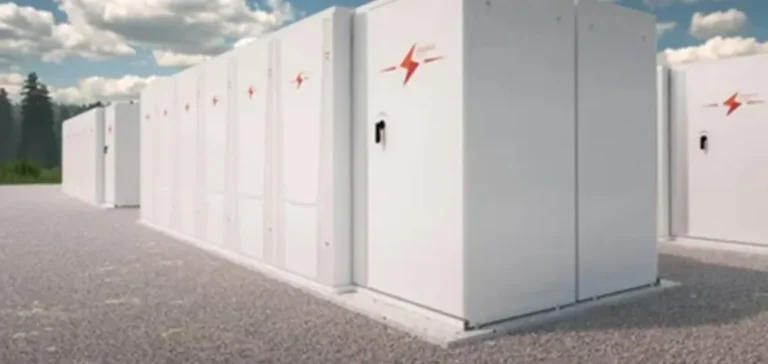
Daiwa, Fuyo and Astmax commission 100MWh battery storage system in Sapporo

Daiwa Energy & Infrastructure, Fuyo General Lease and Astmax have commissioned a 50MW/100MWh battery storage station in Sapporo, marking their entry into Japan’s large-scale energy storage market.

Share:

Comprehensive energy news coverage, updated nonstop

Annual subscription

8.25$/month*

*billed annually at 99$/year for the first year then 149,00$/year ​

Unlimited access • Archives included • Professional invoice

OTHER ACCESS OPTIONS

Monthly subscription

Unlimited access • Archives included

5.2$/month*
then 14.90$ per month thereafter

FREE ACCOUNT

3 articles offered per month

FREE

*Prices are excluding VAT, which may vary depending on your location or professional status

Since 2021: 35,000 articles • 150+ analyses per week

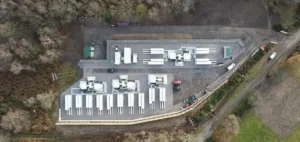
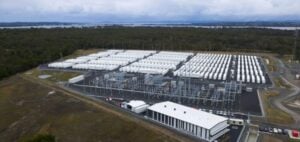
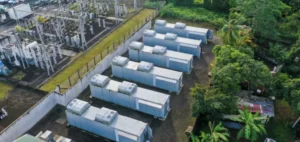
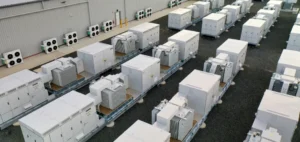
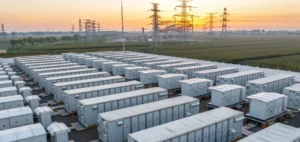
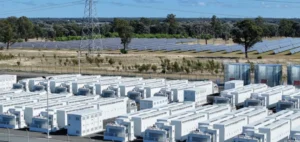
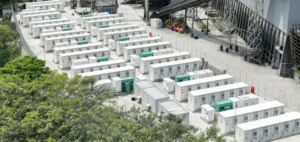
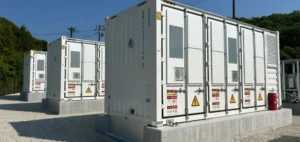
A new battery energy storage system (BESS) with a capacity of 50MW/100MWh has been commissioned in Sapporo, located on the island of Hokkaido. The project, named Shinkawa Power Storage Station, was officially launched on November 1 by Daiwa Energy & Infrastructure, Fuyo General Lease and Astmax. It is the first grid-scale BESS asset of this size for all three companies.

The system is owned by a special purpose company (SPC), DAX LLC, which will operate the site on the wholesale, balancing and capacity markets. Astmax will handle trading optimisation, in line with its broader role in development, construction scheduling and operational readiness.

Government subsidy and Tesla technology

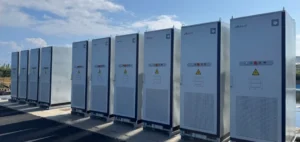
The project received public support through the Japanese Ministry of Economy, Trade and Industry’s (METI) fiscal year 2022 supplementary budget, with a subsidy of JPY2.5bn ($16.5mn). Construction began in 2023, and the facility uses Megapack systems supplied by US-based Tesla.

Daiwa Energy & Infrastructure holds a 50.98% economic interest in DAX LLC, while Fuyo General Lease owns 46% and Astmax the remaining 3.02%. The facility marks a significant addition to the storage portfolios of all three companies.

Regional deployment of high-voltage storage

For Daiwa, this commissioning precedes another large-scale project under construction in Chitose, also on Hokkaido island. That site, with a planned capacity of 38MW/160MWh, is scheduled to begin commercial operations in 2027. Several other projects are reportedly under development in the region.

Fuyo General Lease continues to expand in the storage sector after commissioning a 2MW/7.8MWh system in Chikushino, Fukuoka Prefecture, in July. These investments signal a clear interest by both Japanese firms in strengthening their position in Japan’s emerging high-voltage storage market, as the country gradually reforms its electricity sector.
Peregrine Energy Solutions has begun construction on a 500 MWh storage project in Texas, relying on Wärtsilä's technology and WHC's engineering expertise to enhance ERCOT grid flexibility.
The world's largest battery energy storage system enters service in Saudi Arabia, with an annual capacity of 2.2 billion kWh spread across three strategic sites in the southwest of the country.
Masdar begins commercial operations at a Stockport battery storage unit and announces two more UK projects, part of a £1bn ($1.25bn) plan for 3GWh of BESS capacity.
Australia-based storage platform Akaysha Energy has launched its first operational project, a 155 MW battery in Queensland, while confirming its expansion to over 1 GWh.
LehmanSoft Japan connected a 2MW/8.1MWh energy storage facility to the grid in Chichibu City, marking its entry into the Japanese stationary storage market.
Akuo launches a large-scale electricity storage project in Boulouparis, with a 200 MWh capacity, to support New Caledonia’s grid stability and reinforce the integration of renewable energies.
Vena Energy has begun construction of a 408 MWh battery energy storage system in Tailem Bend, marking a new phase in the deployment of its infrastructure in Australia.
The explosion of battery storage applications in Germany is causing grid congestion and pushing Berlin to revise its regulatory framework to prevent market saturation.
The collapse in storage costs positions batteries as a key lever for dispatchable solar, but dependence on Chinese suppliers creates growing tension between competitiveness and supply chain security.
JA Solar has launched a microgrid combining 5.2 MW of solar and 2.61 MWh of storage at an industrial site in Sicily, marking its first application of the "PV+Storage+X" model in Italy.
Sinexcel has installed a 2MW/8MWh energy storage system in Matsusaka, marking a breakthrough in a regulated market after five years of technical partnerships and gradual deployment in Japan.
Inlyte Energy has successfully completed factory validation testing of its first full-scale iron-sodium battery, witnessed by Southern Company, paving the way for a pilot installation in the United States in early 2026.
Neoen begins construction of a new 305 MW stage in Australia, raising its total battery storage capacity in the country to 2 GW, and signs two additional virtual battery contracts with ENGIE.
ENGIE has awarded NHOA Energy the contract for a 320 MWh battery energy storage system in Drogenbos, marking a new step in their industrial partnership in Belgium.
Stardust Power has completed an independent review of its lithium refinery project in Muskogee, confirming technical feasibility and compliance with industry standards for its initial production phase.
California-based battery manufacturer South 8 Technologies has secured $11mn to boost production of its LiGas cells, targeting military and space applications under extreme conditions.
Samsung SDI will supply LFP cells for energy storage systems in the United States starting in 2027, under a multi-year deal valued at $1.53bn.
Bitzero Holdings launches a new 70 MW expansion phase in Namsskogan, Norway, targeting a total capacity of 110 MW and an upgrade of its high-performance computing capabilities.
Remixpoint and Nippon Chikudenchi have formalised a partnership to develop seven 2MW/8MWh BESS facilities by October 2026 through a newly established joint venture.
UK-based Ray Systems has selected Beam Global to supply tailored battery systems for its new autonomous underwater drones, aiming to extend mission duration without compromising stealth or manoeuvrability.

All the latest energy news, all the time

Annual subscription

8.25$/month*

*billed annually at 99$/year for the first year then 149,00$/year ​

Unlimited access - Archives included - Pro invoice

Monthly subscription

Unlimited access • Archives included

5.2$/month*
then 14.90$ per month thereafter

*Prices shown are exclusive of VAT, which may vary according to your location or professional status.

Since 2021: 30,000 articles - +150 analyses/week.