Japan commissions first 4MWh grid battery in Shiga Prefecture
A battery storage project developed in Shiga Prefecture marks a new step for the Japanese industry, with the official commissioning of a 4MWh facility aimed at the primary balancing market.
| Sectors | Energy Storage, Batteries |
|---|---|
| Themes | Markets & Finance, Financial Market |
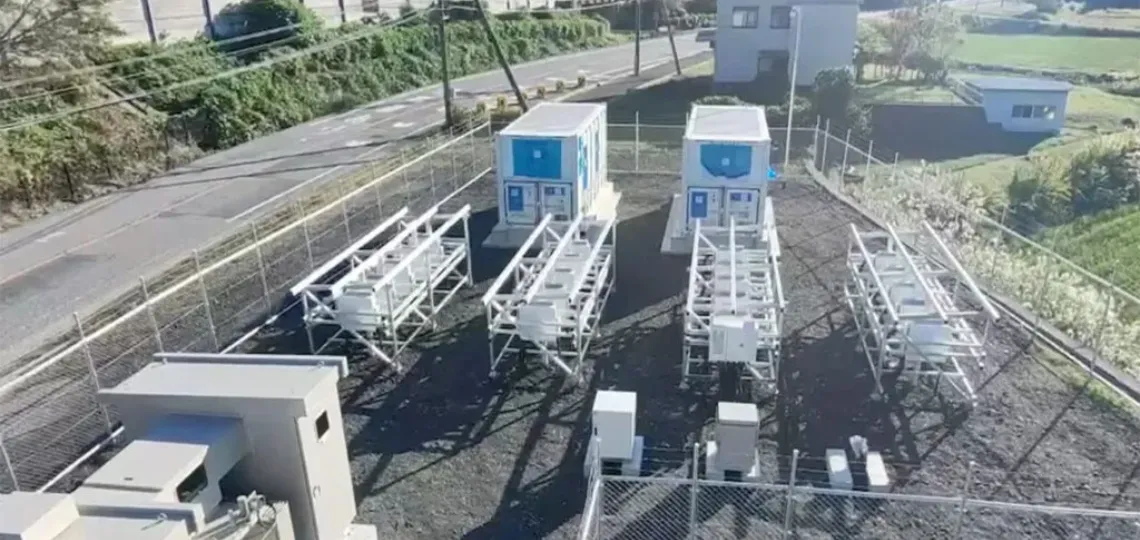
The Japan Energy Storage Development Institute has announced the commissioning of its first large-scale electricity storage facility, a 4MWh unit located in Aisho Town, Shiga Prefecture. The asset was officially completed on November 4 after approximately three months of construction led by Kamisato Kensetsu, the company stated on November 18.
Comprising two containerised Battery Energy Storage System (BESS) units supplied by Huawei, the site will primarily serve the primary balancing market. Although the power capacity was not disclosed, similar projects generally show an installed power between 1.5MW and 2MW.
A project led by a dedicated entity
The project is owned by a dedicated special purpose company, Shiga-ken Aisho-cho Battery JSD24001 LLC, which holds all the assets. RUTILEA, in charge of aggregation, plans to integrate the battery into the national grid through operations in the balancing market. This approach aims to meet Japan’s increasing demand for grid flexibility.
The strategy also aims to test rapid integration of storage solutions in short timeframes, as the construction lasted only three months, which remains uncommon for a project of this scale in Japan. This fast deployment could serve as a model for future developments in the sector.
Momentum driven by new market entrants
The Tokyo-based Japan Energy Storage Development Institute was founded in October 2024. Its market entry follows other specialised developers such as Nippon Chikudenchi and JPN Energy Integrated System, seeking to meet growing demand for battery storage solutions across the country.
Japan’s storage market is benefiting from evolving regulation and progressive liberalisation of grid services, paving the way for new business models centred on energy flexibility. The use of technology from international suppliers such as Huawei also reflects the market’s increasing openness to foreign industrial partnerships.
The commissioning of this first unit marks an operational milestone in structuring this new Japanese player. RUTILEA now plans to expand its portfolio of aggregatable assets, as participation in the balancing market becomes a lever for operator profitability.