Oil prices recover after a week of losses

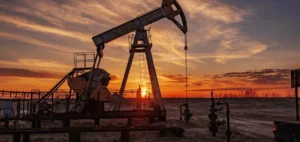
Oil prices rebounded slightly, buoyed by hopes of recovery in China and uncertainties over Fed rates, despite the recent drop due to expectations of rate hikes to counter inflation, and also with the coming impact of sanctions against Russia.

Share:

Comprehensive energy news coverage, updated nonstop

Annual subscription

8.25$/month*

*billed annually at 99$/year for the first year then 149,00$/year ​

Unlimited access • Archives included • Professional invoice

OTHER ACCESS OPTIONS

Monthly subscription

Unlimited access • Archives included

5.2$/month*
then 14.90$ per month thereafter

FREE ACCOUNT

3 articles offered per month

FREE

*Prices are excluding VAT, which may vary depending on your location or professional status

Since 2021: 35,000 articles • 150+ analyses per week

Oil prices started the week slightly higher on Monday, after the previous week’s losses. This slight upturn is explained by hopes of a recovery in Chinese demand and questions about future Fed rate hikes. Around 11:30 GMT (12:30 in Paris), the barrel of Brent for April delivery rose by 0.57% to $83.47, while its U.S. equivalent, the barrel of West Texas Intermediate (WTI) for March delivery, rose by 0.52% to $76.74.

Fed key rates worry investors

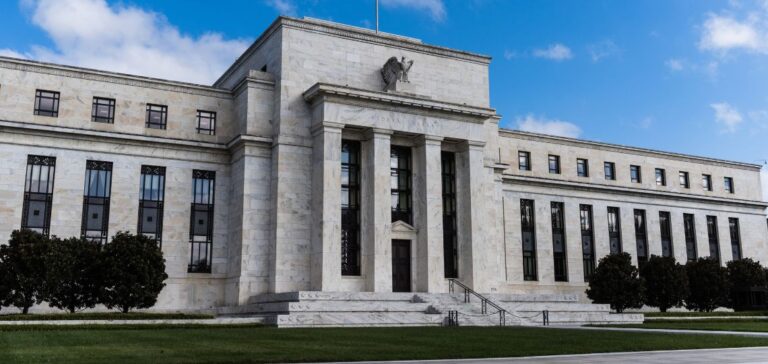
Oil prices lost over 4% last week, weighed down by expectations that the US Federal Reserve (Fed) would raise key interest rates to combat inflation. The market rebounded slightly on Monday, however, in a session marked by low trading volumes due to a US bank holiday, a sign of the lack of consensus among investors on the future course of central bank monetary policies.

For Tamas Varga, analyst at PVM Energy, “those betting on a Fed rate cut this year have had to think again”, with inflation holding out better than expected. Investors are concerned about the possibility of a Fed rate hike, which could weigh on oil demand.

Encouraging signs for China

Investors are also waiting for a definitive signal that Chinese growth is picking up, as the country is the world’s biggest importer of crude oil. The reopening of the country since early December, when China abandoned the last vestiges of its strict zero-covid health policy, is an encouraging factor for the oil market. Investors are hoping for a return to pre-pandemic crude consumption levels.

Western sanctions against Russia tighten oil balance

Finally, Tamas Varga points out that “the oil balance will tighten in a few months’ time” due to the Western sanctions imposed on Russia, particularly on its crude oil and petroleum products. The US and its allies should also focus on preventing sanctions evasion and circumvention, and disrupting the support Russia receives from third countries, according to DNB analysts.
The Nigerian Upstream Petroleum Regulatory Commission opens bidding for 50 exploration blocks across strategic zones to revitalise upstream investment.
La Nigerian Upstream Petroleum Regulatory Commission ouvre la compétition pour 50 blocs d’exploration, répartis sur plusieurs zones stratégiques, afin de relancer les investissements dans l’amont pétrolier.
Serbia's only refinery, operated by NIS, has suspended production due to a shortage of crude oil, a direct consequence of US sanctions imposed on its majority Russian shareholder.
Crude prices increased, driven by rising tensions between the United States and Venezuela and drone attacks targeting Russian oil infrastructure in the Black Sea.
Amid persistent financial losses, Tullow Oil restructures its governance and accelerates efforts to reduce over $1.8 billion in debt while refocusing operations on Ghana.
The Iraqi government is inviting US oil companies to bid for control of the giant West Qurna 2 field, previously operated by Russian group Lukoil, now under US sanctions.
Two tankers under the Gambian flag were attacked in the Black Sea near Turkish shores, prompting a firm response from President Recep Tayyip Erdogan on growing risks to regional energy transport.
The British producer continues to downsize its North Sea operations, citing an uncompetitive tax regime and a strategic shift towards jurisdictions offering greater regulatory stability.
Dangote Refinery says it can fully meet Nigeria’s petrol demand from December, while requesting regulatory, fiscal and logistical support to ensure delivery.
BP reactivated the Olympic pipeline, critical to fuel supply in the U.S. Northwest, after a leak that led to a complete shutdown and emergency declarations in Oregon and Washington state.
President Donald Trump confirmed direct contact with Nicolas Maduro as tensions escalate, with Caracas denouncing a planned US operation targeting its oil resources.
Zenith Energy claims Tunisian authorities carried out the unauthorised sale of stored crude oil, escalating a longstanding commercial dispute over its Robbana and El Bibane concessions.
TotalEnergies restructures its stake in offshore licences PPL 2000 and PPL 2001 by bringing in Chevron at 40%, while retaining operatorship, as part of a broader refocus of its deepwater portfolio in Nigeria.
Aker Solutions has signed a six-year frame agreement with ConocoPhillips for maintenance and modification services on the Eldfisk and Ekofisk offshore fields, with an option to extend for another six years.
Iranian authorities intercepted a vessel carrying 350,000 litres of fuel in the Persian Gulf, tightening control over strategic maritime routes in the Strait of Hormuz.
North Atlantic France finalizes the acquisition of Esso S.A.F. at the agreed per-share price and formalizes the new name, North Atlantic Energies, marking a key step in the reorganization of its operations in France.
Greek shipowner Imperial Petroleum has secured $60mn via a private placement with institutional investors to strengthen liquidity for general corporate purposes.
Ecopetrol plans between $5.57bn and $6.84bn in investments for 2026, aiming to maintain production, optimise infrastructure and ensure profitability despite a moderate crude oil market.
Faced with oversupply risks and Russian sanctions, OPEC+ stabilises volumes while preparing a structural redistribution of quotas by 2027, intensifying tensions between producers with unequal capacities.
The United Kingdom is replacing its exceptional tax with a permanent price mechanism, maintaining one of the world’s highest fiscal pressures and reshaping the North Sea’s investment attractiveness for oil and gas operators.

All the latest energy news, all the time

Annual subscription

8.25$/month*

*billed annually at 99$/year for the first year then 149,00$/year ​

Unlimited access - Archives included - Pro invoice

Monthly subscription

Unlimited access • Archives included

5.2$/month*
then 14.90$ per month thereafter

*Prices shown are exclusive of VAT, which may vary according to your location or professional status.

Since 2021: 30,000 articles - +150 analyses/week.