OPEC Expects Demand to Increase

OPEC is maintaining its forecast for global oil demand growth, despite fears of a recession.

Share:

Comprehensive energy news coverage, updated nonstop

Annual subscription

8.25$/month*

*billed annually at 99$/year for the first year then 149,00$/year ​

Unlimited access • Archives included • Professional invoice

OTHER ACCESS OPTIONS

Monthly subscription

Unlimited access • Archives included

5.2$/month*
then 14.90$ per month thereafter

FREE ACCOUNT

3 articles offered per month

FREE

*Prices are excluding VAT, which may vary depending on your location or professional status

Since 2021: 35,000 articles • 150+ analyses per week

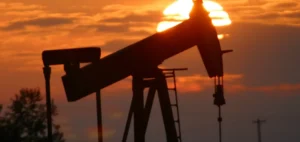
OPEC appears to be forecasting continued oil demand growth for 2023. Thus, it forecasts demand growth of 3.1 million b/d in 2022 and an additional 2.7 million b/d for 2023. These estimates take into account recession fears.

OPEC stays the course for 2023

In addition, OPEC believes that economic performance is still strong in many countries. At the same time, there is a phenomenon of substitution of gas by oil for the production of electricity. In fact, soaring gas prices imply emergency withdrawals to the latter.

Also, according to OPEC, several elements must be taken into account. The organization explains:

“Oil demand in 2023 is expected to be supported by continued strong economic performance in major consuming countries, as well as potential improvements in COVID-19 restrictions and reduced geopolitical uncertainties.”

In this sense, a global economic growth of 3.1% seems to be on the horizon by the end of the year. The fiscal support planned by governments to deal with rising energy prices should offset the anticipated market decline.

OPEC is also forecasting global oil demand of 3.1 million b/d in 2022. This estimate includes additional demand related to the armed conflict in Ukraine. The latter has had a significant impact on natural gas prices. In this way, buyers are switching from gas to crude oil, even though its price has also increased since February.

Earlier this month, OPEC+ countries met to reduce their production quotas by 100,000 barrels. The fluctuations in the market had concerned the group, which found itself obliged to take measures to maintain high prices. On October 5, OPEC ministers will meet to decide on their November production.

What about oil production?

To date, only Saudi Arabia and the United Arab Emirates have sufficient spare capacity. This allows them to increase their production if necessary.

In addition, OPEC’s total production for the month of August was 29.651 million b/d. This exceeded the previous month’s production of 29,033 million b/d.

At the same time, a rise is also expected in non-OPEC oil supply. Thus, it is estimated at 2.1 million b/d in 2022 and 1.73 million b/d in 2023.

Some countries seem to be positioning themselves at the head of the race to be the growth drivers for next year. This is the case in Canada, Brazil, the United States and Norway. On the other hand, a decrease in oil production is expected mainly from Russia and Azerbaijan.
The Nigerian Upstream Petroleum Regulatory Commission opens bidding for 50 exploration blocks across strategic zones to revitalise upstream investment.
La Nigerian Upstream Petroleum Regulatory Commission ouvre la compétition pour 50 blocs d’exploration, répartis sur plusieurs zones stratégiques, afin de relancer les investissements dans l’amont pétrolier.
Crude prices increased, driven by rising tensions between the United States and Venezuela and drone attacks targeting Russian oil infrastructure in the Black Sea.
Amid persistent financial losses, Tullow Oil restructures its governance and accelerates efforts to reduce over $1.8 billion in debt while refocusing operations on Ghana.
The Iraqi government is inviting US oil companies to bid for control of the giant West Qurna 2 field, previously operated by Russian group Lukoil, now under US sanctions.
Two tankers under the Gambian flag were attacked in the Black Sea near Turkish shores, prompting a firm response from President Recep Tayyip Erdogan on growing risks to regional energy transport.
The British producer continues to downsize its North Sea operations, citing an uncompetitive tax regime and a strategic shift towards jurisdictions offering greater regulatory stability.
Dangote Refinery says it can fully meet Nigeria’s petrol demand from December, while requesting regulatory, fiscal and logistical support to ensure delivery.
BP reactivated the Olympic pipeline, critical to fuel supply in the U.S. Northwest, after a leak that led to a complete shutdown and emergency declarations in Oregon and Washington state.
President Donald Trump confirmed direct contact with Nicolas Maduro as tensions escalate, with Caracas denouncing a planned US operation targeting its oil resources.
Zenith Energy claims Tunisian authorities carried out the unauthorised sale of stored crude oil, escalating a longstanding commercial dispute over its Robbana and El Bibane concessions.
TotalEnergies restructures its stake in offshore licences PPL 2000 and PPL 2001 by bringing in Chevron at 40%, while retaining operatorship, as part of a broader refocus of its deepwater portfolio in Nigeria.
Aker Solutions has signed a six-year frame agreement with ConocoPhillips for maintenance and modification services on the Eldfisk and Ekofisk offshore fields, with an option to extend for another six years.
Iranian authorities intercepted a vessel carrying 350,000 litres of fuel in the Persian Gulf, tightening control over strategic maritime routes in the Strait of Hormuz.
North Atlantic France finalizes the acquisition of Esso S.A.F. at the agreed per-share price and formalizes the new name, North Atlantic Energies, marking a key step in the reorganization of its operations in France.
Greek shipowner Imperial Petroleum has secured $60mn via a private placement with institutional investors to strengthen liquidity for general corporate purposes.
Ecopetrol plans between $5.57bn and $6.84bn in investments for 2026, aiming to maintain production, optimise infrastructure and ensure profitability despite a moderate crude oil market.
Faced with oversupply risks and Russian sanctions, OPEC+ stabilises volumes while preparing a structural redistribution of quotas by 2027, intensifying tensions between producers with unequal capacities.
The United Kingdom is replacing its exceptional tax with a permanent price mechanism, maintaining one of the world’s highest fiscal pressures and reshaping the North Sea’s investment attractiveness for oil and gas operators.
Pakistan confirms its exit from domestic fuel oil with over 1.4 Mt exported in 2025, transforming its refineries into export platforms as Asia faces a structural surplus of high- and low-sulphur fuel oil.

All the latest energy news, all the time

Annual subscription

8.25$/month*

*billed annually at 99$/year for the first year then 149,00$/year ​

Unlimited access - Archives included - Pro invoice

Monthly subscription

Unlimited access • Archives included

5.2$/month*
then 14.90$ per month thereafter

*Prices shown are exclusive of VAT, which may vary according to your location or professional status.

Since 2021: 30,000 articles - +150 analyses/week.