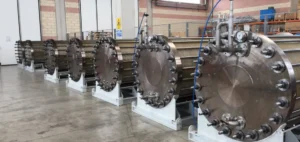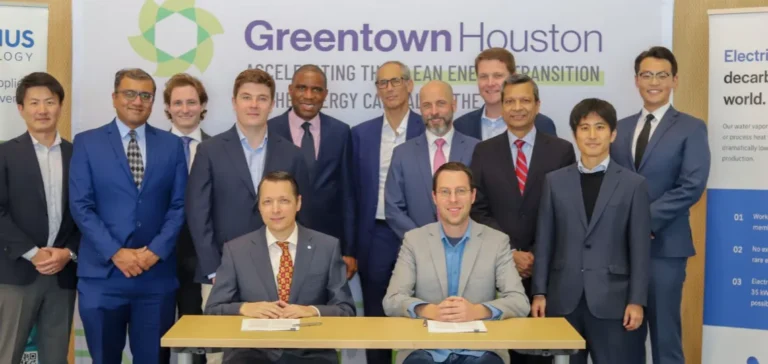

Lummus Technology, a global provider of industrial technologies, and Advanced Ionics, a developer of low-cost hydrogen solutions, have launched a key phase of their collaboration by starting construction of a pilot site in Pasadena, Texas. This facility will test an electrolysis technology developed by Advanced Ionics, presented as energy-efficient and suited for industrial-scale production.
The project continues the partnership established in 2024 between the two companies, aiming to accelerate the commercialisation of competitive green hydrogen solutions. The pilot plant will be integrated into Lummus’ research and development centre, which will operate the facility and manage the auxiliary systems required for the electrolyser’s operation.
Technology tested under real-world conditions
The electrolysis technology developed by Advanced Ionics has been designed to operate with lower energy consumption compared to conventional systems. According to the two companies, this solution would enable the production of green hydrogen at a more accessible cost for industrial applications such as ammonia production, oil refining or steel manufacturing.
The pilot phase is intended to validate the system’s performance and reliability under real operational conditions. Lummus will handle the overall technical management of the site, while Advanced Ionics will provide and integrate its technology into the facility.
Commercial deployment targeted
The stated objective of the two companies is to use this pilot phase as a springboard toward large-scale commercial deployment of the electrolyser. This project is part of the ongoing search for industrial solutions capable of meeting growing demand for hydrogen produced without carbon emissions from fossil fuel combustion.
According to the companies’ executives, this collaboration demonstrates the commercial potential of green hydrogen. The combination of Lummus’ industrial capabilities and Advanced Ionics’ technological innovation could facilitate the integration of this solution into existing production chains.