Australia launches federal tender for 4 GW of electricity storage

The Australian government opens Tender 8 to secure 16 GWh of storage, for the first time including aggregated portfolios of 5 to 30 MW within the National Electricity Market.

Share:

Comprehensive energy news coverage, updated nonstop

Annual subscription

8.25$/month*

*billed annually at 99$/year for the first year then 149,00$/year ​

Unlimited access • Archives included • Professional invoice

OTHER ACCESS OPTIONS

Monthly subscription

Unlimited access • Archives included

5.2$/month*
then 14.90$ per month thereafter

FREE ACCOUNT

3 articles offered per month

FREE

*Prices are excluding VAT, which may vary depending on your location or professional status

Since 2021: 35,000 articles • 150+ analyses per week

The Australian Department of Climate Change, Energy, the Environment and Water has officially launched Tender 8 under the Capacity Investment Scheme (CIS), aiming to deploy 4 GW of four-hour equivalent storage capacity, totalling 16 GWh. This process aligns with the government’s target of reaching 82% renewable electricity by 2030, responding to the marked decline in investments in wind and solar projects.

A new role for aggregated projects

For the first time, the scheme allows the participation of “aggregated” projects made up of several storage units between 5 and 30 MW located within a single National Electricity Market (NEM) region. This measure enables industrial, commercial or municipal developers to pool assets in order to access CISAs, contracts previously reserved for large-scale installations. Standalone projects must meet a minimum threshold of 30 MW, confirming that the core of the tender remains focused on utility-scale systems.

Accelerating deployment of firm capacity

The timeline requires all submissions to be lodged by 6 February 2026. The one-stage process, requiring complete documentation in a single step, reflects the government’s intention to reduce administrative delays. However, this increases pressure on developers, who must submit full proposals at once, with no opportunity for corrections after preselection.

Direct response to investment stagnation

Tender 8’s launch coincides with a sharp decline in final investment decisions (FIDs) on large-scale renewables. The federal government is responding by introducing long-term support contracts offering a revenue floor over 10 to 15 years for storage projects. This financial safety net aims to stabilise cash flows for assets facing volatile revenue streams from energy and system services markets.

Towards a hybrid energy architecture

The introduction of aggregated portfolios opens the way to a future energy model combining centralised large assets and distributed resources under unified governance. This format could be extended to future tenders, supporting more refined interconnection between industrial players, regions and storage technologies.

Market impact and operator outlook

Large battery developers operating in the NEM, including Neoen, AGL and Origin, gain greater visibility for refinancing existing assets. Meanwhile, mid-size aggregators can now build competitive offers and capture part of the funding previously reserved for large-scale projects. Equipment manufacturers will have to adjust their products to a multi-site logic, ensuring compliance with Australian Energy Market Operator (AEMO) technical requirements.

Reinforcing the national grid’s stability

With the additional 16 GWh, the NEM is approaching a storage portfolio sufficient to bridge renewable generation shortfalls lasting several hours. This represents a key tool in anticipating the progressive closure of coal-fired capacity. Batteries located near Renewable Energy Zones (REZs) could also reduce local congestion and losses by absorbing surplus solar and wind power.

Risks of misalignment between awards and delivery

Experts point to several areas of uncertainty, particularly delays due to supply chain issues or grid connection timelines. The layering of federal and state schemes risks blurring market signals and increasing eligibility complexity. Finally, the lack of differentiated value for long-duration storage may slow down adoption of alternative technologies in the medium term.
The Spanish renewable energy producer significantly increased its investments and revenue while achieving more than half of its asset rotation target for the 2025–2027 period.
Chinese manufacturer EVE Energy has signed a three-year memorandum of understanding with Sweden’s Vimab BESS AB to supply batteries and energy storage solutions in Northern Europe.
Huawei's full-lifecycle battery safety rating system has been officially validated by a national technical committee, marking a key milestone for large-scale energy storage deployment.
AMPYR Australia and InCommodities have signed a 15-year partnership for the Bulabul BESS project, marking the Danish trader’s first long-term commitment in the Australian energy storage market.
Tokyo Gas and Okaya & Co. will begin construction in December 2025 of a 25 MW/75 MWh battery energy storage system in Hokkaido, with commercial operations expected in 2028 or later.
US-based CETY has been awarded a $10mn contract to build a battery energy storage system in New York State, marking the first in a series of planned installations across the region.
French energy group Engie wins its second-largest global battery storage project with a capacity of 280 MW, awarded by a state-owned company in Gujarat, India.
Nostromo’s IceBrick system becomes the first behind-the-meter thermal storage device to participate in California’s wholesale energy market, in partnership with Olivine, marking a milestone for commercial buildings.
Pacific Green has received approval from the Victorian government for its second energy storage park in Australia, a 1GW project to be developed over 36 months in Portland’s industrial zone.
TagEnergy launches a 150 MW storage project at the Golden Plains wind farm site, strengthening its investment strategy in Australia's energy infrastructure.
CATL, Sun Village and Marubeni Power Retail have signed an agreement to develop 2.4GWh of grid-scale storage capacity in Japan, without a defined schedule, leveraging investment, construction and commercial management synergies.
Northland Power has acquired two energy storage projects in Poland from Greenvolt Power Group, consolidating a strategic partnership in a transitioning market.
The global battery energy storage systems market anticipates 28.8% annual growth through 2033, supported by industrial electrification, government incentives and grid modernisation efforts.
Group1 and Michigan Potash & Salt Company have signed an agreement to create a domestic potassium-based battery supply chain, relying on local mining and production free from critical metals.
A battery storage project developed in Shiga Prefecture marks a new step for the Japanese industry, with the official commissioning of a 4MWh facility aimed at the primary balancing market.
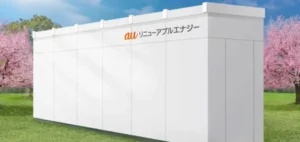
Nine battery storage projects totalling 18MW will be built by au Renewable Energy across the Chubu, Kansai and Kyushu regions, with commissioning scheduled through March 2027.
ACEnergy’s Central BESS project has been approved with a $3.6mn benefit-sharing plan for local and Indigenous communities.
Operator Fullmark Energy has finalised a $46mn investment tax credit transfer linked to its 125MW Redwood storage portfolio in Southern California, strengthening its ability to pursue further growth in the sector.
Eos Energy confirmed the expiry of its public warrants following the exercise of 6.7 million units, generating $76.9mn to finance its industrial projects in the United States.
Trina Storage and Pacific Green Energy Group have signed a memorandum of understanding for the supply of 5GWh of battery systems by 2028, reinforcing their activities in the Australian and international energy storage market.

All the latest energy news, all the time

Annual subscription

8.25$/month*

*billed annually at 99$/year for the first year then 149,00$/year ​

Unlimited access - Archives included - Pro invoice

Monthly subscription

Unlimited access • Archives included

5.2$/month*
then 14.90$ per month thereafter

*Prices shown are exclusive of VAT, which may vary according to your location or professional status.

Since 2021: 30,000 articles - +150 analyses/week.