Asian LNG activity hits seasonal high despite muted demand

Platts' physical pricing platform records its second-highest LNG trading volume, with nearly 1.5 million tonnes exchanged despite regional demand slowdown.

Share:

Comprehensive energy news coverage, updated nonstop

Annual subscription

8.25$/month*

*billed annually at 99$/year for the first year then 149,00$/year ​

Unlimited access • Archives included • Professional invoice

OTHER ACCESS OPTIONS

Monthly subscription

Unlimited access • Archives included

5.2$/month*
then 14.90$ per month thereafter

FREE ACCOUNT

3 articles offered per month

FREE

*Prices are excluding VAT, which may vary depending on your location or professional status

Since 2021: 35,000 articles • 150+ analyses per week

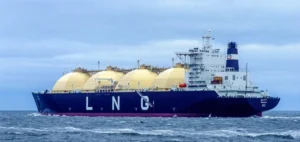
Asia’s physical liquefied natural gas (LNG) market saw sustained activity during the November pricing window, from September 16 to October 15, according to data from the Platts Market on Close (MOC) process. A total of 625 market entries were recorded, comprising 285 bids, 317 offers and 23 trades, for deliveries scheduled from late October through December.

Lower margins drive increased cargo turnover

This level of activity persisted despite a seasonal slowdown typically seen in spot LNG demand across Asia. Total traded volume amounted to approximately 1.49 million tonnes of LNG. Market participants, facing tighter trading margins, increased transaction frequency to sustain profitability. “The market seems to have returned to the 2018–2019 period of low flat prices, low volatility and low margins,” said a Singapore-based trader.

The Japan Korea Marker (JKM) benchmark for November deliveries averaged $11.016 per million British thermal units (MMBtu), marking a 3.03% decline month on month and a 15.96% drop year on year. This compares to 2024 levels where prices averaged between $12 and $13/MMBtu.

Major trading houses lead physical deals

Most deliveries were directed to the Japan-Korea-Taiwan-China region, although bids were also submitted for India and Thailand. Glencore emerged as one of the most active buyers with six cargoes, followed by QatarEnergy Trading with seven and PetroChina with five. On the sell side, BP led with eleven cargoes, ahead of PetroChina and Vitol.

Among the 23 physical transactions, 14 were indexed to the December JKM contract, with an average discount of 2.2 cents/MMBtu. Ten trades were linked to the balance-of-month JKM contract, while only three were concluded at fixed prices, averaging $10.933/MMBtu.

Derivatives segment also sees strong participation

The MOC for derivatives reported 1,783 market entries from 23 participants, including 261 trades. November, December and balance-of-month contracts accounted for most of the activity. On financial exchanges, traded JKM futures volume reached 99,209 lots during the period, representing around 19.08 million tonnes of LNG.

Spot demand limited by high inventories

Despite brief bursts of opportunistic buying when prices dropped to $10.494/MMBtu in early October, overall demand remained subdued. Chinese buyers in particular stayed away from spot cargoes, favouring domestic production and pipeline imports. One trader noted that “Chinese demand will only pick up if prices fall below $10/MMBtu”.

The price spread between Asia and the United States remained too narrow to justify arbitrage opportunities, with reported offers for US-origin cargoes falling 44.9% compared to the previous pricing cycle.

The Marmara Ereğlisi liquefied natural gas (LNG) terminal operated by BOTAŞ is increasing its regasification capacity, consolidating Türkiye’s role as a regional player in gas redistribution toward the Balkans and Southeast Europe.
Budapest contests the European agreement to ban Russian natural gas imports by 2027, claiming the measure is incompatible with its economic interests and the European Union's founding treaties.
The European Union has enshrined in law a complete ban on Russian gas by 2027, forcing utilities, operators, traders and states to restructure contracts, physical flows and supply strategies under strict regulatory pressure.
The partial exploitation of associated gas from the Badila field by Perenco supplies electricity to Moundou, highlighting the logistical and financial challenges of gas development in Chad.
A new regulation requires gas companies to declare the origin, volume and duration of their contracts, as the EU prepares to end Russian imports.
Saudi Aramco has launched production at the unconventional Jafurah gas field, initiating an investment plan exceeding $100bn to substitute domestic crude and increase exportable flows under OPEC+ constraints.
By mobilising long-term contracts with BP and new infrastructure, PLN is driving Indonesia’s shift toward prioritising domestic LNG use, at the centre of a state-backed investment programme supported by international lenders.
TotalEnergies, TES and three Japanese companies will develop an industrial-scale e-gas facility in the United States, targeting 250 MW capacity and 75,000 tonnes of annual output by 2030.
Argentinian consortium Southern Energy will supply up to two million tonnes of LNG per year to Germany’s Sefe, marking the first South American alliance for the European importer.
The UK government has ended its financial support for TotalEnergies' liquefied natural gas project in Mozambique, citing increased risks and a lack of national interest in continuing its involvement.
Faced with a climate- and geopolitically-constrained winter, Beijing announces expected record demand for electricity and gas, placing coal, LNG and UHV grids at the centre of a national energy stress test.
The Iraqi government and Kurdish authorities have launched an investigation into the drone attack targeting the Khor Mor gas field, which halted production and caused widespread electricity outages.
PetroChina internalises three major gas storage sites through two joint ventures with PipeChina, representing 11 Gm³ of capacity, in a CNY40.02bn ($5.43bn) deal consolidating control over its domestic gas network.
The European Union is facilitating the use of force majeure to exit Russian gas contracts by 2028, a risky strategy for companies still bound by strict legal clauses.
Amid an expected LNG surplus from 2026, investors are reallocating positions toward the EU carbon market, betting on tighter supply and a bullish price trajectory.
Axiom Oil and Gas is suing Tidewater Midstream for $110mn over a gas handling dispute tied to a property for sale in the Brazeau region, with bids due this week.
Tokyo Gas has signed a 20-year agreement with US-based Venture Global to purchase one million tonnes per year of liquefied natural gas starting in 2030, reinforcing energy flows between Japan and the United States.
Venture Global accuses Shell of deliberately harming its operations over three years amid a conflict over spot market liquefied natural gas sales outside long-term contracts.
TotalEnergies ends operations of its Le Havre floating LNG terminal, installed after the 2022 energy crisis, due to its complete inactivity since August 2024.
Golar LNG has completed a $1.2bn refinancing for its floating LNG unit Gimi, securing extended financing terms and releasing net liquidity to strengthen its position in the liquefied natural gas market.

All the latest energy news, all the time

Annual subscription

8.25$/month*

*billed annually at 99$/year for the first year then 149,00$/year ​

Unlimited access - Archives included - Pro invoice

Monthly subscription

Unlimited access • Archives included

5.2$/month*
then 14.90$ per month thereafter

*Prices shown are exclusive of VAT, which may vary according to your location or professional status.

Since 2021: 30,000 articles - +150 analyses/week.