Flamanville EPR restarts after four-month technical shutdown

EDF restarted the Flamanville EPR reactor after repairing non-compliant valves, delaying the target of reaching full power output of 1,620 MW until the end of autumn.
Share:

Comprehensive energy news coverage, updated nonstop

Annual subscription

8.25€/month*

*billed annually at 99€/year for the first year then 149,00€/year ​

Unlimited access • Archives included • Professional invoice

OTHER ACCESS OPTIONS

Monthly subscription

Unlimited access • Archives included

5.2€/month*
then 14.90€ per month thereafter

FREE ACCOUNT

3 articles offered per month

FREE

*Prices are excluding VAT, which may vary depending on your location or professional status

Since 2021: 35,000 articles • 150+ analyses per week

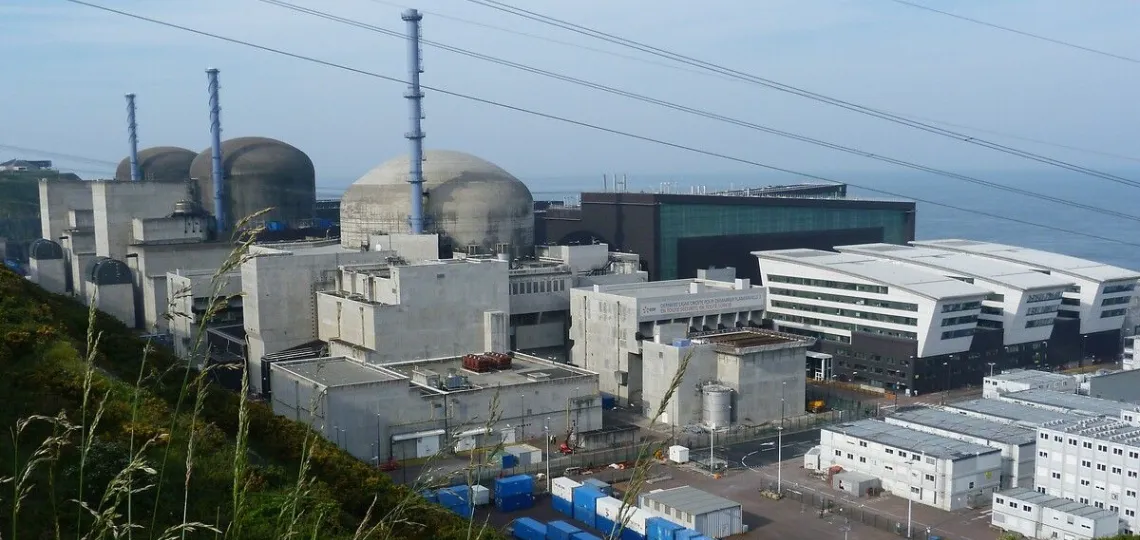
The European Pressurised Reactor (EPR) at Flamanville, located in Normandy, was brought back online during the night of October 14 to 15, following a four-month interruption due to maintenance work on safety equipment. French electricity utility Électricité de France (EDF) confirmed the restart procedure began at 12:33 a.m., two days ahead of the originally scheduled date.

The restart follows the detection of sealing defects on two pressuriser valves during commissioning tests. These critical components ensure the system maintains a pressure of 155 bars in the reactor’s primary circuit, allowing efficient heat transfer to steam generators. The reactor shutdown was extended in July to allow technical intervention on these units.

Gradual power ramp-up under regulatory oversight

According to EDF, the power increase will proceed in stages, first reaching 60 % and then moving to 80 %, the latter requiring approval from the Autorité de sûreté nucléaire et de radioprotection (ASNR). The operator also announced tests involving power variation up to 75 MW in the coming days. The reactor’s nominal capacity of 1,620 MW is expected to be reached before December 21.

Unit Flamanville 3, first connected to the grid in December 2024, is the first new nuclear reactor to go live in France in over 25 years. Initially launched in 2007, the project was originally scheduled for commissioning in 2012.

Costs rise more than sevenfold in fifteen years

The Flamanville 3 construction has faced multiple delays and technical setbacks, significantly increasing its costs. Initially budgeted at €3.3bn ($3.5bn), the total cost is now estimated at €20.4bn ($21.63bn) in 2015 terms, and €23.7bn ($25.13bn) in 2023 terms.

A report from the Cour des comptes published in January confirmed these figures, highlighting the discrepancy between original estimates and actual expenditures. The cost overrun places Flamanville 3 among the most expensive energy infrastructure projects in Europe to date.
Belarus commits major public investment to add a third reactor at the Ostrovets plant and initiates studies for a second nuclear site to support national energy demand.
Framatome’s accident-tolerant fuel prototype has completed a second 24-month cycle in a commercial nuclear reactor in the United States, paving the way for a third phase of industrial testing.
The Wylfa site in Wales will host three Rolls-Royce small modular reactors from 2026, marking a strategic investment in the UK’s nuclear expansion.
EDF confirmed that the Flamanville EPR has reached a major milestone, while planning a nearly year-long shutdown in 2026 for extensive regulatory inspections and key component replacement.
EDF is opening access to its long-term nuclear supply contracts to companies consuming more than 7 GWh per year, an adjustment driven by the gradual end of the Arenh mechanism.
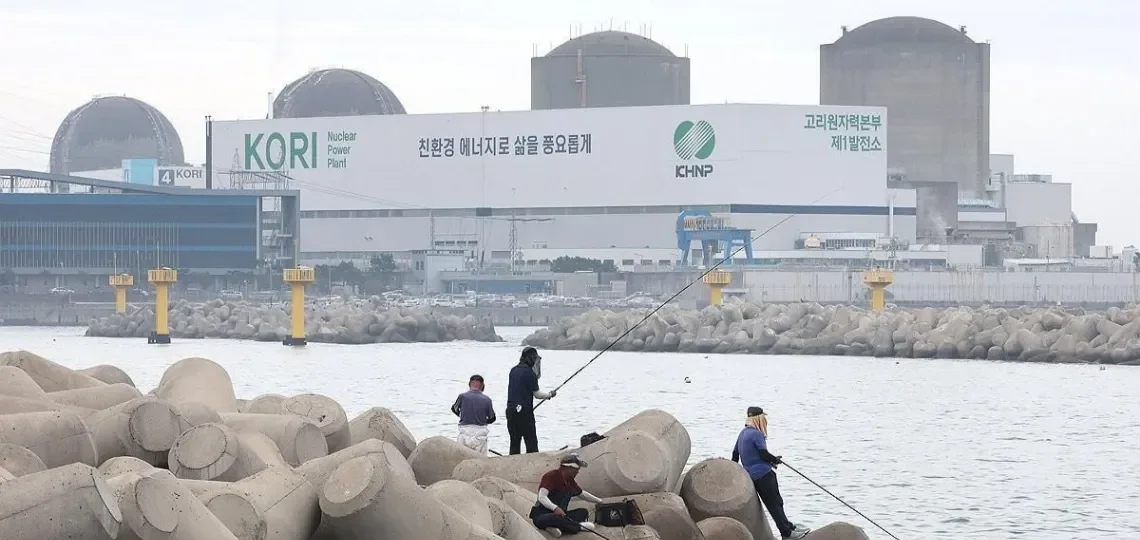
South Korean authorities have approved the continued operation of the Kori 2 reactor for an additional eight years, marking a key milestone in the national nuclear strategy.
A public-private consortium is developing a 5 MW thermal microreactor designed to operate without refuelling for ten years, marking a strategic step in Brazil's nuclear innovation efforts.
EDF has announced that the Flamanville EPR reactor is now operating at 80% of its capacity. The target of reaching full output by the end of autumn remains confirmed by the utility.
The accelerated approval of the Aurora facility’s nuclear safety plan marks a strategic milestone in rebuilding a domestic nuclear fuel production line in the United States.
The Industrikraft consortium will invest SEK400mn ($42.2mn) to become a shareholder in Videberg Kraft, marking a new phase in Sweden’s nuclear project led by Vattenfall on the Värö Peninsula.
MVM Group has signed an agreement with Westinghouse to secure VVER-440 fuel supplies from 2028, reducing its reliance on Russia and strengthening nuclear cooperation between Budapest and Washington.
The delivery of nuclear fuel by Russian subsidiary TVEL to the Da Lat research reactor marks a key step in strengthening the nuclear commercial partnership between Moscow and Hanoi.
US supplier X-energy has formalised a graphite supply contract with Japan's Toyo Tanso for the construction of its first four small modular reactors, in partnership with Dow and backed by the US Department of Energy.
US-based Enveniam has signed an agreement with LIS Technologies Inc. to oversee the design and construction of a new laser-based uranium enrichment facility on American soil.
Faced with shorter approval timelines, several European nuclear firms, including Newcleo, Orano and Urenco, are considering relocating key industrial investments to the United States.
A consortium led by Swedish giants such as ABB, SSAB and Volvo will invest SEK400mn to support the development of small modular nuclear reactors through a strategic partnership with Vattenfall.
Russia and India are preparing an expanded agreement for the construction of VVER-1200 reactors and modular nuclear power plants, while accelerating work at the strategic Kudankulam site.
Fusion Fuel Cycles has begun work on its UNITY-2 facility, a unique test bench designed to validate the full tritium fuel cycle under fusion conditions, marking a key step toward fusion energy.
Framatome will produce TRISO fuel at Romans-sur-Isère as part of a pilot project for advanced nuclear reactors, in partnership with actors such as Blue Capsule Technology.
Sweden’s parliament has approved a major reform authorising uranium extraction, opening the door to a reassessment of the economic potential of mining projects containing this strategic mineral.

All the latest energy news, all the time

Annual subscription

8.25€/month*

*billed annually at 99€/year for the first year then 149,00€/year ​

Unlimited access - Archives included - Pro invoice

Monthly subscription

Unlimited access • Archives included

5.2€/month*
then 14.90€ per month thereafter

*Prices shown are exclusive of VAT, which may vary according to your location or professional status.

Since 2021: 30,000 articles - +150 analyses/week.