France: Enedis reforms off-peak hours for 14.5 million customers from 2025

Enedis will progressively reorganise off-peak hour time slots from 1 November, impacting 14.5 million customers by 2027, under new rules set by the Energy Regulatory Commission.
Share:

Comprehensive energy news coverage, updated nonstop

Annual subscription

8.25€/month*

*billed annually at 99€/year for the first year then 149,00€/year ​

Unlimited access • Archives included • Professional invoice

OTHER ACCESS OPTIONS

Monthly subscription

Unlimited access • Archives included

5.2€/month*
then 14.90€ per month thereafter

FREE ACCOUNT

3 articles offered per month

FREE

*Prices are excluding VAT, which may vary depending on your location or professional status

Since 2021: 35,000 articles • 150+ analyses per week

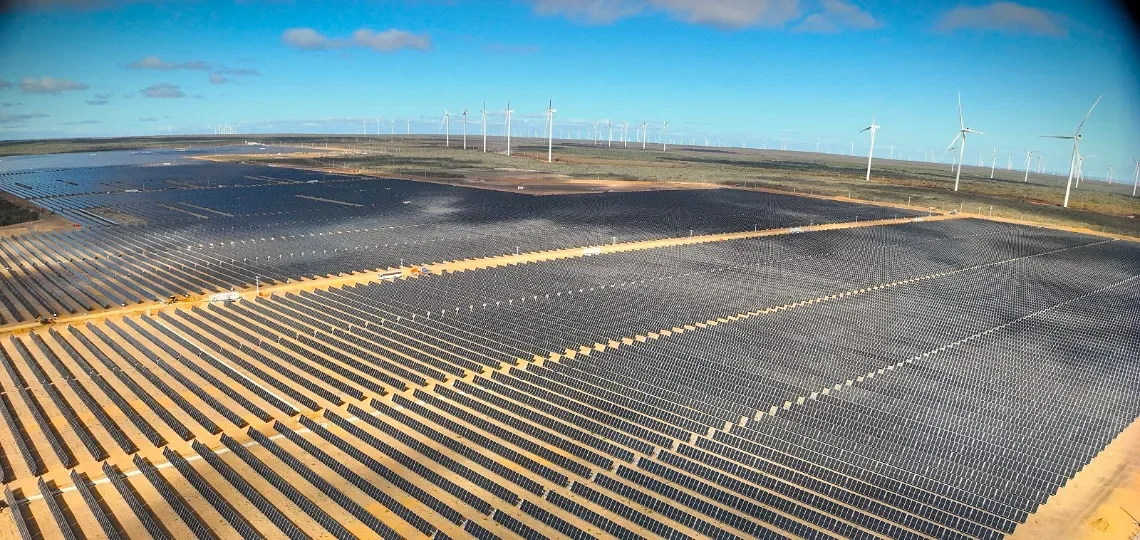
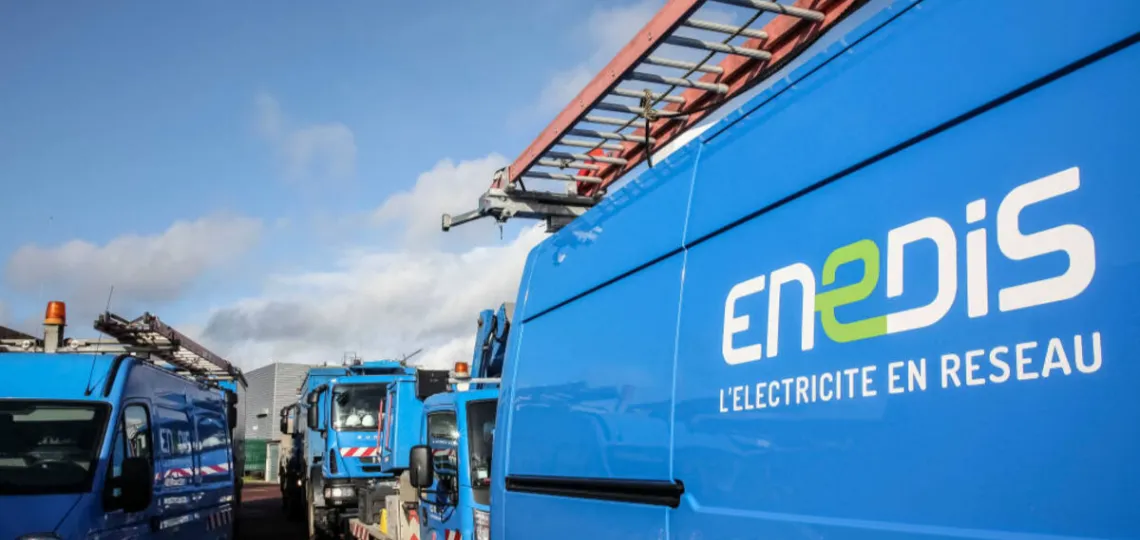
Enedis will implement a major reform of off-peak hours starting 1 November, under the framework of the public electricity network tariff (TURPE 7), defined by the Energy Regulatory Commission (Commission de régulation de l’énergie, CRE) in March. This revision aims to adjust electricity consumption schedules to align with solar energy production and the evolving usage patterns of consumers, such as programmable devices and remote working.

The measure affects 14.5 million customers subscribed to a peak/off-peak offer (HP/HC). Around 3.5 million of these customers already have time slots that comply with the new rules. For the remaining 11 million, the hours will be adjusted gradually between November 2025 and October 2027, following a two-phase implementation schedule.

Reorganisation of time slots to ease peak demand

All customers will retain eight off-peak hours per day, including a minimum of five consecutive hours at night. Enedis plans to shift up to three off-peak hours to the 11am–5pm window, particularly during the summer months, to absorb peaks in photovoltaic production. This redistribution is intended to relieve high-demand periods, typically observed in the morning and early evening.

The first phase, beginning on 1 November, will affect 1.7 million customers whose current schedules already allow partial compatibility. The second phase, starting in the second half of 2026, will cover an additional 9.3 million customers. This stage will also introduce seasonal differentiation between summer and winter off-peak hours. Professional and industrial users will be included in the final phase in 2027.

Automated deployment via Linky meters

All changes will be carried out remotely using Linky smart meters, already installed in most households. Automated devices, such as water heaters, can follow the new schedules provided they are connected to the meter via the dry contact. Electricity providers will notify customers at least one month before any time slot adjustment.

Enedis will adjust schedules based on local network conditions. The reform aims to shift up to 5GW of electricity consumption to sunny afternoon periods, reducing pressure on peak hours. The operation involves Enedis technical teams and electricity suppliers nationwide.
A major blackout has disrupted electricity supply across the Dominican Republic, impacting transport, tourism and infrastructure nationwide. Authorities state that recovery is underway despite the widespread impact.
Vietnam is consolidating its regulatory and financial framework to decarbonise its economy, structure a national carbon market, and attract foreign investment in its long-term energy strategy.
The European Bank for Reconstruction and Development strengthens its commitment to renewables in Africa by supporting Infinity Power’s solar and wind expansion beyond Egypt.
Governor Gavin Newsom attended the COP30 summit in Belém to present California as a strategic partner, distancing himself from federal policy and leveraging the state's economic weight.
Chinese authorities authorise increased private sector participation in strategic energy projects, including nuclear, hydropower and transmission networks, in an effort to revitalise slowing domestic investment.
A new regulatory framework comes into effect to structure the planning, procurement and management of electricity transmission infrastructure, aiming to increase grid reliability and attract private investment.
À l’approche de la COP30, l’Union africaine demande une refonte des mécanismes de financement climatique pour garantir des ressources stables et équitables en faveur de l’adaptation des pays les plus vulnérables.
Global energy efficiency progress remains below the commitments made in Dubai, hindered by industrial demand and public policies that lag behind technological innovation.
Global solar and wind additions will hit a new record in 2025, but the lack of ambitious national targets creates uncertainty around achieving a tripling by 2030.
South Korean refiners warn of excessive emissions targets as government considers cuts of up to 60% from 2018 levels.
Ahead of COP30 in Belém, Brazilian President Luiz Inacio Lula da Silva adopts a controversial stance by proposing to finance the energy transition with proceeds from offshore oil exploration near the Amazon.
An international group of researchers now forecasts a Chinese emissions peak by 2028, despite recent signs of decline, increasing uncertainty over the country’s energy transition pace.
The end of subsidies and a dramatic rise in electricity prices in Syria are worsening poverty and fuelling public discontent, as the country begins reconstruction after more than a decade of war.
Current emission trajectories put the planet on course for a 2.3°C to 2.5°C rise, according to the latest UN calculations, just days before the COP30 in Belem.
The Australian government plans to introduce a free solar electricity offer in several regions starting in July 2026, to optimize the management of the electricity grid during peak production periods.
India is implementing new reforms to effectively integrate renewable energy into the national grid, with a focus on storage projects and improved contracting.
China added a record 264 GW of wind and solar capacity in the first half of 2025, but the introduction of a new competitive pricing mechanism for future projects may put pressure on prices and affect developer profitability.
The government confirmed that the majority sale of Exaion by EDF to Mara will be subject to the foreign investment control procedure, with a response expected by the end of December.
A week before COP30, Brazil announces an unprecedented drop in greenhouse gas emissions, driven mainly by reduced deforestation, with uneven sectorial dynamics, amid controversial offshore oil exploration.
The Catabola electrification project, delivered by Mitrelli, marks the first connection to the national grid for several communities in Bié Province.

All the latest energy news, all the time

Annual subscription

8.25€/month*

*billed annually at 99€/year for the first year then 149,00€/year ​

Unlimited access - Archives included - Pro invoice

Monthly subscription

Unlimited access • Archives included

5.2€/month*
then 14.90€ per month thereafter

*Prices shown are exclusive of VAT, which may vary according to your location or professional status.

Since 2021: 30,000 articles - +150 analyses/week.