Fuel consumption in France rises despite overall oil downturn

In September 2025, French road fuel consumption rose by 3%, driven by a rebound in unleaded fuels, while overall energy petroleum product consumption fell by 1.8% year-on-year.
Share:

Comprehensive energy news coverage, updated nonstop

Annual subscription

8.25€/month*

*billed annually at 99€/year for the first year then 149,00€/year ​

Unlimited access • Archives included • Professional invoice

OTHER ACCESS OPTIONS

Monthly subscription

Unlimited access • Archives included

5.2€/month*
then 14.90€ per month thereafter

FREE ACCOUNT

3 articles offered per month

FREE

*Prices are excluding VAT, which may vary depending on your location or professional status

Since 2021: 35,000 articles • 150+ analyses per week

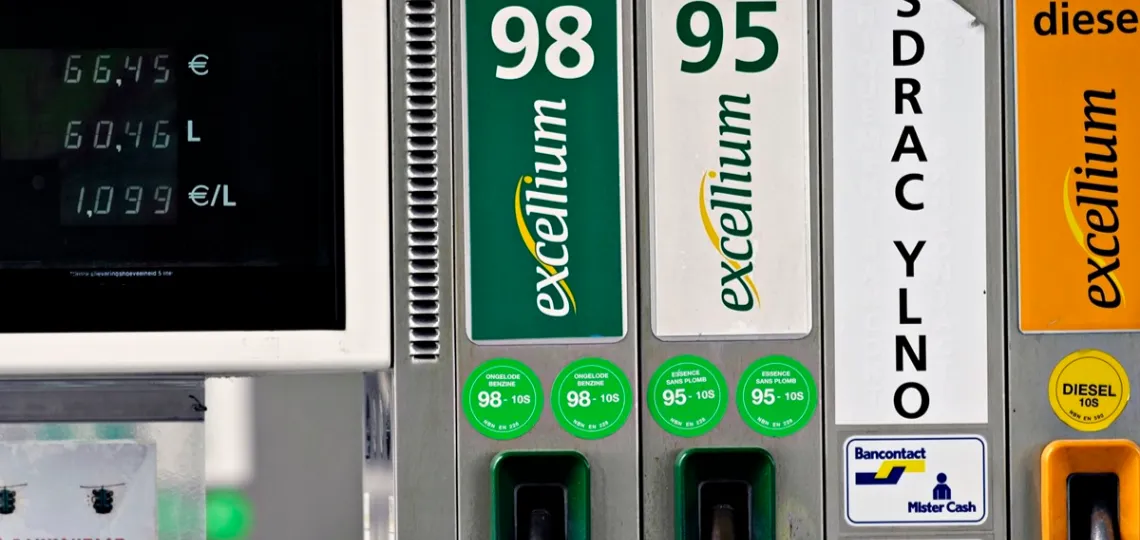
French road fuel consumption recorded a 3% increase in September 2025 compared to the same period the previous year. Deliveries reached a volume of 4.005 mn cubic metres, according to data published by the Comité Professionnel du Pétrole (CPDP). This rebound comes amid a general decline in energy petroleum products, with consumption down 1.8% year-on-year.

Recovery in unleaded fuels and stabilisation of diesel

The monthly rise in road fuels is due to a sharp increase in deliveries of unleaded fuels, up 9.3% compared to September 2024. This dynamic follows a slowdown observed in August. Diesel deliveries, which make up the majority of the market, rose by 0.2%. Diesel’s share of total consumption stands at 67.1%, a decline of 1.9 points compared to the previous year.

On a rolling twelve-month basis, from October 2024 to September 2025, road fuel deliveries reached 47.57 mn cubic metres, a slight decline of 0.4%. This trend confirms medium-term consumption stabilisation, despite short-term volatility linked to calendar effects and market conditions.

Jet fuel exceeds pre-pandemic levels

Jet fuel deliveries posted a 7.4% year-on-year increase, reaching 0.784 mn cubic metres. This level is 1.8% higher than in September 2019. The rise continues a five-month trend marked by steady recovery in air traffic.

Deliveries of non-road diesel remained stable at 0.511 mn cubic metres, while domestic heating oil fell sharply by 40.6% to 0.328 mn cubic metres. This significant drop reflects shifts in usage and demand for this type of product.

Overall decline in energy petroleum products

Across all categories, deliveries of energy petroleum products totalled 4.737 mn tonnes in September 2025, a 1.8% decline year-on-year. Over the twelve-month period, consumption reached 55.503 mn tonnes, representing a 0.6% drop.

“September recorded a rise in fuel deliveries partly due to a one-day working difference compared to September 2024. The underlying twelve-month trend shows a decline in road fuel consumption of less than 1%,” said Olivier Gantois, President of Ufip Énergies et Mobilités.
Serbia considers emergency options to avoid the confiscation of Russian stakes in NIS, targeted by US sanctions, as President Vucic pledges a definitive decision within one week.
Enbridge commits $1.4bn to expand capacity on its Mainline network and Flanagan South pipeline, aiming to streamline the flow of Canadian crude to US Midwest and Gulf Coast refineries.
The Peruvian state has tightened its grip on Petroperu with an emergency board reshuffle to secure the Talara refinery, fuel supply and the revival of Amazon oil fields.
Sofia appoints an administrator to manage Lukoil’s Bulgarian assets ahead of upcoming US sanctions, ensuring continued operations at the Balkans’ largest refinery.
The United States rejected Serbia’s proposal to ease sanctions on NIS, conditioning any relief on the complete withdrawal of Russian shareholders.
The International Energy Agency expects a surplus of crude oil by 2026, with supply exceeding global demand by 4 million barrels per day due to increased production within and outside OPEC+.
Cenovus Energy has completed the acquisition of MEG Energy, adding 110,000 barrels per day of production and strengthening its position in Canadian oil sands.
The International Energy Agency’s “Current Policies Scenario” anticipates growing oil demand through 2050, undermining net-zero pathways and intensifying investment uncertainty globally.
Saudi Aramco cuts its official selling price for Arab Light crude in Asia, responding to Brent-Dubai spread pressure and potential impact of US sanctions on Russian oil.
The removal of two Brazilian refiners and Petrobras’ pricing offensive reshuffle spot volumes around Santos and Paranaguá, shifting competition ahead of a planned tax increase in early 2026.
Shell Pipeline has awarded Morrison the construction of an elevated oil metering facility at Fourchon Junction, a strategic project to strengthen crude transport capacity in the Gulf of Mexico.
An arrest warrant has been issued against Timipre Sylva over the alleged diversion of public funds intended for a modular refinery. This new case further undermines governance in Nigeria’s oil sector.
With only 35 days of gasoline left, Bulgaria is accelerating measures to secure supply before US sanctions on Lukoil take effect on November 21.
Russia is negotiating the sale of its stake in Serbian oil company NIS as US sanctions threaten the operations of the company, which plays a key role in Serbia’s economy.
TotalEnergies, QatarEnergy and Petronas have signed a production sharing contract to explore the offshore S4 block in Guyana, marking a new step in the country’s opening to operators beyond ExxonMobil.
India boosts crude imports from Angola amid tightening U.S. sanctions on Russia, seeking low-risk legal diversification as scrutiny over cargo origins increases.
The shutdown of Karlshamn-2 removes 335 MW of heavy fuel oil capacity from southern Sweden, exposing the limits of a strategic reserve model approved but inoperative, and increasing pressure on winter supply security.
The Bulgarian government has increased security around Lukoil’s Burgas refinery ahead of a state-led takeover enabled by new legislation designed to circumvent international sanctions.
Faced with US sanctions targeting Lukoil, Bulgaria adopts emergency legislation allowing direct control over the Balkans’ largest refinery to secure its energy supply.
MEG Energy shareholders have overwhelmingly approved the acquisition by Cenovus, marking a critical milestone ahead of the expected transaction closing later in November.

All the latest energy news, all the time

Annual subscription

8.25€/month*

*billed annually at 99€/year for the first year then 149,00€/year ​

Unlimited access - Archives included - Pro invoice

Monthly subscription

Unlimited access • Archives included

5.2€/month*
then 14.90€ per month thereafter

*Prices shown are exclusive of VAT, which may vary according to your location or professional status.

Since 2021: 30,000 articles - +150 analyses/week.