US sanctions hit NIS, a key player in Serbia’s oil market

Serbian oil company NIS, partially owned by Gazprom, faces newly enforced US sanctions after a nine-month reprieve, testing the country's fuel supply chain.

Share:

Comprehensive energy news coverage, updated nonstop

Annual subscription

8.25€/month*

*billed annually at 99€/year for the first year then 149,00€/year ​

Unlimited access • Archives included • Professional invoice

OTHER ACCESS OPTIONS

Monthly subscription

Unlimited access • Archives included

5.2€/month*
then 14.90€ per month thereafter

FREE ACCOUNT

3 articles offered per month

FREE

*Prices are excluding VAT, which may vary depending on your location or professional status

Since 2021: 35,000 articles • 150+ analyses per week

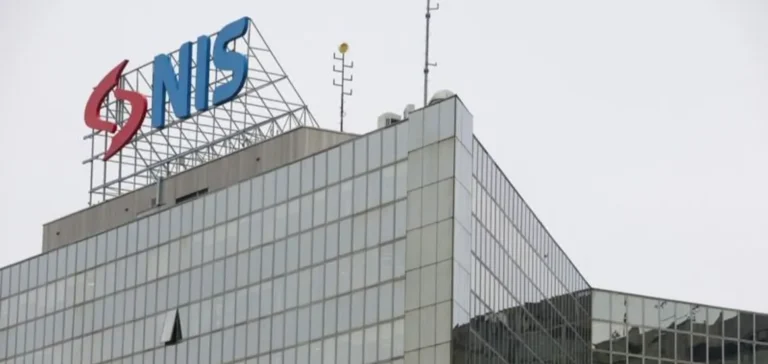
Naftna Industrija Srbije (NIS), the dominant player in Serbia’s oil sector, is now subject to sanctions imposed by the United States. The nine-month waiver granted to the company expired with the non-renewal of a special licence previously issued by the US Department of the Treasury, marking a new phase in the enforcement of restrictions targeting Russian energy interests.

Impact on transactions and national distribution

The implementation of these measures could affect payment operations at NIS petrol stations. International payment cards such as Visa and MasterCard are now likely to be inoperative, although cash payments and local cards remain accepted. NIS, which supplies nearly 80% of the local oil market, stated that distribution remains stable and that no purchasing limits are in place at this stage.

Bojana Radojevic, head of retail at NIS, said that “sales are operating normally” and the company has put in place measures to avoid any service disruption. The firm also claims to have built sufficient oil reserves to ensure continuous operations at its refining facilities.

Regional consequences and exposed partners

The effects of the sanctions extend beyond Serbia. In Croatia, oil pipeline operator Jadranski Naftovod (Janaf), a key regional infrastructure firm and NIS’s main supplier, expects to lose €18mn ($18.96mn) by the end of 2025. Janaf highlighted its economic reliance on the Serbian client, underlining the regional repercussions of this American decision.

The president of Janaf stated that “the United States will not reverse its decision”, calling for adaptation rather than expectations of a policy shift. This statement reflects the growing sense of economic isolation felt by certain actors connected to regional oil infrastructure.

Shareholding structure and political pressure

Gazprom Neft currently holds 45% of NIS, while 11% was recently transferred to a Saint Petersburg-based entity. The Serbian state retains approximately 30% of the capital, with the remainder held by private shareholders. Although NIS represents only a minor share in Gazprom’s overall revenue, its geopolitical relevance is considered strategic.

Serbian President Aleksandar Vucic recently confirmed that talks are ongoing regarding a potential withdrawal of Russian shareholders. However, Moscow’s stance remains firm, viewing its stake in NIS as a political asset in Serbia.

Energy stakes and continued dependence on Russian gas

Serbia, a candidate for European Union membership, continues to maintain a neutral stance towards Russia, refusing to join Western sanctions. The country remains heavily dependent on Russian gas, which covers over 90% of its energy needs.

The supply contract signed in 2022 between Belgrade and Moscow is nearing expiration. Talks are currently underway to determine the terms of a new agreement, in a context where Serbia’s room for manoeuvre appears limited.
Brazil, Guyana, Suriname and Argentina are expected to provide a growing share of non-OPEC+ oil supply, backed by massive offshore investments and continued exploration momentum.
The revocation of US licences limits European companies’ operations in Venezuela, triggering a collapse in crude oil imports and a reconfiguration of bilateral energy flows.
Faced with tighter legal frameworks and reinforced sanctions, grey fleet operators are turning to 15-year-old VLCCs and scrapping older vessels to secure oil routes to Asia.
Reconnaissance Energy Africa completed drilling at the Kavango West 1X onshore well in Namibia, where 64 metres of net hydrocarbon pay were detected in the Otavi carbonate section.
CNOOC Limited has started production at the Weizhou 11-4 oilfield adjustment project and its satellite fields, targeting 16,900 barrels per day by 2026.
The Adura joint venture merges Shell and Equinor’s UK offshore assets, becoming the leading independent oil and gas producer in the mature North Sea basin.
A Delaware court approved the sale of PDV Holding shares to Elliott’s Amber Energy for $5.9bn, a deal still awaiting a U.S. Treasury licence through OFAC.
A new $100mn fund has been launched to support Nigerian oil and gas service companies, as part of a national target to reach 70% local content by 2027.
Western measures targeting Rosneft and Lukoil deeply reorganise oil trade, triggering a discreet yet massive shift of Russian export routes to Asia without causing global supply disruption.
The Nigerian Upstream Petroleum Regulatory Commission opens bidding for 50 exploration blocks across strategic zones to revitalise upstream investment.
La Nigerian Upstream Petroleum Regulatory Commission ouvre la compétition pour 50 blocs d’exploration, répartis sur plusieurs zones stratégiques, afin de relancer les investissements dans l’amont pétrolier.
Serbia's only refinery, operated by NIS, has suspended production due to a shortage of crude oil, a direct consequence of US sanctions imposed on its majority Russian shareholder.
Crude prices increased, driven by rising tensions between the United States and Venezuela and drone attacks targeting Russian oil infrastructure in the Black Sea.
Amid persistent financial losses, Tullow Oil restructures its governance and accelerates efforts to reduce over $1.8 billion in debt while refocusing operations on Ghana.
The Iraqi government is inviting US oil companies to bid for control of the giant West Qurna 2 field, previously operated by Russian group Lukoil, now under US sanctions.
Two tankers under the Gambian flag were attacked in the Black Sea near Turkish shores, prompting a firm response from President Recep Tayyip Erdogan on growing risks to regional energy transport.
The British producer continues to downsize its North Sea operations, citing an uncompetitive tax regime and a strategic shift towards jurisdictions offering greater regulatory stability.
Dangote Refinery says it can fully meet Nigeria’s petrol demand from December, while requesting regulatory, fiscal and logistical support to ensure delivery.
BP reactivated the Olympic pipeline, critical to fuel supply in the U.S. Northwest, after a leak that led to a complete shutdown and emergency declarations in Oregon and Washington state.
President Donald Trump confirmed direct contact with Nicolas Maduro as tensions escalate, with Caracas denouncing a planned US operation targeting its oil resources.

All the latest energy news, all the time

Annual subscription

8.25€/month*

*billed annually at 99€/year for the first year then 149,00€/year ​

Unlimited access - Archives included - Pro invoice

Monthly subscription

Unlimited access • Archives included

5.2€/month*
then 14.90€ per month thereafter

*Prices shown are exclusive of VAT, which may vary according to your location or professional status.

Since 2021: 30,000 articles - +150 analyses/week.