Russian crude exports hit 18-month high despite sanctions pressure

Russian seaborne crude shipments surged in September to their highest level since April 2024, despite G7 sanctions and repeated drone strikes on refinery infrastructure.

Share:

Comprehensive energy news coverage, updated nonstop

Annual subscription

8.25€/month*

*billed annually at 99€/year for the first year then 149,00€/year ​

Unlimited access • Archives included • Professional invoice

OTHER ACCESS OPTIONS

Monthly subscription

Unlimited access • Archives included

5.2€/month*
then 14.90€ per month thereafter

FREE ACCOUNT

3 articles offered per month

FREE

*Prices are excluding VAT, which may vary depending on your location or professional status

Since 2021: 35,000 articles • 150+ analyses per week

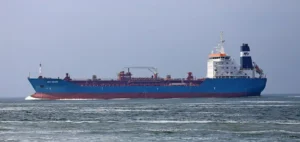
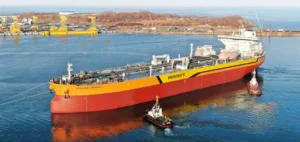
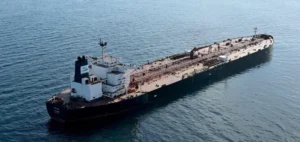
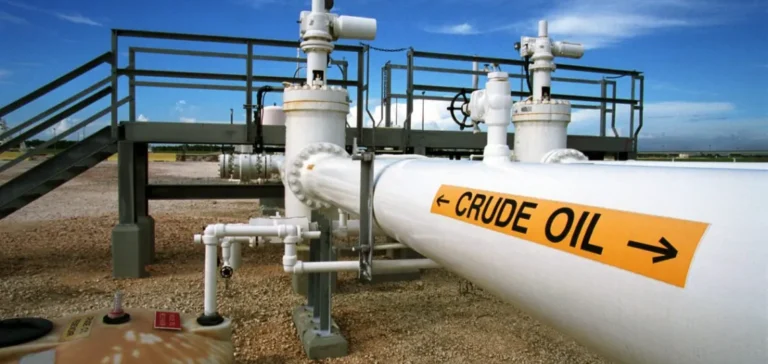
Seaborne exports of crude oil from Russian ports reached 3.88 million barrels per day in September, according to data from S&P Global Commodities at Sea. This marks the highest monthly volume since April 2024, amid increasing scrutiny on Russian oil buyers and intensified drone strikes on Russian energy infrastructure.

Deliveries to India rose by 29% month over month to 1.73 million barrels per day, while shipments to Turkey increased by 11% to 375,000 barrels per day. In contrast, volumes to China declined by 12%, settling at 1.12 million barrels per day.

Rising international pressure on Russian exports

Finance ministers of the Group of Seven (G7) countries announced plans to strengthen restrictions on Russian oil exports. In a joint statement issued on October 1, they committed to “maximising pressure” on Russia’s energy revenues, targeting countries that have increased purchases since the onset of the Ukraine conflict.

The statement followed the reduction of the G7 oil price cap to $47.60 per barrel in September, down from $60. This was the first revision since the mechanism was introduced in December 2022, and reflected growing divergences within the alliance, after months of unsuccessful lobbying for a coordinated change.

At the same time, exports of Russian refined oil products fell to their lowest level since the war began. Product exports declined by 15% in September to 1.87 million barrels per day, driven by sustained Ukrainian drone attacks on refinery infrastructure.

Refining capacity under pressure

Drone strikes led to the shutdown of multiple Russian refineries. According to Commodity Insights, refining downtime stood at 1.86 million barrels per day as of September 19. Several major plants remain offline, further tightening domestic fuel supplies.

Russia’s Ministry of Energy announced an extension of its gasoline export ban and a partial restriction on diesel exports to address mounting concerns over energy security. Fuel loading infrastructure at the Baltic port of Primorsk was also hit, causing temporary disruption. Two tankers,Kusto andCai Yun, sustained damage during the attacks and remain docked at the port.

Impact on domestic fuel supply

The decline in refining output has worsened Russia’s fuel crisis. Between June 28 and September 22, 360 retail fuel stations closed, representing 2.6% of the national total. The southern regions were hardest hit, with up to 14% of stations suspending operations, and as much as 50% in annexed Crimea, according to OMT-Consult.

“The situation seems to be alarming,” said Tamara Kandelaki, Chairperson of the Committee on Economics at the Oil Refiners and Petrochemical Association. She added that the refinery shutdowns were not part of a broader trend, but rather a force majeure event expected to persist.
ExxonMobil is shutting down its oldest ethylene steam cracker in Singapore, reducing local capacity to invest in its integrated Huizhou complex in China, amid regional overcapacity and rising operational costs.
Brazil, Guyana, Suriname and Argentina are expected to provide a growing share of non-OPEC+ oil supply, backed by massive offshore investments and continued exploration momentum.
Bourbon has signed an agreement with ExxonMobil for the charter of next-generation Crewboats on Angola’s Block 15, strengthening a strategic cooperation that began over 15 years ago.
Faced with tighter legal frameworks and reinforced sanctions, grey fleet operators are turning to 15-year-old VLCCs and scrapping older vessels to secure oil routes to Asia.
Reconnaissance Energy Africa completed drilling at the Kavango West 1X onshore well in Namibia, where 64 metres of net hydrocarbon pay were detected in the Otavi carbonate section.
The Adura joint venture merges Shell and Equinor’s UK offshore assets, becoming the leading independent oil and gas producer in the mature North Sea basin.
A Delaware court approved the sale of PDV Holding shares to Elliott’s Amber Energy for $5.9bn, a deal still awaiting a U.S. Treasury licence through OFAC.
A new $100mn fund has been launched to support Nigerian oil and gas service companies, as part of a national target to reach 70% local content by 2027.
Western measures targeting Rosneft and Lukoil deeply reorganise oil trade, triggering a discreet yet massive shift of Russian export routes to Asia without causing global supply disruption.
The Nigerian Upstream Petroleum Regulatory Commission opens bidding for 50 exploration blocks across strategic zones to revitalise upstream investment.
La Nigerian Upstream Petroleum Regulatory Commission ouvre la compétition pour 50 blocs d’exploration, répartis sur plusieurs zones stratégiques, afin de relancer les investissements dans l’amont pétrolier.
Serbia's only refinery, operated by NIS, has suspended production due to a shortage of crude oil, a direct consequence of US sanctions imposed on its majority Russian shareholder.
Crude prices increased, driven by rising tensions between the United States and Venezuela and drone attacks targeting Russian oil infrastructure in the Black Sea.
Amid persistent financial losses, Tullow Oil restructures its governance and accelerates efforts to reduce over $1.8 billion in debt while refocusing operations on Ghana.
The Iraqi government is inviting US oil companies to bid for control of the giant West Qurna 2 field, previously operated by Russian group Lukoil, now under US sanctions.
Two tankers under the Gambian flag were attacked in the Black Sea near Turkish shores, prompting a firm response from President Recep Tayyip Erdogan on growing risks to regional energy transport.
The British producer continues to downsize its North Sea operations, citing an uncompetitive tax regime and a strategic shift towards jurisdictions offering greater regulatory stability.
Dangote Refinery says it can fully meet Nigeria’s petrol demand from December, while requesting regulatory, fiscal and logistical support to ensure delivery.
BP reactivated the Olympic pipeline, critical to fuel supply in the U.S. Northwest, after a leak that led to a complete shutdown and emergency declarations in Oregon and Washington state.
President Donald Trump confirmed direct contact with Nicolas Maduro as tensions escalate, with Caracas denouncing a planned US operation targeting its oil resources.

All the latest energy news, all the time

Annual subscription

8.25€/month*

*billed annually at 99€/year for the first year then 149,00€/year ​

Unlimited access - Archives included - Pro invoice

Monthly subscription

Unlimited access • Archives included

5.2€/month*
then 14.90€ per month thereafter

*Prices shown are exclusive of VAT, which may vary according to your location or professional status.

Since 2021: 30,000 articles - +150 analyses/week.