Italy awards Prysmian $539mn contract for Tunisia-Europe power cable

The 600MW submarine interconnection between Tunisia and Italy enters its construction phase, marking a logistical and financial milestone for the Euro-Mediterranean electricity market.

Share:

Comprehensive energy news coverage, updated nonstop

Annual subscription

8.25$/month*

*billed annually at 99$/year for the first year then 149,00$/year ​

Unlimited access • Archives included • Professional invoice

OTHER ACCESS OPTIONS

Monthly subscription

Unlimited access • Archives included

5.2$/month*
then 14.90$ per month thereafter

FREE ACCOUNT

3 articles offered per month

FREE

*Prices are excluding VAT, which may vary depending on your location or professional status

Since 2021: 35,000 articles • 150+ analyses per week

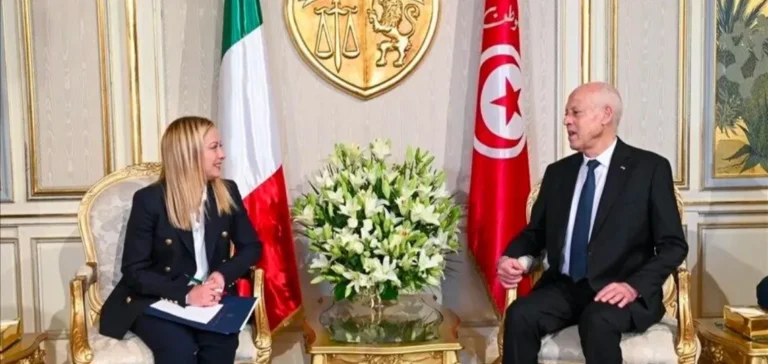
Italian manufacturer Prysmian Group has secured a contract worth up to €460 mn ($539 mn) to build a submarine power cable linking Italy to Tunisia. The project marks the implementation of the first energy bridge between North Africa and Europe, as part of the Electricity Link between Elmed (ELMED) interconnection programme.

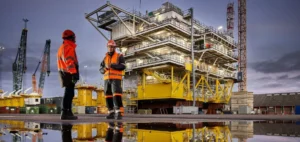
Awarded following a joint tender by Terna Rete Elettrica Nazionale, the Italian transmission system operator, and the Tunisian Company of Electricity and Gas (STEG), the contract covers the design, production and laying of a high-voltage direct current (HVDC) cable with a capacity of 600 megawatts (MW). The line will connect the Partanna station in Sicily to the Mlaabi station on Tunisia’s Cap Bon peninsula, over a total distance of 220 kilometres, including 200 km laid underwater.

A strategic engineering project for Euro-African interconnection

The infrastructure will cross the Strait of Sicily at a maximum depth of 800 metres, presenting a technical challenge that required advanced marine studies. The project aims to be operational by 2028. It is designed to strengthen electricity capacity and enable bidirectional energy flows between both sides of the Mediterranean.

The European Union (EU) is supporting the initiative with €307 mn in funding, out of a total estimated cost of €850 mn. Other financial institutions, including the European Investment Bank (EIB), the European Bank for Reconstruction and Development (EBRD) and the German public bank KfW, are expected to contribute an additional €125 mn. This multilateral support reflects the strategic importance of the project in securing and diversifying regional power supply.

Growing momentum for bilateral energy investment

The World Bank has approved $268.4 mn in financing for Tunisia to cover part of the costs for the main converter station and associated substations on the Tunisian side. The Green Climate Fund also plans to contribute $25 mn in concessional funds under its Sustainable Renewables Risk Mitigation Initiative.

According to the project’s promoters, the infrastructure is expected to enhance the reliability of Tunisia’s electricity grid during high-demand periods, while enabling future exports of renewable electricity to European markets. Tunisia, which is already developing several solar and wind projects, aims to consolidate its position in the regional electricity market.

Italy’s geopolitical positioning reinforced

Italy aims to improve its energy resilience and establish itself as a key hub for electricity redistribution in Europe. The ELMED connection would allow the country to diversify its import sources while meeting growing demand, reducing reliance on traditional partners.

Raul Gil, Executive Vice President of Transmission at Prysmian, stated that the project “demonstrates the group’s ability to manage complex operations with large-scale technical solutions.” The turnkey delivery includes cable production at Prysmian’s Naples and Nordenham plants, with offshore installation scheduled for 2027.
Brussels validates a new list of 235 PCI/PMI infrastructure projects, prioritising electricity, hydrogen and CO₂ corridors, while locking in access conditions to European funding through 2040.
Azerbaijan is developing Nakhchivan into a key electricity export hub with interconnection projects to Türkiye, boosting regional integration into the European energy market.
The European Union faces a €30bn public funding gap for cross-border electricity interconnections, jeopardising supply security and market integration by 2040.
The new Vunumoya station, built for over $58mn in 18 months, marks a strategic step toward integrating 900 MW of renewable energy in the mining region of Mpumalanga.
A joint vehicle between RWE and Apollo injects €3.2bn into the 25.1% stake in Amprion to support a €36.4bn investment plan in German power grids by 2029, consolidating a hybrid public-private model.
Türkiye enters advanced negotiations with the World Bank for $6bn in funding to strengthen its electricity transmission network, a key condition for expanding its renewable and nuclear capacity.
The Government of Ontario has tasked Hydro One with developing a strategic power line between Bowmanville and the Greater Toronto Area, offering equity participation to nearby First Nations.
China Southern Power Grid continues its network modernisation operations in Africa, introducing its technologies in Cairo and training local technicians to support long-term energy cooperation with the continent.
Avangrid has obtained the final regulatory approval for the NECEC project, a 1,200-megawatt cross-border transmission line connecting Québec hydropower to New England.
The European hydrogen interconnection project H2med reaches a key milestone with the technical validation of the BarMar route between Barcelona and Marseille, confirming the viability of the subsea corridor for expected operation in 2032.
Vattenfall has signed an agreement to sell its Independent Distribution Network Operator in the UK to Eclipse Power, a subsidiary of Octopus Sky Fund, marking a strategic refocus of its energy investments.
Shanghai Electric signed a framework agreement with Siemens to develop medium- and low-voltage equipment, aiming to modernise China’s power grids and support national decarbonisation targets.
Germany allocates a €7.6bn ($8.14bn) ceiling to acquire a minority interest in TenneT Germany, bolstering control over strategic grid infrastructure without a full buyout of the Dutch-owned subsidiary.
Naturgy secures major financing from the European Investment Bank to modernise Panama’s power infrastructure, in a strategic project supporting grid reliability and regional integration.
A $430mn funding package will be allocated by the World Bank to Tunisia to modernise its electrical grid and strengthen its integration with renewable capacity, aiming to attract $2.8bn in private investments.
German grid operator 50Hertz commits to nearly 30 GW of new connection capacity by 2029, amid network saturation and calls for reforming access procedures.
Thailand’s pending approval of transmission fees is holding back progress on an energy project linking Laos to Singapore via Malaysia, amid political uncertainty.
Amman says it is ready to provide electricity and natural gas to Lebanon using its already operational infrastructure, pending the completion of regional procedures.
Jordan can export electricity if three conditions align: fuel availability for its power plants, measurable system surplus, and a functional transit framework via Syria to Lebanon with clear metering and settlement rules.
The Egyptian government and UAE-based K&K have signed an agreement to finalise studies for an electricity interconnection project linking Egypt to Europe via Italy.

All the latest energy news, all the time

Annual subscription

8.25$/month*

*billed annually at 99$/year for the first year then 149,00$/year ​

Unlimited access - Archives included - Pro invoice

Monthly subscription

Unlimited access • Archives included

5.2$/month*
then 14.90$ per month thereafter

*Prices shown are exclusive of VAT, which may vary according to your location or professional status.

Since 2021: 30,000 articles - +150 analyses/week.