EDF nuclear costs kept under control until 2028 according to CRE

The French Energy Regulatory Commission set the full nuclear cost at €60.3/MWh by 2026, outlining the taxation thresholds applicable under the market reform scheduled for 2026.
Share:

Comprehensive energy news coverage, updated nonstop

Annual subscription

8.25$/month*

*billed annually at 99$/year for the first year then 149,00$/year ​

Unlimited access • Archives included • Professional invoice

OTHER ACCESS OPTIONS

Monthly subscription

Unlimited access • Archives included

5.2$/month*
then 14.90$ per month thereafter

FREE ACCOUNT

3 articles offered per month

FREE

*Prices are excluding VAT, which may vary depending on your location or professional status

Since 2021: 35,000 articles • 150+ analyses per week

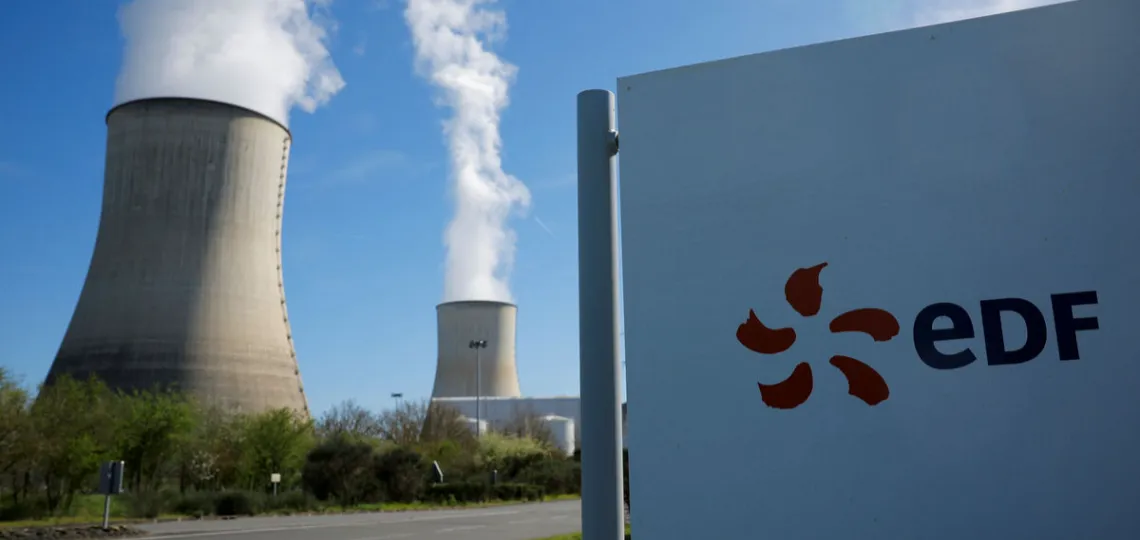
The production costs of Électricité de France’s (EDF) nuclear fleet will remain contained over the coming years, according to data published by the French Energy Regulatory Commission (Commission de régulation de l’énergie, CRE). The updated assessment serves as a reference for the implementation of the new regulatory framework after the Arenh system, which will take effect from 1 January 2026.

A strategic reference cost for the State

CRE estimated the full cost of nuclear electricity at €60.3/MWh under 2026 economic conditions for the 2026-2028 period. This figure rises to €61.5/MWh in current terms. For the following period, between 2029 and 2031, the cost is projected at €63.4/MWh under 2026 conditions, equivalent to €68.4/MWh in current 2025 terms.

These figures form the basis of the Universal Nuclear Contribution (Versement nucléaire universel, VNU), which will allow the State to collect part of EDF’s revenues when they exceed set thresholds. The proceeds will then be redistributed to all consumers, both households and industrial users, in order to ensure price stability.

Persistent gaps with EDF’s estimates

The amounts advanced by the regulator remain well below those announced by the state-owned utility. EDF had assessed its production costs at €79.6/MWh for 2026-2028, and €81.5/MWh for 2029-2031. CRE specified that the gap partly results from a methodological adjustment, combined with corrective factors that mitigated the impact of inflation.

According to the president of CRE, the new figures remain “very close” to the evaluations published in 2023, showing relative stability in projections. This consistency facilitates the setting of thresholds beyond which EDF will be subject to progressive taxation of its nuclear revenues, with two levels: 50% in a first bracket, then 90% beyond a second threshold.

Towards a post-Arenh framework

The Arenh mechanism (Regulated Access to Historic Nuclear Electricity), in place until 31 December 2025, obliges EDF to sell part of its electricity at low prices to competitors. From 2026 onwards, the company will be able to market all of its production on wholesale markets. However, the future framework provides redistribution mechanisms to avoid sudden price increases for end users.

EDF’s fleet currently includes 57 reactors, among them the Flamanville EPR, commissioned in 2024. These facilities remain the backbone of the country’s electricity production, making transparency on their operating costs critical.
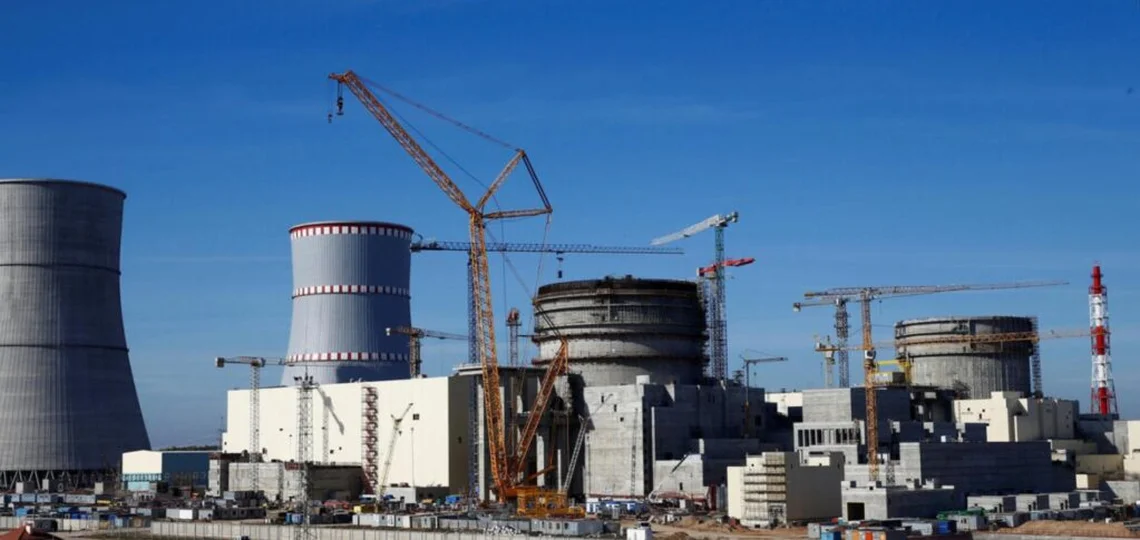
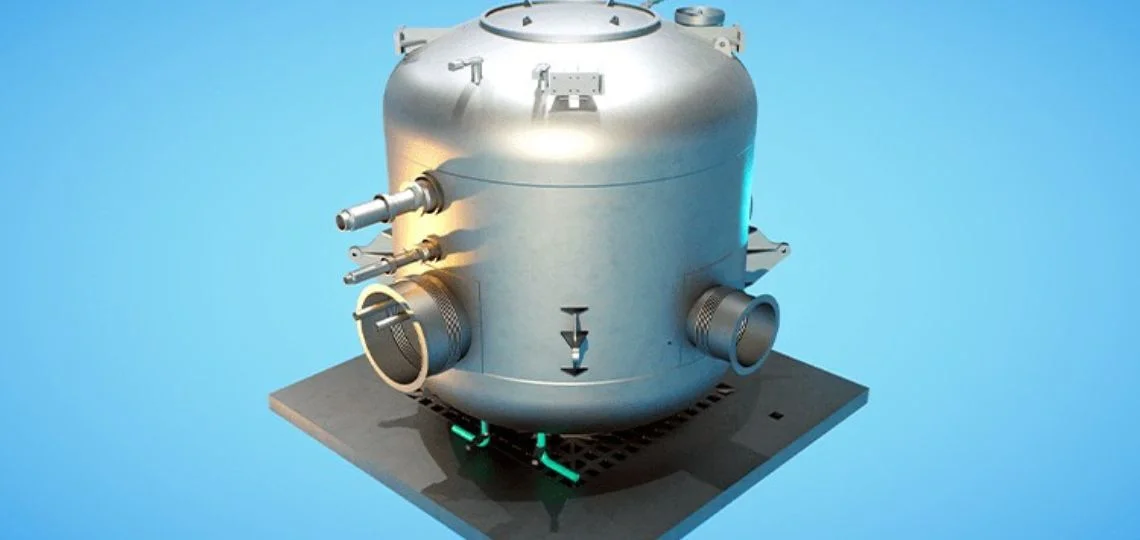
EDF has announced that the Flamanville EPR reactor is now operating at 80% of its capacity. The target of reaching full output by the end of autumn remains confirmed by the utility.
The accelerated approval of the Aurora facility’s nuclear safety plan marks a strategic milestone in rebuilding a domestic nuclear fuel production line in the United States.
The Industrikraft consortium will invest SEK400mn ($42.2mn) to become a shareholder in Videberg Kraft, marking a new phase in Sweden’s nuclear project led by Vattenfall on the Värö Peninsula.
MVM Group has signed an agreement with Westinghouse to secure VVER-440 fuel supplies from 2028, reducing its reliance on Russia and strengthening nuclear cooperation between Budapest and Washington.
The delivery of nuclear fuel by Russian subsidiary TVEL to the Da Lat research reactor marks a key step in strengthening the nuclear commercial partnership between Moscow and Hanoi.
US supplier X-energy has formalised a graphite supply contract with Japan's Toyo Tanso for the construction of its first four small modular reactors, in partnership with Dow and backed by the US Department of Energy.
US-based Enveniam has signed an agreement with LIS Technologies Inc. to oversee the design and construction of a new laser-based uranium enrichment facility on American soil.
Faced with shorter approval timelines, several European nuclear firms, including Newcleo, Orano and Urenco, are considering relocating key industrial investments to the United States.
A consortium led by Swedish giants such as ABB, SSAB and Volvo will invest SEK400mn to support the development of small modular nuclear reactors through a strategic partnership with Vattenfall.
Russia and India are preparing an expanded agreement for the construction of VVER-1200 reactors and modular nuclear power plants, while accelerating work at the strategic Kudankulam site.
Fusion Fuel Cycles has begun work on its UNITY-2 facility, a unique test bench designed to validate the full tritium fuel cycle under fusion conditions, marking a key step toward fusion energy.
Framatome will produce TRISO fuel at Romans-sur-Isère as part of a pilot project for advanced nuclear reactors, in partnership with actors such as Blue Capsule Technology.
Sweden’s parliament has approved a major reform authorising uranium extraction, opening the door to a reassessment of the economic potential of mining projects containing this strategic mineral.
South Africa's regulator has authorised Koeberg Unit 2 to operate until 2045 following maintenance work and a long-term safety assessment.
French nuclear group Orano has confirmed the release of its representative in Niger, detained since May, as tensions remain high with the country’s junta over control of uranium assets.
EDF launches a sovereign digital platform to secure data exchanges between nuclear stakeholders, aiming to accelerate the construction of future EPR2 reactors.
ONE Nuclear Energy publishes a virtual presentation for investors detailing its industrial vision, ahead of its merger with Hennessy Capital Investment Corp. VII expected in the first half of 2026.
A majority of Americans now back nuclear energy, with strong approval for converting coal plants into nuclear sites and increasing public investment in sector technologies.
Alfa Laval extends its cooperation with EDF to supply heat exchangers for EPR2 projects across three nuclear sites, reinforcing its position in the French nuclear sector.
Hadron Energy formalises its regulatory plan with U.S. nuclear authorities ahead of its $1.2bn merger with GigCapital7, relying on early compliance to accelerate the commercial deployment of its microreactor.

All the latest energy news, all the time

Annual subscription

8.25$/month*

*billed annually at 99$/year for the first year then 149,00$/year ​

Unlimited access - Archives included - Pro invoice

Monthly subscription

Unlimited access • Archives included

5.2$/month*
then 14.90$ per month thereafter

*Prices shown are exclusive of VAT, which may vary according to your location or professional status.

Since 2021: 30,000 articles - +150 analyses/week.