Hungary strengthens energy cooperation with Russia despite war in Ukraine

Hungary’s Foreign Minister travelled to Moscow for talks with Russian authorities on energy security, reinforcing a strategic energy partnership already bolstered by record gas and oil deliveries in 2024.

Share:

Comprehensive energy news coverage, updated nonstop

Annual subscription

8.25$/month*

*billed annually at 99$/year for the first year then 149,00$/year ​

Unlimited access • Archives included • Professional invoice

OTHER ACCESS OPTIONS

Monthly subscription

Unlimited access • Archives included

5.2$/month*
then 14.90$ per month thereafter

FREE ACCOUNT

3 articles offered per month

FREE

*Prices are excluding VAT, which may vary depending on your location or professional status

Since 2021: 35,000 articles • 150+ analyses per week

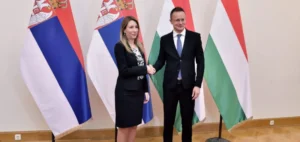
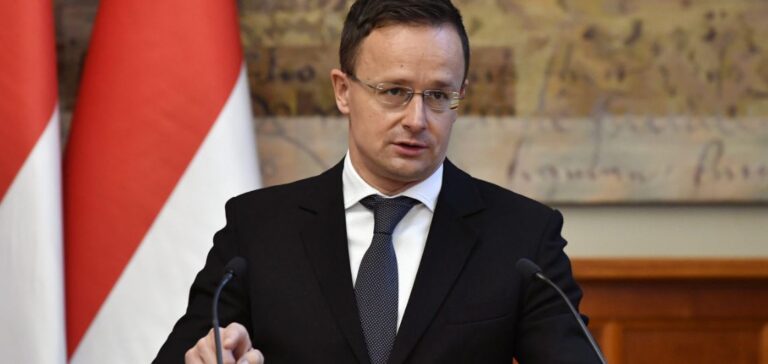
Hungary’s Minister of Foreign Affairs, Péter Szijjártó, announced he had travelled to Moscow to discuss peace conditions and energy security. The visit followed a US announcement of a partial truce in Ukraine. Talks focused on enhancing economic cooperation between the two nations, particularly in the energy sector.

Bilateral meeting focused on energy

During the visit, Péter Szijjártó met with the Deputy Prime Minister of the Russian Federation responsible for energy, Alexander Novak. According to an official statement from the Russian government, Hungary reaffirmed its commitment to maintaining stable energy cooperation with Russia, underlining the importance of this relationship for national supply. The Hungarian minister emphasised the consistency of Russian deliveries, stating they contributed directly to Hungary’s energy security.

In 2024, Hungary imported 8.6 billion cubic metres of natural gas and 4.78 million tonnes of crude oil from Russia. These figures marked a historical record, reinforcing Moscow’s role as a key energy partner for Budapest despite ongoing geopolitical tensions in Eastern Europe.

Strategic alignment under European tensions

Alexander Novak praised Hungary’s stance, describing it as “constructive” amid ongoing efforts by Budapest to ease certain European Union sanctions against Russia. Although Hungary has formally endorsed all sanctions packages since the start of the Ukraine conflict, it has repeatedly worked to delay or soften their implementation.

Prime Minister Viktor Orbán, a close political ally of Vladimir Putin, has maintained a divergent position within the European Union, refusing to provide military assistance to Kyiv since the beginning of the invasion. This stance was echoed by Péter Szijjártó, who welcomed recent US-Russia negotiations in Saudi Arabia, calling them a significant step towards de-escalation.
Global South Utilities is investing $1 billion in new solar, wind and storage projects to strengthen Yemen's energy capacity and expand its regional influence.
British International Investment and FirstRand partner to finance the decarbonisation of African companies through a facility focused on supporting high-emission sectors.
Budapest moves to secure Serbian oil supply, threatened by Croatia’s suspension of crude flows following US sanctions on the Russian-controlled NIS refinery.
Moscow says it wants to increase oil and liquefied natural gas exports to Beijing, while consolidating bilateral cooperation amid US sanctions targeting Russian producers.
The European Investment Bank is mobilising €2bn in financing backed by the European Commission for energy projects in Africa, with a strategic objective rooted in the European Union’s energy diplomacy.
Russia faces a structural decline in energy revenues as strengthened sanctions against Rosneft and Lukoil disrupt trade flows and deepen the federal budget deficit.
Washington imposes new sanctions targeting vessels, shipowners and intermediaries in Asia, increasing the regulatory risk of Iranian oil trade and redefining maritime compliance in the region.
OFAC’s licence for Paks II circumvents sanctions on Rosatom in exchange for US technological involvement, reshaping the balance of interests between Moscow, Budapest and Washington.
Finland, Estonia, Hungary and Czechia are multiplying bilateral initiatives in Africa to capture strategic energy and mining projects under the European Global Gateway programme.
The Brazilian president calls for a voluntary and non-binding energy transition during COP30 in Belém, avoiding direct confrontation with oil-producing countries.
The region attracted only a small share of global capital allocated to renewables in 2024, despite high energy needs and ambitious development goals, according to a report published in November.
The United States approves South Korea’s development of civilian uranium enrichment capabilities and supports a nuclear-powered submarine project, expanding a strategic partnership already linked to a major trade agreement.
The EU member states agree to prioritise a loan mechanism backed by immobilised Russian assets to finance aid to Ukraine, reducing national budgetary impact while ensuring enhanced funding capacity.
The Canadian government commits $56 billion to a new wave of infrastructure projects aimed at expanding energy corridors, accelerating critical mineral extraction and reinforcing strategic capacity.
Berlin strengthens its cooperation with Abuja through funding aimed at supporting Nigeria’s energy diversification and consolidating its renewable infrastructure.
COP30 begins in Belém under uncertainty, as countries fail to agree on key discussion topics, highlighting deep divisions over climate finance and the global energy transition.
The United States secures a tungsten joint venture in Kazakhstan and mining protocols in Uzbekistan, with financing envisaged from the Export-Import Bank of the United States and shipment routed via the Trans-Caspian corridor.
The United States grants Hungary a one-year waiver on sanctions targeting Russian oil, in return for a commitment to purchase US liquefied natural gas worth $600mn.
Meeting in Canada, G7 energy ministers unveiled a series of projects aimed at securing supply chains for critical minerals, in response to China’s restrictions on rare earth exports.
Donald Trump announces an immediate reduction in tariffs on Chinese fentanyl-related imports from 20% to 10%, potentially impacting energy flows between Washington and Beijing.

All the latest energy news, all the time

Annual subscription

8.25$/month*

*billed annually at 99$/year for the first year then 149,00$/year ​

Unlimited access - Archives included - Pro invoice

Monthly subscription

Unlimited access • Archives included

5.2$/month*
then 14.90$ per month thereafter

*Prices shown are exclusive of VAT, which may vary according to your location or professional status.

Since 2021: 30,000 articles - +150 analyses/week.