Pemex cuts spending to save more than USD 1.35 billion

Pemex postpones strategic exploration and production projects in the last quarter of 2024, aiming to save USD 1.35 billion while grappling with growing debt and operational challenges.

Share:

Comprehensive energy news coverage, updated nonstop

Annual subscription

8.25€/month*

*billed annually at 99€/year for the first year then 149,00€/year ​

Unlimited access • Archives included • Professional invoice

OTHER ACCESS OPTIONS

Monthly subscription

Unlimited access • Archives included

5.2€/month*
then 14.90€ per month thereafter

FREE ACCOUNT

3 articles offered per month

FREE

*Prices are excluding VAT, which may vary depending on your location or professional status

Since 2021: 35,000 articles • 150+ analyses per week

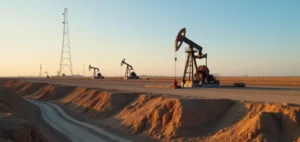
Pemex, Mexico’s national oil company, announced a significant reduction in spending on its exploration and production activities, aiming to save approximately 26.8 billion pesos (USD 1.35 billion). This austerity plan particularly affects the fourth quarter of 2024, during which the company decided to delay several strategic projects until 2025, including the acquisition of seismic equipment and the drilling of certain wells.

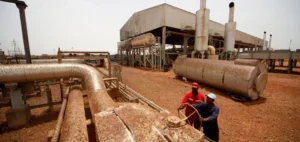
This decision comes in the context of intense financial pressure for Pemex. With accumulated debt exceeding USD 100 billion, the company is struggling to balance its accounts while maintaining its current production levels, set at approximately 1.5 million barrels per day (bpd) of crude oil. This figure rises to 1.8 million bpd when condensate, a natural gas liquid often assimilated to crude oil, is included.

Sectoral and economic challenges

Pemex, although a cornerstone of the Mexican economy, is highly dependent on state financial support. In 2023, the Mexican government had to inject USD 42 billion into the company to help it manage its debt while reducing its profit tax to free up funds. Despite this, Pemex continues to have limited access to financing in international markets due to its poor credit rating and rising production costs.

One of the main challenges faced by the company is maintaining its production while controlling expenses. Pemex’s production cost has increased by 60% over the past two years, reaching approximately USD 18 per barrel, well above levels observed in other oil-producing regions, such as the Arab countries. This increase is due to aging infrastructure and operational inefficiencies, particularly in its refineries.

Consequences for the future

The slowdown in investment could undermine Pemex’s long-term ambitions. By delaying exploration projects, the company risks not discovering new deposits quickly enough to compensate for the natural decline of its existing wells. Moreover, the acquisition of critical equipment for exploration could slow Pemex’s ability to identify new resources.

Finally, the company must contend with rising environmental costs, particularly due to natural gas flaring. This practice, which involves burning excess gas during oil production, has doubled since 2018, despite commitments to reduce emissions. In 2022, Pemex flared an average of 548 million cubic feet of gas per day, exacerbating its financial situation as it misses opportunities to monetize this resource while increasing its environmental burden.

Pemex, in its cost-cutting strategy, operates within a broader context of a Mexican energy sector facing multiple challenges. Mexico still relies heavily on its oil resources to support its public finances, with nearly 17% of tax revenues coming directly from Pemex’s oil activities. However, the continued decline in proven oil reserves, which have fallen by more than 40% over the past decade, poses a long-term threat to the sustainability of this economic dependence.

OPEC expects crude demand from its members to reach 43 million barrels per day in 2026, nearly matching current OPEC+ output, contrasting with oversupply forecasts from other institutions.
The United States seized a vessel suspected of transporting sanctioned oil from Iran and Venezuela, prompting a strong reaction from Nicolás Maduro's government.
The International Energy Agency lowers its global oil supply forecast for 2026 while slightly raising demand growth expectations amid improved macroeconomic conditions.
South Sudanese authorities have been granted responsibility for securing the strategic Heglig oilfield following an agreement with both warring parties in Sudan.
TotalEnergies acquires a 40% operated interest in the offshore PEL83 license, marking a strategic move in Namibia with the Mopane oil field, while Galp secures stakes in two other promising blocks.
BOURBON will provide maritime services to ExxonMobil Guyana for five years starting in 2026, marking a key step in the logistical development of the Guyanese offshore basin.
Viridien has launched a 4,300 sq km seismic reimaging programme over Angola’s offshore block 22 to support the country’s upcoming licensing round in the Kwanza Basin.
Shell restructures its stake in the Caspian pipeline by exiting the joint venture with Rosneft, with Kremlin approval, to comply with sanctions while maintaining access to Kazakh crude.
Shell acquires 60% of Block 2C in the Orange Basin, commits to drilling three wells and paying a $25mn signing bonus to PetroSA, pending regulatory approval in South Africa.
Malgré la pression exercée sur le gouvernement vénézuélien, Washington ne cherche pas à exclure Caracas de l’OPEP, misant sur une influence indirecte au sein du cartel pour défendre ses intérêts énergétiques.
Kazakhstan redirects part of its oil production to China following the drone attack on the Caspian Pipeline Consortium terminal, without a full export halt.
US investment bank Xtellus Partners has submitted a plan to the US Treasury to recover frozen Lukoil holdings for investors by selling the Russian company’s international assets.
Ghanaian company Cybele Energy has signed a $17mn exploration deal in Guyana’s shallow offshore waters, targeting a block estimated to contain 400 million barrels and located outside disputed territorial zones.
Oil prices moved little after a drop linked to the restart of a major Iraqi oilfield, while investors remained focused on Ukraine peace negotiations and an upcoming monetary policy decision in the United States.
TechnipFMC will design and install flexible pipes for Ithaca Energy as part of the development of the Captain oil field, strengthening its footprint in the UK offshore sector.
Vaalco Energy has started drilling the ET-15 well on the Etame platform, marking the beginning of phase three of its offshore development programme in Gabon, supported by a contract with Borr Drilling.
The attack on a key Caspian Pipeline Consortium offshore facility in the Black Sea halves Kazakhstan’s crude exports, exposing oil majors and reshaping regional energy dynamics.
Iraq is preparing a managed transition at the West Qurna-2 oil field, following US sanctions against Lukoil, by prioritising a transfer to players deemed reliable by Washington, including ExxonMobil.
The Rapid Support Forces have taken Heglig, Sudan’s largest oil site, halting production and increasing risks to regional crude export flows.
The rehabilitation cost of Sonara, Cameroon’s only refinery, has now reached XAF300bn (USD533mn), with several international banks showing growing interest in financing the project.

All the latest energy news, all the time

Annual subscription

8.25€/month*

*billed annually at 99€/year for the first year then 149,00€/year ​

Unlimited access - Archives included - Pro invoice

Monthly subscription

Unlimited access • Archives included

5.2€/month*
then 14.90€ per month thereafter

*Prices shown are exclusive of VAT, which may vary according to your location or professional status.

Since 2021: 30,000 articles - +150 analyses/week.