BP Pessimistic About Its Results

The British giant BP forecasts a decline in its oil sales and refining margins in the third quarter of 2024, impacting its financial results amid falling oil prices.

Share:

Comprehensive energy news coverage, updated nonstop

Annual subscription

8.25$/month*

*billed annually at 99$/year for the first year then 149,00$/year ​

Unlimited access • Archives included • Professional invoice

OTHER ACCESS OPTIONS

Monthly subscription

Unlimited access • Archives included

5.2$/month*
then 14.90$ per month thereafter

FREE ACCOUNT

3 articles offered per month

FREE

*Prices are excluding VAT, which may vary depending on your location or professional status

Since 2021: 35,000 articles • 150+ analyses per week

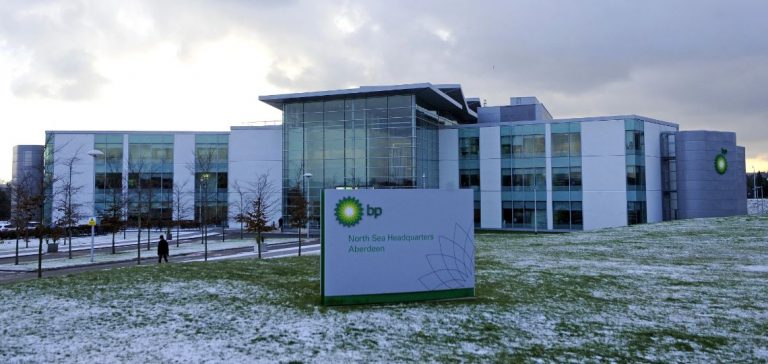
The British oil giant BP warned on Friday that its oil sales and refining margins would be weaker in the third quarter than in the second, which will weigh on its results in the context of declining oil prices.

Refining margins will be “weaker” between July and September, between $400 and $600 million lower than the previous quarter, BP estimates in a statement before its results on October 29. Oil sales are also expected to be “weak” during the period, adds the group, which recalls that the average price of Brent crude was $80.34 per barrel for the quarter, nearly $5 less than the previous quarter.

Decline in Refining Margins and Oil Sales

While oil prices were pushed up in the last two weeks by renewed tensions in the Middle East, they are structurally constrained by weak demand from China, the largest crude importer, and forecasts of abundant production in 2025. BP’s stock on the London Stock Exchange fell by 0.55% to 408.60 pence on Friday around 08:50 GMT.

BP’s oil production, on the other hand, is expected to remain generally stable from one quarter to the next, where the group had previously anticipated a decline. However, this stability will not be enough to offset the weakness in refining margins and oil sales.

Impact on BP’s Debt and Profits

Furthermore, the company expects its debt to increase over the period, due to the impact of weaker refining margins but also because it has postponed recognizing a credit of approximately $1 billion related to sales in its accounts from the third quarter to the fourth quarter. BP’s profit fell by 79% year-on-year in the first half, already hampered by declining refining margins and asset impairments, to $2.1 billion.

Shell, BP’s competitor and compatriot, which will publish its results on October 31, also warned earlier in the week of a decline in its refining margins for the third quarter. This situation reflects a broader trend in the energy sector, where major oil companies are facing pressure on their refining margins, combined with global oil demand struggling to regain strength, particularly due to China’s economic slowdown. With projections of abundant production for 2025, short-term recovery prospects seem limited for BP and its competitors.

Bourbon has signed an agreement with ExxonMobil for the charter of next-generation Crewboats on Angola’s Block 15, strengthening a strategic cooperation that began over 15 years ago.
Faced with tighter legal frameworks and reinforced sanctions, grey fleet operators are turning to 15-year-old VLCCs and scrapping older vessels to secure oil routes to Asia.
The Adura joint venture merges Shell and Equinor’s UK offshore assets, becoming the leading independent oil and gas producer in the mature North Sea basin.
A Delaware court approved the sale of PDV Holding shares to Elliott’s Amber Energy for $5.9bn, a deal still awaiting a U.S. Treasury licence through OFAC.
A new $100mn fund has been launched to support Nigerian oil and gas service companies, as part of a national target to reach 70% local content by 2027.
Western measures targeting Rosneft and Lukoil deeply reorganise oil trade, triggering a discreet yet massive shift of Russian export routes to Asia without causing global supply disruption.
The Nigerian Upstream Petroleum Regulatory Commission opens bidding for 50 exploration blocks across strategic zones to revitalise upstream investment.
La Nigerian Upstream Petroleum Regulatory Commission ouvre la compétition pour 50 blocs d’exploration, répartis sur plusieurs zones stratégiques, afin de relancer les investissements dans l’amont pétrolier.
Serbia's only refinery, operated by NIS, has suspended production due to a shortage of crude oil, a direct consequence of US sanctions imposed on its majority Russian shareholder.
Crude prices increased, driven by rising tensions between the United States and Venezuela and drone attacks targeting Russian oil infrastructure in the Black Sea.
Amid persistent financial losses, Tullow Oil restructures its governance and accelerates efforts to reduce over $1.8 billion in debt while refocusing operations on Ghana.
The Iraqi government is inviting US oil companies to bid for control of the giant West Qurna 2 field, previously operated by Russian group Lukoil, now under US sanctions.
Two tankers under the Gambian flag were attacked in the Black Sea near Turkish shores, prompting a firm response from President Recep Tayyip Erdogan on growing risks to regional energy transport.
The British producer continues to downsize its North Sea operations, citing an uncompetitive tax regime and a strategic shift towards jurisdictions offering greater regulatory stability.
Dangote Refinery says it can fully meet Nigeria’s petrol demand from December, while requesting regulatory, fiscal and logistical support to ensure delivery.
BP reactivated the Olympic pipeline, critical to fuel supply in the U.S. Northwest, after a leak that led to a complete shutdown and emergency declarations in Oregon and Washington state.
President Donald Trump confirmed direct contact with Nicolas Maduro as tensions escalate, with Caracas denouncing a planned US operation targeting its oil resources.
Zenith Energy claims Tunisian authorities carried out the unauthorised sale of stored crude oil, escalating a longstanding commercial dispute over its Robbana and El Bibane concessions.
TotalEnergies restructures its stake in offshore licences PPL 2000 and PPL 2001 by bringing in Chevron at 40%, while retaining operatorship, as part of a broader refocus of its deepwater portfolio in Nigeria.
Aker Solutions has signed a six-year frame agreement with ConocoPhillips for maintenance and modification services on the Eldfisk and Ekofisk offshore fields, with an option to extend for another six years.

All the latest energy news, all the time

Annual subscription

8.25$/month*

*billed annually at 99$/year for the first year then 149,00$/year ​

Unlimited access - Archives included - Pro invoice

Monthly subscription

Unlimited access • Archives included

5.2$/month*
then 14.90$ per month thereafter

*Prices shown are exclusive of VAT, which may vary according to your location or professional status.

Since 2021: 30,000 articles - +150 analyses/week.