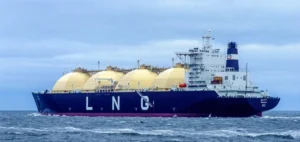
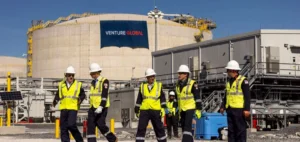
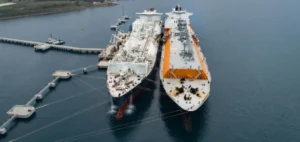
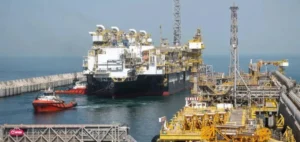
US liquefied natural gas (LNG) exports, which reached record levels this year, are under threat from rising domestic prices and growing pressure on producers’ profit margins. The spread between the US Henry Hub benchmark and European TTF prices has narrowed to its lowest level since April 2021, according to LSEG data, fuelling concerns over the economic viability of certain exports.
Domestic demand, driven by increased LNG plant feedstock needs and winter conditions, pushed gas prices above $5 per million British thermal units (mmbtu). At the same time, import market prices, particularly in Europe and Asia, have dropped due to an abundant supply, much of it coming from the US.
Margins under pressure and contracts at risk
While US exports reached 12 billion cubic metres in November, up 20% year-on-year, the profitability of these volumes is becoming uncertain. Several export contracts are now approaching the break-even point if the Henry Hub-TTF spread drops below $4 per mmbtu. Below $2, representing average LNG production costs, output cuts would become likely.
According to projections, global LNG export capacity will rise by 300 billion cubic metres per year by 2030, a 50% increase. The US is expected to account for 45% of these additions. However, this large-scale expansion could further saturate the global market and exert additional downward pressure on prices.
Record investments but mid-term uncertainty
Between January and October 2025, 83 billion cubic metres of new US projects received final investment decisions, marking a record. Infrastructure such as Golden Pass, owned by Exxon Mobil and QatarEnergy, and the Corpus Christi expansion by Cheniere, will boost capacity in the coming months. This pace of investment reflects strong confidence in the strategic role of US LNG.
Nevertheless, the continued increase in domestic gas demand, which is set to rise from 39 to 42 trillion cubic feet between 2025 and 2030, according to the Energy Information Administration, could create tensions in the domestic market. The share of gas allocated to LNG in total demand will rise from 13% to 20% over the same period.
Political risks linked to rising prices
Rising gas prices could become politically sensitive. The Trump administration, which aims to boost exports while pledging lower energy costs for American consumers, could face a dilemma if margins deteriorate further. A reduction in production in response to declining profitability would complicate the stated goal of expanding LNG exports.
The balance between the domestic market and international ambitions could thus become a major issue in US energy strategy in the coming years.