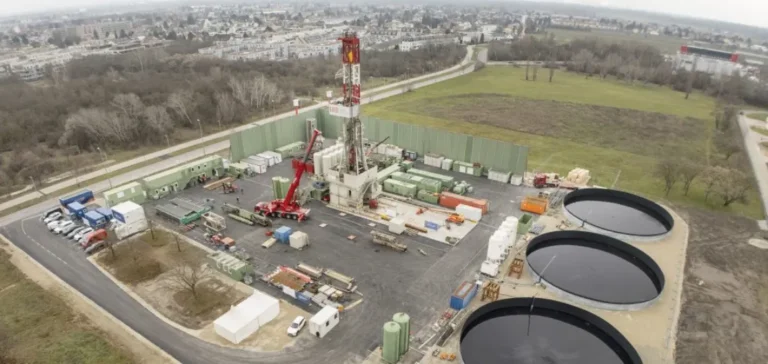
OMV launches seismic study to explore deep geothermal energy in Austria

Austrian oil group OMV announces a seismic campaign starting in December 2025 in the Graz region, aiming to identify potential deep geothermal reservoirs suitable for local energy production.

Share:

Comprehensive energy news coverage, updated nonstop

Annual subscription

8.25$/month*

*billed annually at 99$/year for the first year then 149,00$/year ​

Unlimited access • Archives included • Professional invoice

OTHER ACCESS OPTIONS

Monthly subscription

Unlimited access • Archives included

5.2$/month*
then 14.90$ per month thereafter

FREE ACCOUNT

3 articles offered per month

FREE

*Prices are excluding VAT, which may vary depending on your location or professional status

Since 2021: 35,000 articles • 150+ analyses per week

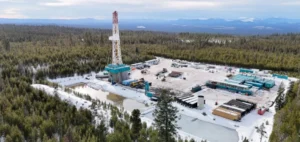
Oil company OMV AG (OMV) plans a seismic campaign to explore deep geothermal potential in the Greater Graz area, located in the East Styrian basin. Scheduled from December 2025 to March 2026, this operation aims to identify potential reservoirs at depths ranging from 700 to 3,500 metres. OMV draws on experience gained from its joint project called “deeep,” conducted with Wien Energie in the Vienna Basin. The collected data will enable evaluation of the technical and economic feasibility for future exploitation.

Methodology and timeline

OMV technical teams will use specialised trucks to generate controlled vibrations primarily along public roads. These vibrations, comparable to natural ground movements, will be captured by geophones placed at the surface to record reflections from underground rock layers. The method, known as seismic reflection, is a globally proven practice employed by the Austrian group. The programme will total approximately 900 kilometres of seismic measurements and last several weeks between late 2025 and early 2026.

After completing this campaign, OMV geophysical experts will process and analyse the data to obtain an accurate mapping of the Styrian subsurface. Once the seismic phase concludes, OMV plans to drill an exploratory well in the second half of 2026. This complementary operation aims to definitively confirm the presence of reservoirs identified during the seismic measurements.

Local partnerships and regulatory conditions

Should the geothermal resources be positively confirmed, OMV intends to jointly develop the site with two local energy companies, Energie Steiermark and Energie Graz. This partnership’s long-term objective is to generate thermal energy to supply the city of Graz with district heating. However, final implementation of the project remains dependent on approval by the relevant competition regulatory authorities.

The project is currently in an administrative validation phase, ensuring compliance with all necessary legal requirements. All permits must be obtained prior to the actual execution of seismic works and subsequent drilling. These administrative procedures represent a critical step before the effective launch of field operations planned from the end of 2025.

Strategic significance for OMV

According to Berislav Gaso, OMV Executive Vice President Energy, this deep geothermal initiative represents a central component of the Austrian oil group’s energy transition strategy. Gaso states that the objective is to provide local households with climate-neutral heat through district networks. This initiative in the Styrian region fully aligns with OMV’s aim to diversify its energy activities while ensuring sustainable local supply.
The International Geothermal Standard Committee was launched in Beijing with a permanent secretariat established at Sinopec, marking a major step toward harmonising global geothermal industry standards.
Húsavík Energy launches a drilling campaign to secure its geothermal resource following the shutdown of its main industrial client, aiming to diversify its energy offers and strengthen the appeal of the Bakki site.
The global geothermal market is set to double within a decade, driven by technological advances, stronger regulatory support and growing international funding.
Idex signs a 30-year contract with the Nice Côte d’Azur Metropolis to develop GéotherNice, a heating network using 82% renewable energy and artificial intelligence-based control.
Ethiopia is implementing an ambitious plan to develop geothermal energy and stabilise its electricity supply, with multiple projects underway in the Great Rift Valley and increasing support from international partners.
Thermal Energy International has won two new turnkey projects worth a total of CAD1.5mn ($1.09mn) from a global nutrition group, strengthening a collaboration initiated in 2019.
Ormat Technologies reported a rise in revenue for the third quarter, supported by solid performances in its Product and Storage segments, and revised its 2025 annual guidance upward.
Mazama Energy has completed the creation of the world’s hottest Enhanced Geothermal System, paving the way for low-cost, high-density baseload power aimed at data centres and heavy industry.
Ormat Technologies and SLB join forces to accelerate the development of integrated geothermal systems, including a pilot EGS project at an existing site for large-scale commercial deployment.
With a 9.3% increase in one year, district heating networks cross a historic threshold, while cooling networks continue expanding in response to intensifying heatwaves.
Dalkia and Paris-Vallée de la Marne launch a project to upgrade the GEOVAL network, aiming to deliver 20 GWh annually with 90% decarbonised energy.
State-owned PT SMI financed 65% of the Ijen geothermal plant, recently inaugurated, while continuing social responsibility programmes in East Java province.
The new GeoMap tool identifies vast geothermal potential in the Middle East, notably for urban cooling, long-duration storage, and large-scale power generation.
Clean Energy Technologies and RPG Energy Group completed the installation of an Organic Rankine Cycle heat recovery system at a major industrial site in Tennessee.
German start-up Factor2 Energy has raised $9.1mn in venture capital to develop a geothermal system based on CO₂ injected into porous geological formations, with the goal of building a pilot power plant in Germany.
Start-up Dig Energy has secured $5mn to launch its first pilot projects for compact geothermal drilling, aiming to cut thermal energy production costs in buildings without relying on conventional oilfield rigs.
Baker Hughes joins the development of the second phase of the Hell’s Kitchen project in California, targeting 500 megawatts of geothermal energy to power energy-intensive data centres.
Baker Hughes will supply Fervo Energy with key equipment for five geothermal ORC plants as part of the Cape Station Phase II project in Utah, United States.
A long-term extension secures continuous baseload geothermal power supply to California’s main utilities while strengthening financial visibility in the energy sector.
The inauguration of the Tanawon geothermal site, with a capacity of 22 megawatts, marks a milestone in the expansion of the Philippines’ energy park with local solutions of low carbon footprint.

All the latest energy news, all the time

Annual subscription

8.25$/month*

*billed annually at 99$/year for the first year then 149,00$/year ​

Unlimited access - Archives included - Pro invoice

Monthly subscription

Unlimited access • Archives included

5.2$/month*
then 14.90$ per month thereafter

*Prices shown are exclusive of VAT, which may vary according to your location or professional status.

Since 2021: 30,000 articles - +150 analyses/week.