OMS Energy turns to AI and robotics to capture global pipeline inspection market

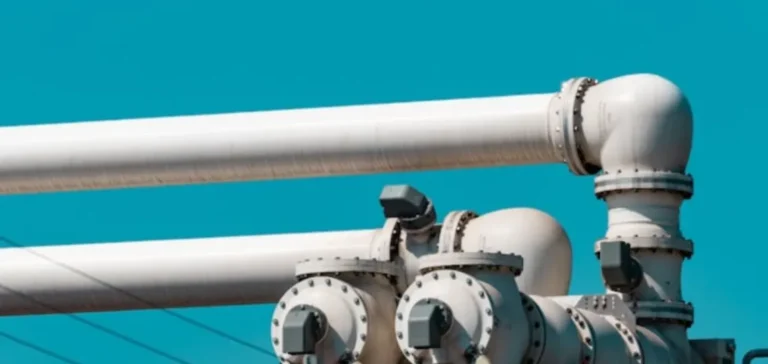
OMS Energy is accelerating investments in artificial intelligence and robotics to position itself in the growing pipeline inspection and maintenance sector, a strategic segment with higher margins than traditional equipment manufacturing.

Share:

Comprehensive energy news coverage, updated nonstop

Annual subscription

8.25€/month*

*billed annually at 99€/year for the first year then 149,00€/year ​

Unlimited access • Archives included • Professional invoice

OTHER ACCESS OPTIONS

Monthly subscription

Unlimited access • Archives included

5.2€/month*
then 14.90€ per month thereafter

FREE ACCOUNT

3 articles offered per month

FREE

*Prices are excluding VAT, which may vary depending on your location or professional status

Since 2021: 35,000 articles • 150+ analyses per week

Oilfield service provider OMS Energy is strengthening its global footprint through a technology-driven strategy. The Singapore-based company is now investing in artificial intelligence (AI) and robotics solutions to meet the growing demand for pipeline inspection and maintenance, a segment estimated at USD102.9bn in 2025 and projected to reach USD150bn by 2035.

Paradigm shift in pipeline inspection

The oilfield engineering sector, long dominated by conventional inspection methods, is rapidly evolving due to geographic and climatic constraints. OMS Energy anticipates a transition toward automated systems capable of operating in extreme environments, reducing human risk and increasing operational profitability.

According to Data Bridge Market Research, the global pipeline monitoring systems market is expected to reach USD32.65bn by 2032, with a compound annual growth rate of 7.40%. OMS Energy, in search of international technology partners, is exploring solutions combining intelligent sensors, real-time data collection and robotic intervention to establish a lasting foothold in this segment.

Geographic expansion and localisation strategy

With eleven production sites across Singapore, Malaysia, Brunei, Saudi Arabia, Thailand and Indonesia, OMS Energy is consolidating its position in high-output oil zones. The company relies on a local integration strategy: recruiting local labour, collaborating with regional suppliers and complying with regulatory frameworks for public tenders.

The recent supply of the first smart wellhead system to MOL Pakistan illustrates this dynamic. By integrating components from several sector players, manufacturing key modules in Singapore and providing on-site installation support, OMS Energy positions itself as a key player in the digitalisation of oilfield operations.

Expanding into urban pipeline infrastructure

Beyond oil infrastructure, OMS Energy is considering expanding into the urban pipeline maintenance market, estimated to exceed USD50bn globally by 2030. In China alone, this segment could reach USD10bn, presenting significant opportunities for companies with adaptable technologies for non-industrial environments.

As part of recent projects, OMS Energy delivered and installed key components for MOL Pakistan, a subsidiary of the Hungarian MOL Group. The partnership includes real-time monitoring, remote control and automation of wellhead equipment, aimed at enhancing productivity and operational safety.

Market valuation and growth outlook

As of March 31, 2025, OMS Energy serves more than 200 clients worldwide, including several major oilfield service firms. The company relies on higher-margin pipeline maintenance services to offset the lower profitability of equipment manufacturing.

Despite a recent surge in its stock price, OMS Energy remains valued at a forward P/E ratio below 5x—well under the industry average of 15x. This discount supports mid-term revaluation prospects, especially as Roth Capital maintains a price target of USD10 per share, more than double its current value.

Enbridge has announced a 3% increase in its annual dividend for 2026 and expects steady revenue growth, with up to CAD20.8bn ($15.2bn) in EBITDA and CAD10bn ($7.3bn) in capital investment.
Axess Group has signed a memorandum of understanding with ARO Drilling to deliver asset integrity management services across its fleet, integrating digital technologies to optimise operations.
South African state utility Eskom expects a second consecutive year of profit, supported by tariff increases, lower debt levels and improved operations.
Equans Process Solutions brings together its expertise to support highly technical industrial sectors with an integrated offer covering the entire project lifecycle in France and abroad.
Zenith Energy centres its strategy on a $572.65mn ICSID claim against Tunisia, an Italian solar portfolio and uranium permits, amid financial strain and reliance on capital markets.
Ivanhoe Mines expects a 67% increase in electricity consumption at its copper mine in DRC, supported by new hydroelectric, solar and imported supply sources.
Q ENERGY France and the Association of Rural Mayors of France have entered a strategic partnership to develop local electrification and support France's energy sovereignty through rural territories.
ACWA Power, Badeel and SAPCO have secured $8.2bn in financing to develop seven solar and wind power plants with a combined capacity of 15 GW in Saudi Arabia, under the national programme overseen by the Ministry of Energy.
Hydro-Québec reports a 29% increase in net income over nine months in 2025, supported by a profitable export strategy and financial gains from an asset sale.
Antin Infrastructure Partners is preparing to sell Idex in early 2026, with four North American funds competing for a strategic asset in the European district heating market.
EDF could sell up to 100% of its US renewables unit, valued at nearly €4bn ($4.35bn), to focus on French nuclear projects amid rising debt and growing political uncertainty in the United States.
Norsk Hydro plans to shut down five extrusion plants in Europe in 2026, impacting 730 employees, as part of a restructuring aimed at improving profitability in a pressured market.
The City of Paris has awarded Dalkia the concession for its urban heating network, a €15bn contract, ousting long-time operator Engie after a five-year process.
NU E Power Corp. completed the purchase of 500 MW in energy assets from ACT Mid Market Ltd. and appointed Broderick Gunning as Chief Executive Officer, marking a new strategic phase for the company.
Commodities trader BB Energy has cut over a dozen jobs in Houston and will shift some administrative roles to Europe as part of a strategic reorganisation.
Ferrari has entered into an agreement with Shell for the supply of 650 GWh of renewable electricity until 2034, covering nearly half of the energy needs of its Maranello site.
By divesting assets in Mexico, France and Eastern Europe, Iberdrola reduces exposure to non-strategic markets to strengthen its positions in regulated networks in the United Kingdom, the United States and Brazil, following a targeted capital reallocation strategy.
Iberdrola offers to buy the remaining 16.2% of Neoenergia for 32.5 BRL per share, valuing the transaction at approximately €1.03bn to simplify its Brazilian subsidiary’s structure.
Paratus Energy Services collected $38mn via its subsidiary Fontis Energy for overdue invoices in Mexico, supported by a public fund aimed at stabilising supplier payments.
CrossBoundary Energy secures a $200mn multi-project debt facility, backed by Standard Bank and a $495mn MIGA guarantee, to supply solar and storage solutions for industrial and mining clients across up to 20 African countries.

All the latest energy news, all the time

Annual subscription

8.25€/month*

*billed annually at 99€/year for the first year then 149,00€/year ​

Unlimited access - Archives included - Pro invoice

Monthly subscription

Unlimited access • Archives included

5.2€/month*
then 14.90€ per month thereafter

*Prices shown are exclusive of VAT, which may vary according to your location or professional status.

Since 2021: 30,000 articles - +150 analyses/week.