NamPower launches $90.3mn solar power plant to secure Namibian energy
Namibia begins construction of its largest solar plant, Sores|Gaib, aiming to reduce dependence on energy imports by leveraging its solar potential, considered among the highest globally according to the World Bank.
| Sectors | Solar Energy, Photovoltaic |
|---|---|
| Themes | Investments & Transactions, Project Development, Financing |
| Companies | AIE, KfW, Banque Mondiale |
| Countries | United Kingdom |
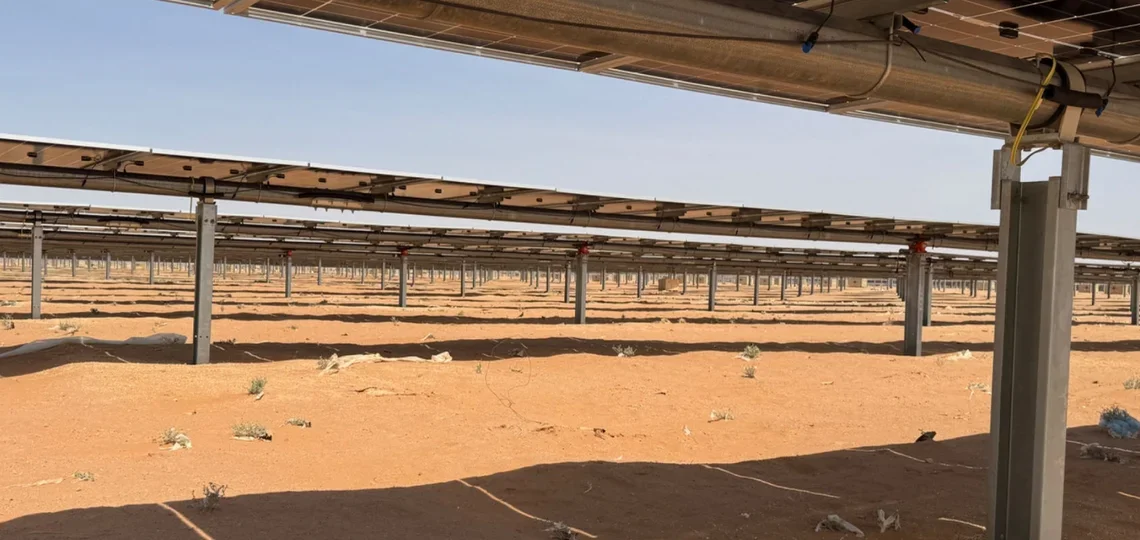
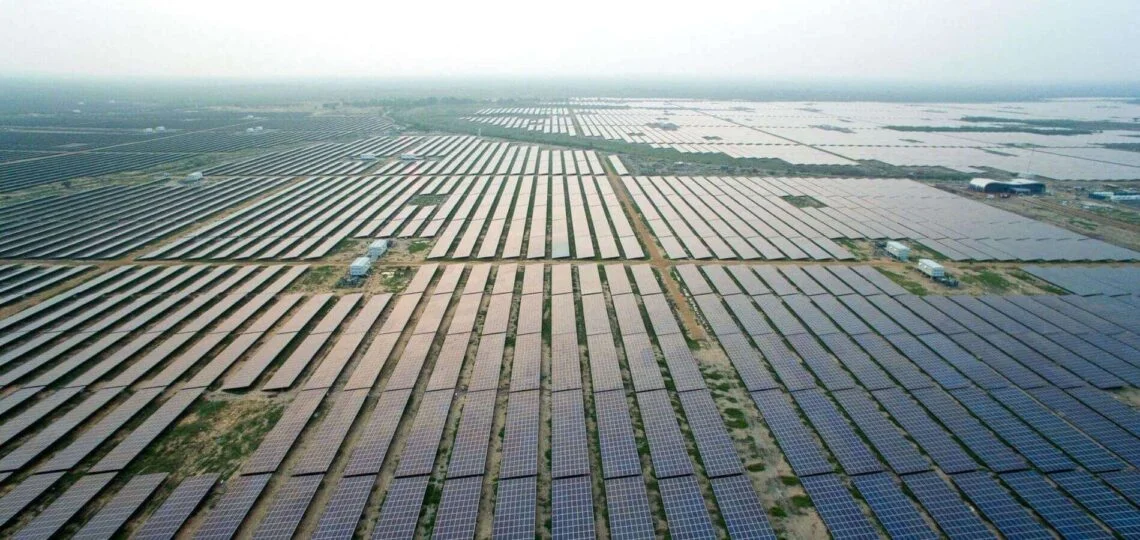
NamPower, the state-owned company responsible for Namibia’s electricity supply, has started construction work on the 100 megawatt (MW) Sores|Gaib solar power plant. Located 33 kilometres from the town of Rosh Pinah in the south of the country, the project requires a total investment of approximately $90.3mn, primarily funded through a $73mn loan provided by German development bank KfW, with the remainder coming from NamPower’s own funds.
A project addressing marked dependency
According to the International Energy Agency (IEA), in 2022, Namibia imported 77.8% of the electricity consumed on its territory. Despite possessing considerable solar potential, highlighted in the “Global Photovoltaic Power Potential by Country” report by the Energy Sector Management Assistance Program (ESMAP) of the World Bank in 2020, Namibia remains one of Africa’s major net electricity importers. The report specifically indicates that the country’s average practical photovoltaic potential is approximately twice that of the United Kingdom.
The Sores|Gaib solar power plant, whose name translates to “Power of the sun” in a local language, forms part of NamPower’s concrete efforts to exploit this abundant solar resource. The share of solar energy in Namibia’s electricity mix increased from 232 gigawatt hours (GWh) in 2018 to 508 GWh in 2022, still relatively minor compared to the dominant electricity imports.
Job creation and local development
The construction of the solar power plant is expected to directly create over 300 jobs. Additionally, NamPower confirmed that 25% of the Engineering, Procurement, and Construction (EPC) contract, valued at $20mn, is allocated to local content, reflecting a strategy designed to enhance economic benefits within the project’s region.
Moreover, NamPower incorporated an Environmental and Social Management Plan (ESMP) into the Sores|Gaib project. This plan includes thorough consideration of biodiversity, working conditions, and the effective involvement of local communities, aligning with international standards in this area.
Supporting grid resilience
Development of the plant is also part of a strategy to stabilise the national electricity grid, frequently subject to regional uncertainties. Introducing additional local production from national renewable resources is anticipated to significantly contribute to the country’s overall energy security. NamPower thus aims to progressively reduce external dependence through similar projects.
The Namibian state-owned company positions this project as a critical step toward more autonomous energy production. The Sores|Gaib project could thus permanently alter Namibia’s electricity supply structure, opening new short- and medium-term opportunities for the country and its neighbours.