Lyten reaches agreement to acquire the majority of Northvolt’s assets in Europe

Lyten announces an agreement to acquire most of Northvolt's assets in Sweden and Germany, bringing new industrial prospects to the energy storage sector in Europe.

Share:

Comprehensive energy news coverage, updated nonstop

Annual subscription

8.25$/month*

*billed annually at 99$/year for the first year then 149,00$/year ​

Unlimited access • Archives included • Professional invoice

OTHER ACCESS OPTIONS

Monthly subscription

Unlimited access • Archives included

5.2$/month*
then 14.90$ per month thereafter

FREE ACCOUNT

3 articles offered per month

FREE

*Prices are excluding VAT, which may vary depending on your location or professional status

Since 2021: 35,000 articles • 150+ analyses per week

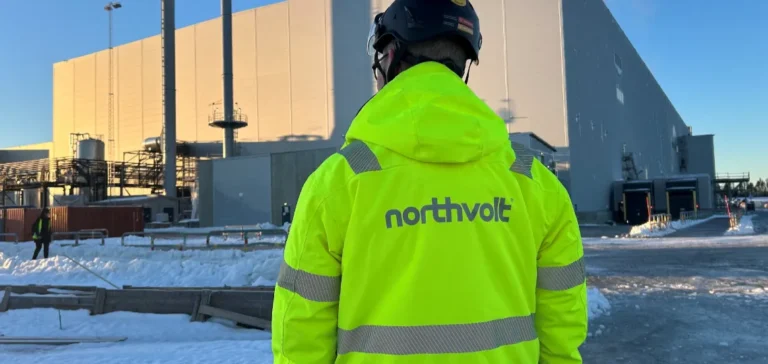
US startup Lyten has confirmed it has reached an agreement to purchase the majority of assets from Swedish battery manufacturer Northvolt, which has been in bankruptcy since March. The deal covers Northvolt’s strategic facilities in Sweden and Germany, as well as its intellectual property rights. Lyten plans to restart production at the Skelleftea site and aims to reposition Europe as a major player in energy storage, against the backdrop of strong global competition.

Industrial redeployment and preservation of European capabilities
Northvolt represented one of the main hopes for European sovereignty in the manufacturing of batteries for electric vehicles and industrial applications. Before its bankruptcy, the company held an order book exceeding $50bn with major automakers, including BMW, Volkswagen, and Audi. Northvolt had raised more than $10bn in equity, debt, and public funding, employing over 6,000 people at its peak. The bankruptcy was attributed to difficulties in producing cells that met quality requirements and in scaling up production as expected by customers and shareholders.

Founded in California in 2015, Lyten specialises in lithium-sulphur technology, seen as an alternative to traditional lithium-ion batteries. Lyten Chief Executive Officer Dan Cook stated that the priority is “to pick up where the Northvolt team left off.” Several members of Northvolt’s former management will join the new entity, with the exception of founder Peter Carlsson. No details have been disclosed about the exact amount of the transaction, except that it was concluded at a “significantly reduced” price.

Energy storage market and restart prospects
The agreement also includes Northvolt’s intellectual property and its operations in Germany. Lyten intends to restart production at Skelleftea quickly and to resume deliveries of lithium-ion cells as early as 2026. In July, the company had already acquired Northvolt’s energy storage division in Poland, considered the largest in Europe. The Swedish government highlighted that this operation prevents a complete shutdown of the sector and positions the country as a strategic hub for energy storage.

Lyten benefits from investments by several major players, including Stellantis, FedEx, and the US government. More than $200mn in additional funds have recently been raised to support this expansion strategy. The company plans to focus initially on supplying a single major customer, while targeting the automotive, defence, and industrial storage markets. Steps are also underway to acquire Northvolt’s Canadian subsidiary.

The finalisation of this agreement remains subject to regulatory steps, while the European energy storage sector is closely watching the development of this case.

Spie and Tesla have signed a framework agreement to install battery electricity storage systems in Europe, focusing on France, Poland and Germany.
The group has won a strategic project with operator Amprion to deploy five 50 MW batteries to ease pressure on the German power grid and optimise electricity transmission.
Vena Energy has begun construction of a 408 MWh battery energy storage system in Tailem Bend, marking a new phase in the deployment of its infrastructure in Australia.
The explosion of battery storage applications in Germany is causing grid congestion and pushing Berlin to revise its regulatory framework to prevent market saturation.
The collapse in storage costs positions batteries as a key lever for dispatchable solar, but dependence on Chinese suppliers creates growing tension between competitiveness and supply chain security.
JA Solar has launched a microgrid combining 5.2 MW of solar and 2.61 MWh of storage at an industrial site in Sicily, marking its first application of the "PV+Storage+X" model in Italy.
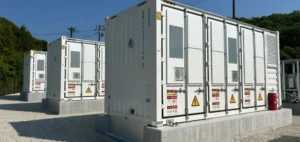
Sinexcel has installed a 2MW/8MWh energy storage system in Matsusaka, marking a breakthrough in a regulated market after five years of technical partnerships and gradual deployment in Japan.
Inlyte Energy has successfully completed factory validation testing of its first full-scale iron-sodium battery, witnessed by Southern Company, paving the way for a pilot installation in the United States in early 2026.
Neoen begins construction of a new 305 MW stage in Australia, raising its total battery storage capacity in the country to 2 GW, and signs two additional virtual battery contracts with ENGIE.
ENGIE has awarded NHOA Energy the contract for a 320 MWh battery energy storage system in Drogenbos, marking a new step in their industrial partnership in Belgium.
Stardust Power has completed an independent review of its lithium refinery project in Muskogee, confirming technical feasibility and compliance with industry standards for its initial production phase.
California-based battery manufacturer South 8 Technologies has secured $11mn to boost production of its LiGas cells, targeting military and space applications under extreme conditions.
Samsung SDI will supply LFP cells for energy storage systems in the United States starting in 2027, under a multi-year deal valued at $1.53bn.
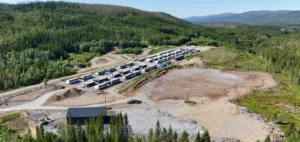
Bitzero Holdings launches a new 70 MW expansion phase in Namsskogan, Norway, targeting a total capacity of 110 MW and an upgrade of its high-performance computing capabilities.
Remixpoint and Nippon Chikudenchi have formalised a partnership to develop seven 2MW/8MWh BESS facilities by October 2026 through a newly established joint venture.
UK-based Ray Systems has selected Beam Global to supply tailored battery systems for its new autonomous underwater drones, aiming to extend mission duration without compromising stealth or manoeuvrability.
Sungrow has started construction on a 200 MW/400 MWh battery storage system for ENGIE, aimed at strengthening grid stability in a state heavily reliant on renewable energy.
Blue Current secures over $80mn in funding led by Amazon to industrialise its silicon solid-state batteries for large-scale mobility and stationary applications.
AGL has begun construction of a 500 MW battery storage system in Tomago, a project valued at AUD800mn ($530.8mn), in the Hunter region, with commissioning expected in 2027.
Real estate group JALCO Holdings diversifies its activities by investing in a 2 MW/8.1 MWh battery energy storage system developed by Taoke Energy in Narita, Chiba Prefecture.

All the latest energy news, all the time

Annual subscription

8.25$/month*

*billed annually at 99$/year for the first year then 149,00$/year ​

Unlimited access - Archives included - Pro invoice

Monthly subscription

Unlimited access • Archives included

5.2$/month*
then 14.90$ per month thereafter

*Prices shown are exclusive of VAT, which may vary according to your location or professional status.

Since 2021: 30,000 articles - +150 analyses/week.