Indonesia must secure $92bn in investments by 2050 to transition its industrial electricity generation to more sustainable sources, according to a report published by the Just Energy Transition Partnership (JETP) Secretariat. By 2030, an estimated $31bn would be required to initiate this energy transformation.
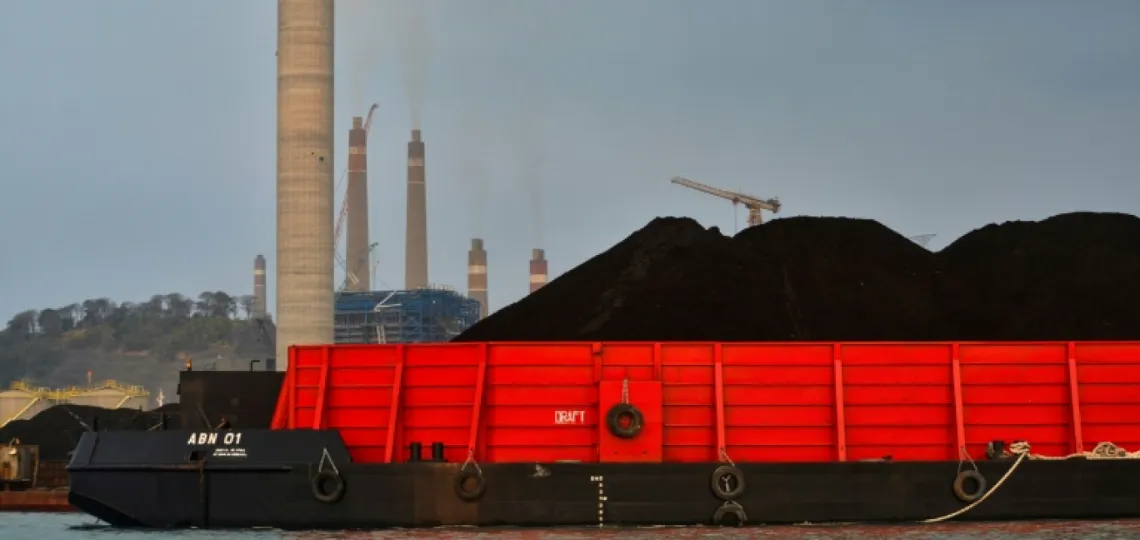
Captive power refers to generation facilities owned directly by industrial operators and used to power their own sites, particularly in special economic zones dedicated to nickel processing. This sector, critical to Indonesia’s economy and the global supply of strategic metals, relies heavily on coal, considered a cheap and locally available resource.
Persistent coal reliance in the industrial sector
As of 2024, installed capacity in the captive power sector was estimated at 25.9 gigawatts (GW), with over 75% supplied by coal-fired plants. The report notes that an additional 11 GW is under development, with most of the new projects also planning to use coal.
The report states that planned investments through 2030 will focus on renewable energy technologies, including solar photovoltaic, hydropower, and battery storage systems. It also highlights complementary measures such as improving energy efficiency and partially integrating gas as a transitional fuel.
An ambitious but vulnerable decarbonisation pathway
According to the report’s projections, the share of renewables in captive power is expected to reach 34% by 2030, up from 9% in 2024. This share could grow to 55% in 2040 and exceed 80% by 2050. Such a shift would result in a 75% reduction in carbon emissions in 2030 compared to the baseline scenario.
However, captive power was excluded from the decarbonisation policy launched by the Indonesian government in 2023 under the JETP framework. The programme, backed by G7 countries, was designed to help developing nations transition their energy sectors, but its limited scope reduced its effectiveness.
Financial uncertainty weakens implementation
The initiative suffered a setback following the withdrawal of the United States from several JETP agreements, including that with Indonesia, raising concerns over the future availability of funds. Although the country has secured more than $20bn in pledged support under the scheme, actual disbursements have remained limited.
The report emphasises that current funding covers only a fraction of total needs. The JETP Secretariat further estimates an additional $97bn will be needed by 2030 to decarbonise the country’s main grid, beyond the captive sector.