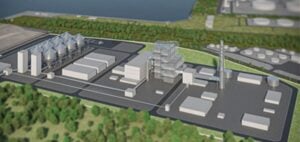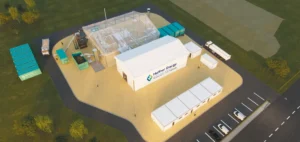

Haffner Energy has unveiled the H6 generation of its HYNOCA® and SYNOCA® units, based on thermolysis of residual biomass and targeting a hydrogen production cost of €2.34/kg for a 5 MW installation. The technology aims to reduce investment costs by bringing CAPEX down to €500/kWth, a level below that of conventional biomass boilers or current combined heat and power plants. These projections come as French and European public policies prioritise electrolysis for support mechanisms and quantified objectives. The launch represents a central lever in Haffner Energy’s investment strategy.
An economic model built on CAPEX reduction
The company states that the H6 generation could cut the cost of syngas per thermal kilowatt by a factor of three compared with the previous version. This optimisation relies on a simplified architecture designed to reduce maintenance costs and improve operational availability. However, the announced performance is not yet backed by consolidated operating data, limiting visibility for investors. Estimates will need to be validated on pilot installations, particularly in France and Switzerland.
The partnerships in place play a significant role in Haffner Energy’s investment trajectory. Collaborations with LanzaJet and LanzaTech target sustainable fuel production, while projects in Switzerland and the Netherlands rely on territorial models combining heat, syngas and local hydrogen. These initiatives aim to demonstrate the versatility of the H6 technology in high‑value segments.
A positioning misaligned with current support frameworks
The European hydrogen strategy directs most public aid toward Renewable Fuels of Non‑Biological Origin (RFNBO), limiting direct support opportunities for biomass‑derived hydrogen. Installed‑capacity targets, financing mechanisms and fuel‑decarbonisation quotas favour electrolysis units connected to renewable or nuclear electricity. This situation forces Haffner Energy to target markets where competitiveness depends on intrinsic costs rather than access to subsidies.
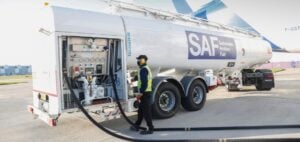
In this context, syngas production for sustainable fuel value chains, including e‑fuels and SAF, remains one of the most relevant avenues. European and North American mandates for aviation fuels are generating increasing demand that may support the emergence of projects integrating H6 technology. The attractiveness of such projects will, however, depend on the availability of sustainable biomass at stable prices.
A technological launch tied to a fragile financial situation
The company operates in a financial environment marked by a going‑concern warning issued by statutory auditors. The steep drop in share price since the beginning of the year has reinforced the need to secure alternative funding sources. The use of a €4.8mn OCEANE‑BSA convertible bond facility, acknowledged as dilutive, illustrates this strategy. The company presents the H6 generation as a key element to restore investor confidence by demonstrating a more competitive cost trajectory.
This situation increases pressure on converting the opportunity pipeline into firm orders. Agreements signed for projects in California, Switzerland and the Netherlands remain at preliminary stages and require technical demonstrations to progress to final investment decisions. Investors will need consolidated operational data to assess the viability of the proposed industrial model.
Biomass supply and regulatory uncertainty
The competitiveness of H6 largely depends on the cost of biomass, a market already under pressure from demand in biomethane, wood pellets and panel industries. Partnerships with operators specialising in non‑food biomass aim to secure supply, but uncertainties persist regarding agricultural yields and the acceptability of dedicated crops. Sustainability requirements imposed by the RED III regulation introduce traceability obligations that may influence final project costs.
Installations must also comply with strict standards regarding atmospheric emissions and co‑product handling. These requirements may necessitate additional investment affecting actual CAPEX. In this context, regulatory risk assessment becomes essential for financial actors considering engagement with Haffner Energy.
Market outlook and implications for investors
If announced costs are confirmed, the H6 technology could become competitive with local electrolysis for the supply of hydrogen and renewable heat. This development could influence the structuring of hydrogen offtake contracts, particularly in territorial projects. Infrastructure investors may view H6 as an alternative to small conventional biomass installations, provided there is a solid performance track record.
For Haffner Energy, the challenge lies in stabilising its financial structure while demonstrating the industrial maturity of its technology. The ability to attract long‑term industrial partners will be a key indicator of the evolution of its economic model. The market will also monitor the commissioning of operational H6 units and the publication of results on efficiency, availability and operating costs.