Germany locks in food-based biofuels and restructures carbon quota system

Berlin maintains crop-based biofuels, bans palm oil from 2027, and ends double counting, securing GHG compliance and agricultural demand through 2030.

Share:

Comprehensive energy news coverage, updated nonstop

Annual subscription

8.25€/month*

*billed annually at 99€/year for the first year then 149,00€/year ​

Unlimited access • Archives included • Professional invoice

OTHER ACCESS OPTIONS

Monthly subscription

Unlimited access • Archives included

5.2€/month*
then 14.90€ per month thereafter

FREE ACCOUNT

3 articles offered per month

FREE

*Prices are excluding VAT, which may vary depending on your location or professional status

Since 2021: 35,000 articles • 150+ analyses per week

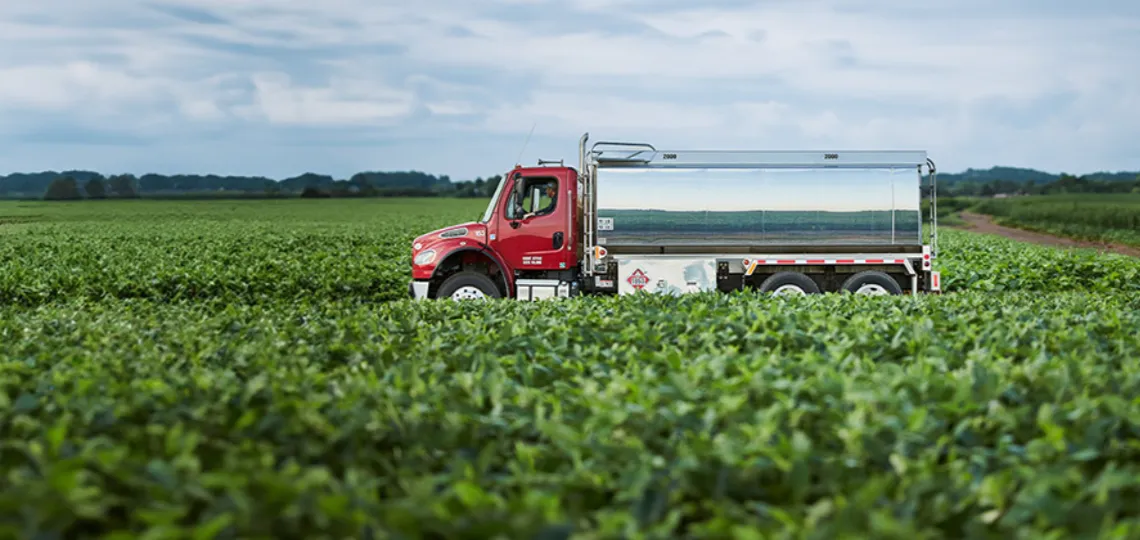
The German federal government has approved a draft law maintaining the use of food-based biofuels at current levels, while ending double counting for certain advanced biofuels and excluding palm oil from climate compliance instruments as of 2027. The legislation also introduces a binding trajectory for greenhouse gas (GHG) emissions reductions across transport, electricity, and heating under the amended GHG quota Act.
Retention of crop-based biofuels reflects political compromise

This decision marks a shift from the former SPD–Green–FDP coalition, which had planned a gradual phase-out of food-based biofuels. Now led by a CDU/CSU–SPD cabinet under Friedrich Merz, the government confirms the status quo on volumes, amid growing tensions with the farming sector. The measure satisfies agricultural unions and oilseed processors by securing demand for rapeseed and cereal-based biodiesel and ethanol.

The provisions align with the European Renewable Energy Directive (RED III), which caps food-based biofuels at 7% of transport energy consumption. Berlin opts to use the maximum allowed share without reducing it, whereas other EU member states have voluntarily chosen lower limits to support advanced biofuels or electrification.

End of double counting reshapes real demand

The removal of double counting, which previously allowed certain waste-based biofuels to be counted twice towards compliance, alters the market structure. The reform increases effective regulatory demand, making a higher physical volume necessary to meet GHG targets. Fuel distributors and oil companies support the measure, seeing it as a clarification of compliance obligations.

Feedstocks such as used cooking oil and animal fats may rise in value due to their relative scarcity and strategic relevance in a now linear framework—one litre equals one carbon credit. In contrast, advanced biofuel producers lose a key regulatory advantage, which may affect short-term profitability.

Gradual palm oil exclusion triggers supply chain adjustment

The law excludes palm oil from GHG quota compliance from 2027, in line with EU rules on high indirect land-use change (ILUC) risk feedstocks. However, this applies only to climate accounting and does not ban imports. This legal approach allows Berlin to avoid conflict with World Trade Organization rules.

Logistics and industrial players are expected to redirect import flows to other uses or markets. The measure may heighten tensions with exporting countries such as Indonesia and Malaysia while increasing pressure on European operators to secure traceable volumes that comply with the upcoming EU Deforestation Regulation (EUDR).

Impact on energy firms and agricultural sector

The combination of a more ambitious GHG quota and the removal of regulatory bonuses raises the cost of compliance for oil companies and fuel distributors. Several are already pursuing vertical integration strategies to secure feedstock supply, including investments in biofuel units and partnerships with the farming sector.

For agricultural producers and the agri-industry, the retention of first-generation biofuels is seen as an economic stabiliser. However, this policy choice could trigger backlash from environmental NGOs, which have long criticised the food-versus-fuel debate, especially amid global agricultural price volatility.

Towards a more coherent yet demanding compliance framework

The reform partially aligns the obligations under the national GHG quota, RED III, and EUDR. Companies must now manage cross-compliance obligations, with increased legal risk if interpretations differ between national and EU authorities.

To meet these demands, energy sector stakeholders will need to reinforce traceability systems, internal controls, and audit processes. This structural change aligns regulatory incentives with climate targets while redefining the parameters of Germany’s biofuels market.

GE Vernova is working with the US government to increase its yttrium stockpiles, a critical metal now facing export restrictions from China, disrupting global industrial supply chains.
A coalition of eight EU countries plans a series of public auctions to secure e-SAF production, responding to a lack of final investment decisions despite over 40 projects identified.
L’arrêt de la raffinerie de Pancevo, frappée par des sanctions américaines contre ses actionnaires russes, menace les recettes fiscales, l’emploi et la stabilité énergétique de la Serbie.
The commercial court of Évry has ordered the judicial liquidation of Global Bioenergies, a French start-up in sustainable aviation fuel, after both takeover bids were rejected due to insufficient guarantees for employees and assets.
Parliament approved the removal of a proposed tax increase on Superethanol-E85, ensuring a continued favourable tax regime for motorists and the agricultural sector until 2026.
The rejection of the removal of tax benefits for B100 and E85 biofuels preserves a favourable fiscal framework for an agricultural sector under pressure, despite uncertainty over actual environmental gains.
Brasília links a major tax fraud investigation to talks with Washington, combining demands for financial transparency with negotiations over U.S. access to Brazilian rare earths.
Three companies will begin methanol refuelling operations in Singapore in January 2026, marking a shift for the world’s largest bunkering hub.
London deploys a regulatory framework to secure critical mineral supplies by 2035, limiting dependence on single-country sourcing while developing a domestic lithium and tungsten industry.
Mining group BHP has re-entered talks to acquire Anglo American, months after the latter announced a copper-focused merger with Canadian firm Teck Resources.
Verso Energy assigns the front-end engineering design of the e-SAF DEZiR site to Rely, marking a major industrial step in sustainable aviation fuel production in France, with global deployment ambitions.
The Chinese giant targets 120 kt of SAF trading in 2025 and expands into European carbon markets, banking on ReFuelEU and CORSIA mandates to capture growing regulated demand.
Nineteen countries, led by Brazil, Italy, Japan and India, aim to quadruple sustainable fuel production by 2035, marking a major industrial and regulatory challenge for global energy and transport supply chains.
Clean Energy reported a net loss for the third quarter of 2025, impacted by Amazon-related charges and a decline in adjusted EBITDA, despite continued growth in renewable natural gas volumes.
Coulson Aviation has developed SafeFuel, a patented system that verifies fuel quality in real time during refuelling, reducing the risk of contamination on aircraft operating in remote environments.
Fluor Corporation will lead the front-end engineering of a UK sustainable aviation fuel plant led by LanzaJet and British Airways, with planned output of over 90,000 tonnes per year.
The French National Assembly rejected proposed tax increases on E85 and B100 biofuels in the 2026 budget after strong opposition from the agricultural and transport sectors.
The Commercial Court of Evry has delayed the review of takeover bids for Global Bioenergies, raising the possibility of judicial liquidation if no buyer emerges by November 12 at noon.
Rheinmetall forms a strategic partnership with Sunfire, Ineratec, and other companies to establish decentralized synthetic fuel production across Europe, thereby strengthening the continent’s energy independence.
Schneider Electric Canada aims to bring its Danish e-methanol plant model to the Canadian market, leveraging advanced automation to support new partnerships with heavy industry sectors.

All the latest energy news, all the time

Annual subscription

8.25€/month*

*billed annually at 99€/year for the first year then 149,00€/year ​

Unlimited access - Archives included - Pro invoice

Monthly subscription

Unlimited access • Archives included

5.2€/month*
then 14.90€ per month thereafter

*Prices shown are exclusive of VAT, which may vary according to your location or professional status.

Since 2021: 30,000 articles - +150 analyses/week.