Dutch gas infrastructure operator Gasunie and German network operator Thyssengas have finalised an agreement to jointly develop a cross-border hydrogen transport network between the two countries. The partnership involves Hynetwork Services, a subsidiary of Gasunie, along with Thyssengas H2 GmbH and Gasunie Deutschland.

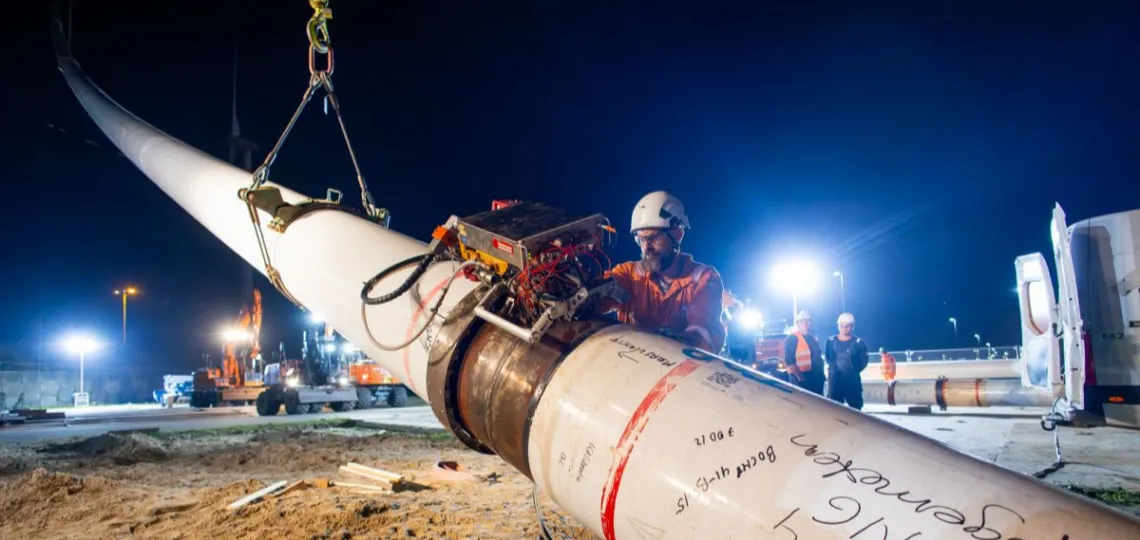
The project will primarily focus on converting existing natural gas pipelines into hydrogen-compatible infrastructure. This approach reduces capital expenditure and significantly shortens deployment timelines compared to building new, dedicated hydrogen networks.
Strategic connection between industrial hubs
The infrastructure will link border points at Oude Statenzijl, in the Groningen province, and Vlieghuis, in Drenthe. It will connect Dutch ports, including Rotterdam and Eemshaven, to western Germany’s industrial centres, notably the Ruhr region, a major energy consumer.
The project also anticipates future flows to and from Denmark. It supports regional integration efforts responding to rising demand for low-carbon hydrogen, particularly in Germany’s refining, steel, and chemical sectors.
Timeline, capacity and costs defined
The agreement outlines technical and organisational details, including schedule, location of connection points and planned capacities. Thyssengas announced in August it had begun construction of a 53-km section between Vlieghuis and Ochtrup, in the Münsterland region, expected to become operational by 2027.
Germany approved plans in 2024 to develop a nationwide 9,040-km hydrogen core grid by 2032. Around 60% of this network will rely on converted natural gas pipelines, with an estimated investment of EUR18.9bn ($20.78bn).
Delays in the Netherlands and market prices
In the Netherlands, a planned 1,200-km hydrogen network has faced delays due to regulatory issues and staffing shortages. The initial phase is now set to enter operation from 2026, starting near the port of Rotterdam.
Meanwhile, the cost of producing EU-compliant green hydrogen via alkaline electrolysis, backed by renewable power purchase agreements, was assessed at EUR7.95/kg ($9.32/kg) in the Netherlands, compared to EUR8.16/kg in Germany, according to the latest available data.