Exowatt raises $50m to speed up solar unit deployment near AI data centres
Exowatt strengthens its capital to industrialise its P3 solar solution and meet the strong demand from AI-powered data centres across the United States.
| Sectors | Solar Energy, Energy Storage, Thermal Storage, Solar Thermal |
|---|---|
| Themes | Investments & Transactions, Financing, Project Development |
Exowatt has announced an additional $50m fundraising, bringing its total funding to $140m in less than two years. This operation aims to accelerate local manufacturing and the national rollout of its modular solar system, P3, designed to meet the growing energy needs of artificial intelligence-driven data centres.
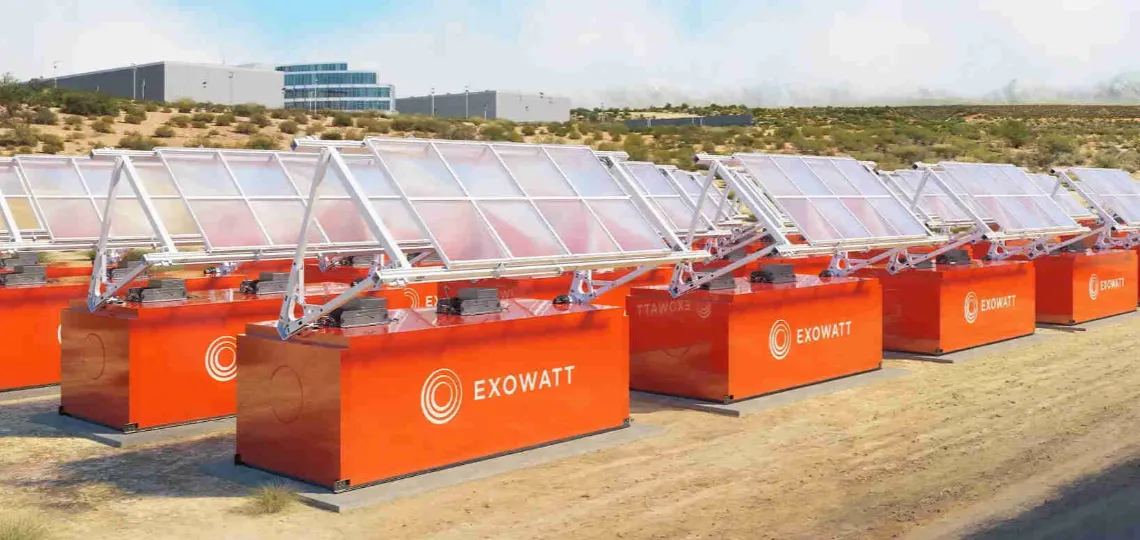
The P3 is a modular, dispatchable solar installation capable of delivering constant power through a thermal storage system. This technology allows stored heat to be converted into electricity during peak hours or at night. The model is designed for rapid deployment close to high-demand energy sites, such as high-performance computing infrastructures or industrial zones.
A direct response to data centre power demand
The demand for dispatchable renewable energy capacity is rising, particularly in the United States, where consumption by artificial intelligence data centres is growing rapidly. Exowatt states that its current order backlog exceeds 90 GWh, including energy developers and data centre operators.
This funding round is led by MVP Ventures and 8090 Industries, joined by existing investors such as Felicis, which led the $70m Series A in April 2025. New investors include The Florida Opportunity Fund, DeepWork Capital, Dragon Global, Massive VC, and a range of specialised funds. The initial $20m seed round included Sam Altman, Chief Executive Officer of Open AI, among its backers.
An industrial tool to capture national-scale demand
The company plans to rapidly expand its industrial capacity on American soil. This strategy aims to reduce often-constraining grid interconnection delays by promoting units deployed close to loads. It aligns with a broader objective of energy sovereignty in a global race for computing power.
According to investors, this ability to deliver dispatchable power quickly is a strategic advantage for the AI industry. “AI demand won’t wait for new grid interconnections,” said Andre de Baubigny, Managing Director at MVP Ventures. Rayyan Islam, Co-Founder of 8090 Industries, added that the company is able to “convert commercial momentum into real production.”
Robert Harvey, President of the Florida Opportunity Fund, highlighted that this approach could position Florida as a key player in the fast delivery of reliable and low-carbon electricity for digital infrastructure.