China: Nuclear progress at Lianjiang

The first concrete pour for the construction of the CAP1000 reactors at Lianjiang marks a significant step forward for SPIC (State Power Investment Corporation), projecting major reductions in emissions.

Share:

Nucléaire Lianjiang

Comprehensive energy news coverage, updated nonstop

Annual subscription

8.25$/month*

*billed annually at 99$/year for the first year then 149,00$/year ​

Unlimited access • Archives included • Professional invoice

OTHER ACCESS OPTIONS

Monthly subscription

Unlimited access • Archives included

5.2$/month*
then 14.90$ per month thereafter

FREE ACCOUNT

3 articles offered per month

FREE

*Prices are excluding VAT, which may vary depending on your location or professional status

Since 2021: 35,000 articles • 150+ analyses per week

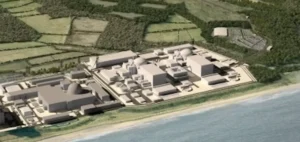
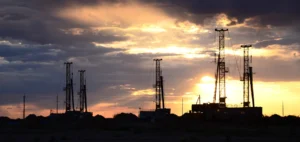
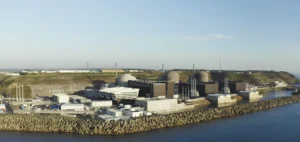
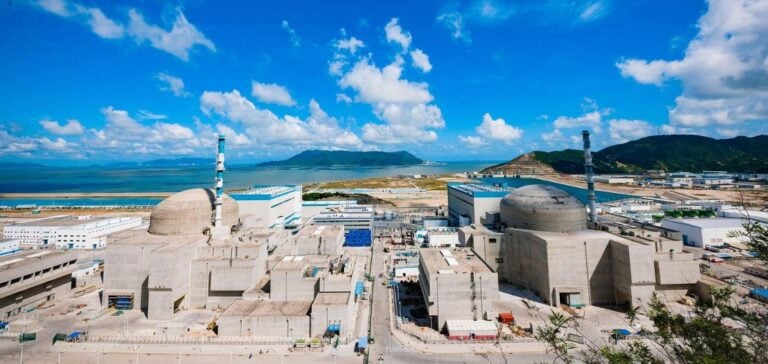
State Power Investment Corporation (SPIC) reached a major milestone on April 26, with the start of concrete pouring for the first two CAP1000 reactors at Lianjiang. This event marks not only the start of construction, but also the launch of SPIC’s first nuclear power project in Guangdong province. This ambitious project is scheduled for commissioning in 2028.

Significant reduction in emissions

Completion of these facilities will provide an annual energy production capacity of around 70.2 TWh, reducing standard coal consumption by over 20 million tonnes. This represents a reduction in carbon dioxide emissions of over 52 million tonnes, sulphur dioxide of around 171,000 tonnes and nitrogen oxides of around 149,000 tonnes, underlining the project’s significant impact on the environment.

Innovation and efficiency

The CAP1000 reactors, a Chinese adaptation of the AP1000 design, incorporate modular construction techniques. These techniques make it possible to prefabricate large structural modules at the factory, which are then installed on site, optimizing costs and construction times. This innovative method marks a significant improvement over traditional methods.

Technological firsts

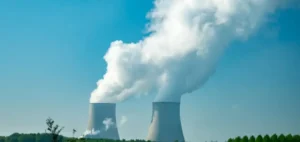
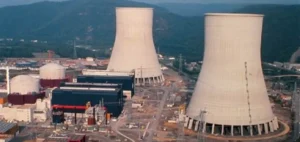
The project will also be the first in China to use secondary seawater cooling technology and to incorporate a large cooling tower – firsts for the Chinese nuclear sector. These technological initiatives are at the forefront of the industry, positioning SPIC as a leader in the adoption of new technologies.

With a total installed nuclear capacity of 8.09 GWe, SPIC is consolidating its position as one of the three main players in China’s nuclear sector. In addition to the four units currently under construction, the company has several other nuclear project sites in the preliminary phase.
EDF launches a sovereign digital platform to secure data exchanges between nuclear stakeholders, aiming to accelerate the construction of future EPR2 reactors.
ONE Nuclear Energy publishes a virtual presentation for investors detailing its industrial vision, ahead of its merger with Hennessy Capital Investment Corp. VII expected in the first half of 2026.
A majority of Americans now back nuclear energy, with strong approval for converting coal plants into nuclear sites and increasing public investment in sector technologies.
Alfa Laval extends its cooperation with EDF to supply heat exchangers for EPR2 projects across three nuclear sites, reinforcing its position in the French nuclear sector.
Hadron Energy formalises its regulatory plan with U.S. nuclear authorities ahead of its $1.2bn merger with GigCapital7, relying on early compliance to accelerate the commercial deployment of its microreactor.
The International Atomic Energy Agency denounces the ongoing inspection blockage at several damaged Iranian nuclear facilities, where stocks of highly enriched uranium remain.
Orano is testing an artificial intelligence-equipped robot for four months at its Melox site to assess its ability to assist in sensitive and repetitive industrial operations.
The UK’s Sizewell C project reaches a key milestone with a financing boost from EDF, including a loan guaranteed by Bpifrance and backing from the National Wealth Fund, with an estimated total cost of GBP38bn ($48.19bn).
NGE, through its subsidiary Sade, has won the contract for the cooling system networks (SEC) of six EPR2 reactors in France, a key project for nuclear safety and industrial innovation.
Constellation plans to increase the nuclear capacity of Calvert Cliffs in Maryland, with projects aimed at addressing the rising energy demand and supporting the state’s economic growth.
The UK's Office for Nuclear Regulation has granted formal consent to EDF Energy to decommission the Hinkley Point B nuclear power plant in Somerset, England, following its permanent shutdown in August 2022.
Illinois and New York take significant steps to develop additional nuclear capacity, aiming to strengthen their power generation while diversifying their sources.
US company Intuitive Machines has secured an additional contract to develop compact nuclear technology for lunar missions and extended space infrastructure.
Centrales Nucleares Almaraz-Trillo has officially requested the extension of operations for reactors Almaraz I and II until 2030, challenging the original timeline for the shutdown of Spain’s nuclear fleet.
US-based Amentum has secured strategic roles on a 15-year decommissioning framework in the United Kingdom, potentially worth up to £1.4bn ($1.9bn), through multiple projects at the Sellafield site.
Finland’s Olkiluoto nuclear plant will receive a €90mn ($104mn) loan from the European Investment Bank to upgrade units I and II as part of a programme aiming to extend their operational lifespan.
Electrabel has entrusted Framatome with upgrading the control system of the Tihange 3 reactor, reinforcing Belgium’s nuclear extension strategy launched in 2023.
Hitachi joins Washington and Tokyo in strategic projects to modernise the US grid and back artificial intelligence expansion through nuclear and electrification investments.
NANO Nuclear restructures its Canadian operations under the name True North Nuclear to accelerate regulatory and industrial development of its KRONOS MMR™ microreactor.
Cameco and Brookfield have signed a strategic agreement with the US government to build new Westinghouse reactors, a project valued at a minimum of $80bn, including an unprecedented public participation mechanism.

All the latest energy news, all the time

Annual subscription

8.25$/month*

*billed annually at 99$/year for the first year then 149,00$/year ​

Unlimited access - Archives included - Pro invoice

Monthly subscription

Unlimited access • Archives included

5.2$/month*
then 14.90$ per month thereafter

*Prices shown are exclusive of VAT, which may vary according to your location or professional status.

Since 2021: 30,000 articles - +150 analyses/week.