Africa captures only 2% of global clean energy investment in 2025
While capital is flowing into clean technologies globally, Africa remains marginalised, receiving only a fraction of the expected flows, according to the International Energy Agency.
| Sectors | Solar Energy, Photovoltaic |
|---|---|
| Themes | Investments & Transactions, Public Investment |
| Companies | AIE |
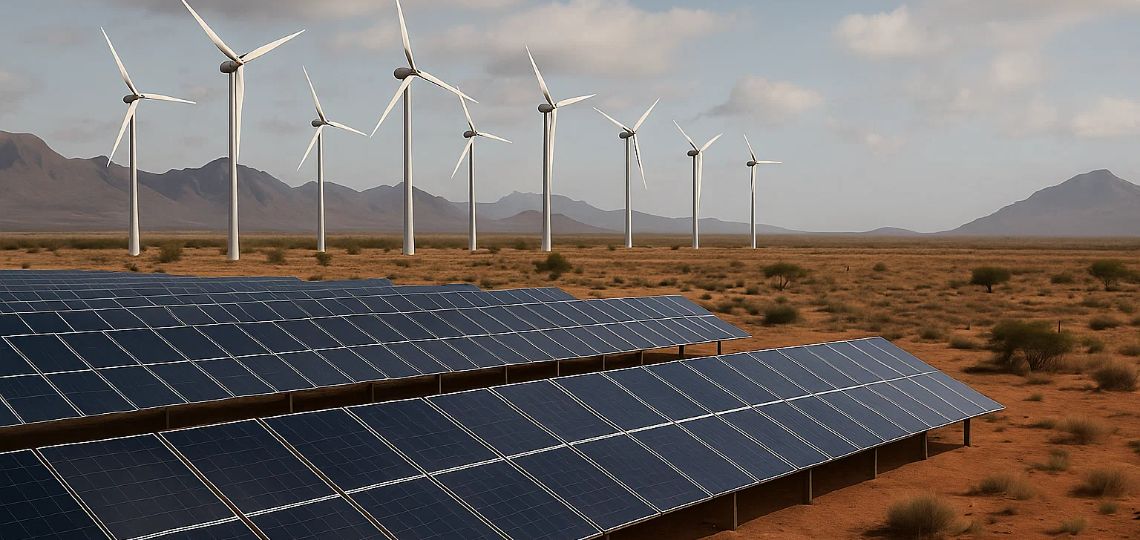
Global investment in the energy sector will reach $3,300bn in 2025, with $2,200bn allocated to clean technologies, according to the World Energy Investment 2025 report published by the International Energy Agency (IEA). Africa, home to around 20% of the world’s population, captures only 2% of these investments, highlighting a structural underrepresentation in global capital flows related to energy.
A continent on the margins of international flows
Until 2021, clean energy investments in Africa remained below $30bn per year. A relative improvement began with an increase in private financing, driven by the falling cost of technologies, particularly solar. These funds rose from $17bn in 2019 to nearly $40bn in 2024.
However, this progress remains insufficient compared to the needs. Public flows and those from development finance institutions dropped by one third over ten years, from $28bn in 2015 to $20bn in 2024. This decline is mainly due to an over 85% drop in funding from China between 2015 and 2021.
An energy potential still largely underfunded
According to the International Renewable Energy Agency (IRENA), Africa has a renewable energy production potential one thousand times greater than its projected electricity demand by 2040. This gap underscores the difference between available resources and the financing mobilised to date.
The lack of financial instruments in local currencies presents an additional barrier. This weakness limits the long-term viability of energy projects, particularly in areas where revenue in foreign currency is restricted or volatile. Currency risk is thus a major constraint on foreign direct investment.
Persistent structural constraints
Barriers for investors include heterogeneous regulations, perceived political instability in several countries, and the fragmentation of national energy markets. The difficulty of developing bankable large-scale projects also hinders the arrival of new capital.
In a global context where financial flows are massively shifting toward low-carbon technologies, the African continent remains on the sidelines of this energy transformation. The ongoing gap between its energy potential and the investment received continues to raise questions about the geographical distribution of financial resources.