Macron Announces Construction of Eight New Nuclear Reactors

President Emmanuel Macron confirms the addition of eight nuclear reactors, in addition to the planned six EPR2s, reinforcing France's energy transition.

Share:

Réacteurs nucléaires transition énergétique

Comprehensive energy news coverage, updated nonstop

Annual subscription

8.25€/month*

*billed annually at 99€/year for the first year then 149,00€/year ​

Unlimited access • Archives included • Professional invoice

OTHER ACCESS OPTIONS

Monthly subscription

Unlimited access • Archives included

5.2€/month*
then 14.90€ per month thereafter

FREE ACCOUNT

3 articles offered per month

FREE

*Prices are excluding VAT, which may vary depending on your location or professional status

Since 2021: 35,000 articles • 150+ analyses per week

President Emmanuel Macron’s announcement of the construction of eight new nuclear reactors marks a decisive step in France’s energy policy. This decision, announced at a recent press conference, aims to accelerate the energy transition by reducing dependence on fossil fuels.

An Ambitious Nuclear Program

Emmanuel Macron had already initiated an ambitious program in February 2022, before the start of the conflict in Ukraine, to extend the life of existing reactors and build six new EPR2-type reactors. These first reactors should be operational by 2035-2037. The current announcement adds a further eight reactors to this plan, underlining the importance of nuclear power in the national energy strategy.
This decision comes against a backdrop of renewal of France’s nuclear fleet, which is crucial to meeting carbon emission reduction targets and guaranteeing energy independence. Energy transition has become a priority for France, especially after the surprise dissolution of the National Assembly and the recent results of the European elections.

Challenges and opportunities for the nuclear industry

The French Minister of the Economy, Bruno Le Maire, recently underlined the enormous challenges that this project represents for the French nuclear industry. During a Senate inquiry, he recalled the ups and downs of the industry, which has lost critical skills and now needs to rebuild. The completion of the first six EPR2s will serve as a test of France’s ability to successfully complete this vast program.
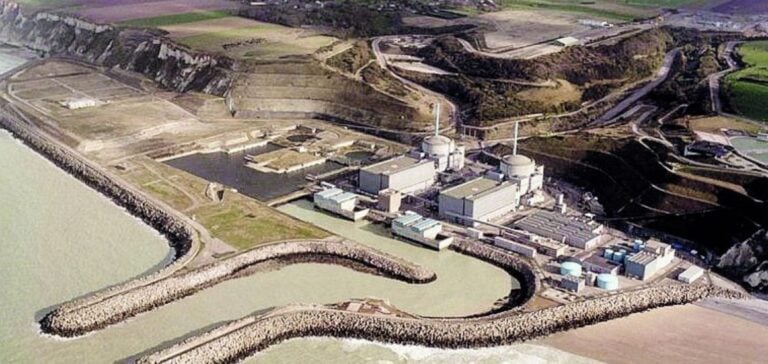
EDF, the incumbent electric utility, has already received the go-ahead for preparatory work on the first two EPR2 plants at Penly (Seine-Maritime). Additional reactors are planned for Gravelines and the Bugey site, although the locations of the eight new reactors have not yet been determined. The success of this program will depend on the industry’s ability to meet deadlines and costs, while guaranteeing high standards of safety and performance.

Impact on Energy Transition

The addition of eight nuclear reactors represents a significant step towards cleaner, more sustainable energy. By diversifying its energy sources, France aims to reduce its dependence on fossil fuels, thereby helping to combat climate change. Nuclear power, with its low CO2 emissions, plays a central role in this strategy.
Investment in nuclear power is also seen as a way of revitalizing the industry and creating highly-skilled jobs. This initiative could position France as a world leader in nuclear energy, while strengthening national energy security.
The nuclear revival program is ambitious and complex, requiring close coordination between the government, EDF and all the players in the industry. The success of this project will depend on an ongoing commitment to training skills, investing in research and maintaining high standards of safety and innovation.
Texas-based developer Natura Resources receives new federal funding to test key components of its 100-megawatt modular reactor in partnership with Oak Ridge National Laboratory.
The Niigata regional assembly is deliberating on restarting unit 6 of the world’s largest nuclear plant, thirteen years after operations ceased following the Fukushima disaster.
Reactor Doel 2 was taken offline, becoming the fifth Belgian reactor to cease operations under the country’s gradual nuclear phase-out policy.
Rolls-Royce SMR has expanded its partnership with ÚJV Řež to accelerate the deployment of small modular reactors, targeting the construction of several units in the Czech Republic and abroad.
The Indian government aims to amend legislation to allow private companies to participate in civil nuclear development, a move positioned as critical to achieving the country’s long-term energy targets.
The VVER-1200 nuclear reactor at Xudabao 4 in China has completed installation of its final passive water tank, marking the end of modular construction for the second phase of the project.
Ottawa and Edmonton commit to a nuclear production roadmap by 2050, through a memorandum of understanding also covering carbon capture and an Indigenous-led pipeline project.
Niamey asserts control over its uranium resources by authorising open market sales of Somaïr’s production, formerly operated by France’s Orano, amid ongoing legal disputes.
Equinix has signed a strategic agreement with French start-up Stellaria to reserve 500 MWe of advanced nuclear capacity to power its future European AI data centres starting in 2035.
Bishkek plans to host a RITM-200N small modular reactor supplied by Rosatom to address electricity shortages and deepen energy ties with Moscow, despite the risks posed by Western sanctions.
The Niigata prefectural assembly will vote on the restart of Unit 6, potentially marking TEPCO’s first reactor relaunch since the 2011 Fukushima disaster.
The Norwegian government has initiated a consultation with neighbouring countries on its modular nuclear power plant project in Aure and Heim, in accordance with the Espoo Convention.
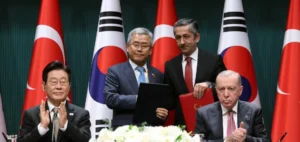
Türkiye and South Korea have signed a memorandum of understanding to jointly explore nuclear power plant projects, marking a strategic step in the long-term development of Türkiye's energy infrastructure.
Asian Development Bank has amended its energy policy to enable funding for civil nuclear projects in developing member countries across the Asia-Pacific region.
First Hydrogen begins research with the University of Alberta to identify molten-salt mixtures simulating nuclear fuels for SMR prototypes.
Framatome has completed the manufacturing of the first nuclear fuel assemblies for the Barakah power plant, marking a key milestone in the supply agreement signed with Emirates Nuclear Energy Company in July.
A government-commissioned report proposes 47 measures to simplify nuclear regulation, reduce decommissioning costs and accelerate delivery of civilian and military projects.
The Hualong One reactor at Zhangzhou nuclear power plant has been connected to the grid, marking a major milestone in the expansion of China’s civilian nuclear programme.
Russian state nuclear group Rosatom has validated the additive manufacturing of parts for its small modular reactors, marking an industrial first for RITM-200 SMR plant equipment.
California-based Maritime Fusion, backed by Y Combinator and Trucks VC, is betting on a decentralised approach to fusion to target maritime and off-grid applications.

All the latest energy news, all the time

Annual subscription

8.25€/month*

*billed annually at 99€/year for the first year then 149,00€/year ​

Unlimited access - Archives included - Pro invoice

Monthly subscription

Unlimited access • Archives included

5.2€/month*
then 14.90€ per month thereafter

*Prices shown are exclusive of VAT, which may vary according to your location or professional status.

Since 2021: 30,000 articles - +150 analyses/week.