Rosatom receives approval to 3D-print SMR components
Russian state nuclear group Rosatom has validated the additive manufacturing of parts for its small modular reactors, marking an industrial first for RITM-200 SMR plant equipment.
| Sectors | Nuclear Energy, SMR |
|---|---|
| Themes | Innovation & Transformation, Sector Innovation |
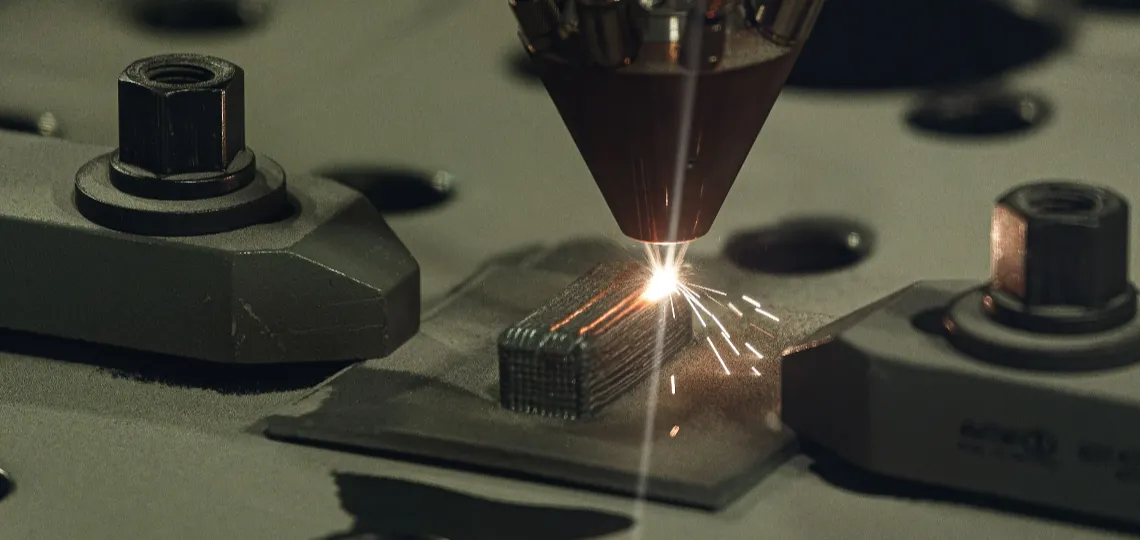
Rosatom has received regulatory approval to manufacture reactor elements using 3D printing, a first in the Russian nuclear sector. The first component produced is a terminal box, manufactured by the Afrikantov Experimental Design Bureau of Mechanical Engineering (OKBM), a subsidiary of the state-owned group. This component will be integrated into the RITM-200 small modular reactor (SMR) plant, used notably on Russian nuclear-powered icebreakers.
Tested and certified by regulatory authorities
Prototypes underwent a full range of industrial tests before receiving official certification from the Russian Maritime Register of Shipping. Rosatom stated that the required regulatory documentation has now been approved, paving the way for the production of more complex components using additive manufacturing. This technology creates parts by layering material, thus reducing production time, weight, and potentially costs compared to traditional manufacturing methods such as casting or mechanical processing.
Towards industrial adoption of 3D printing
Yuri Vytnov, Chief Technologist at Afrikantov OKBM, said that this initial approval opens the door for the broader use of 3D printing across various nuclear power equipment types. According to him, this technical progress also enables the integration of such technologies across other segments of the nuclear industry.
Rosatom, through its Additive Technologies Business Unit, sees this innovation as a tool to improve the technical performance of components. Ilya Kavelashvili, Director of the division, stated that this approach enables the creation of parts with optimised geometry that are more efficient and reliable.
A development aligned with international trends
3D printing is already being used in civil nuclear sectors in several countries. In Slovenia, a 3D-printed pump impeller was installed in 2017, while in the United States, Oak Ridge National Laboratory manufactured metallic fasteners for a reactor in 2021. In 2022, Framatome installed a 3D-printed stainless steel component at Sweden’s Forsmark nuclear power plant.
In addition to Russia, countries such as the United Kingdom and South Korea are also exploring the integration of this technology into nuclear equipment manufacturing. For Rosatom, this first certification may represent a step toward standardising additive printing across its entire nuclear production chain.