Poland constractualizes its nuclear park

Poland reaches agreement with Westinghouse for the implementation of the first AP1000 nuclear reactors.

Share:

Comprehensive energy news coverage, updated nonstop

Annual subscription

8.25$/month*

*billed annually at 99$/year for the first year then 149,00$/year ​

Unlimited access • Archives included • Professional invoice

OTHER ACCESS OPTIONS

Monthly subscription

Unlimited access • Archives included

5.2$/month*
then 14.90$ per month thereafter

FREE ACCOUNT

3 articles offered per month

FREE

*Prices are excluding VAT, which may vary depending on your location or professional status

Since 2021: 35,000 articles • 150+ analyses per week

Poland reaches agreement with Westinghouse for the implementation of the first AP1000 nuclear reactors.

A nuclear agreement

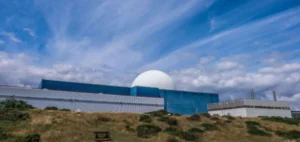
Poland seeks Westinghouse to build the first nuclear reactor with Polskie Elektrownie Jądrowe. This agreement defines the main principles and the process for the first Polish reactors. Thus, the agreement provides for site development, licensing and building permit support.

In addition, the contract also provides for development services, procurement, and future project delivery contracts. In addition, a second agreement could be reached before mid-2023 for the design of the future power plant in Pomerania. The decision is aimed at obtaining safe and reliable energy, while contributing to the reduction of emissions.

In Poland, the construction of these first nuclear reactors is part of the government’s current policy. The country had been considering a civilian nuclear program for several years. Russia’s invasion of Ukraine is the trigger for the implementation of this policy.

Multiple projects

Today, Poland plans to host three nuclear sites, each with three reactors. They would provide about 30% of the country’s energy mix for a maximum power of about 15GW. The AP1000 is the only Generation III+ reactor with fully passive safety systems.

The Westinghouse AP1000 reactor features a modular construction design. In addition, it has the smallest footprint per MWe on the market. Two AP1000 units are being completed at the Vogtle site in the United States.

In addition, four other units are operational in China and four others are under construction. Other units are being studied at other sites in Central and Eastern Europe. Finally, other projects are being developed in the United Kingdom and the United States.
Electricité de France's Flamanville 3 reactor has reached full power for the first time, marking a key industrial milestone in the deployment of EPRs in Europe, despite cost overruns reaching EUR23.7bn ($25.7bn).
GE Vernova Hitachi’s BWRX-300 small modular reactor has passed a key regulatory hurdle in the United Kingdom, opening the door to potential commercial deployment, despite no current plans for construction.
Molten salt reactor developer Natura Resources has acquired Shepherd Power and partnered with NOV to scale up modular reactor manufacturing by the next decade.
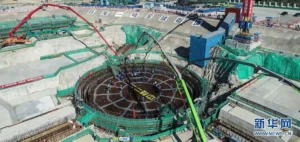
China National Nuclear Corporation expects commercial operation in 2026 for its ACP100 reactor, following successful cold testing and completion of critical structures in 2025.
Start-up SEATOM has been selected to join NATO's DIANA programme with its micro nuclear reactor designed for extreme environments, reinforcing its position in dual-use marine and military energy technologies.
The Estonian Ministry of Economic Affairs has opened a tender to select a site and conduct initial environmental studies for a 600 MW nuclear power plant, marking a decisive step for the country’s energy future.
The European Commission has approved Poland's financial support plan for its first nuclear power plant, a €42bn project backed by public funding, state guarantees, and a contract for difference mechanism.
Six European nuclear authorities have completed the second phase of a joint review of the Nuward modular reactor, a key step toward aligning regulatory frameworks for small nuclear reactors across Europe.
US fusion energy leaders have called on the federal government to redirect public funding towards their projects, arguing that large-scale investment is needed to stay competitive with China.
Santee Cooper has approved a memorandum of understanding with Brookfield Asset Management to assess the feasibility of restarting two unfinished nuclear reactors, with a potential $2.7 billion payment and 550 MW capacity stake.
Helical Fusion has signed a landmark agreement with Aoki Super to supply electricity from fusion, marking a first in Japan’s energy sector and a commercial step forward for the helical stellarator technology.
India’s nuclear capacity is expected to grow by more than 13,000 MW by 2032, driven by ongoing heavy water reactor construction, new regional projects and small modular reactor development by the Bhabha Atomic Research Centre.
NextEra Energy has lifted its earnings estimates for 2025 and 2026, supported by power demand linked to long‑term contracts previously signed with Google and Meta to supply their artificial intelligence data centres with low‑carbon electricity.
London launches a complete regulatory overhaul of its nuclear industry to shorten authorisation timelines, expand eligible sites, and lower construction and financing costs.
Finland's Ministry of Economic Affairs extends the deadline to June 2026 for the regulator to complete its review of the operating licence for the Olkiluoto spent nuclear fuel repository.
Framatome will replace several digital control systems at the Columbia plant in the United States under a contract awarded by Energy Northwest.
The conditional green light from the nuclear regulator moves Cigéo into its final regulatory stage, while shifting the risks towards financing, territorial negotiations and industrial execution.
The drone strike confirmed by the IAEA on the Chernobyl site vault exposes Ukraine to a nuclear risk under armed conflict, forcing the EBRD to finance partial restoration while industry standards must now account for drone threats.
Deep Fission is installing a 15 MWe pressurised reactor 1.6 km underground at Great Plains Industrial Park, under the Department of Energy’s accelerated pilot programme, targeting criticality by July 4, 2026.
EDF commits to supply 33 MW of nuclear electricity to Verkor over 12 years, enabling the battery manufacturer to stabilise energy costs ahead of launching its first Gigafactory.

All the latest energy news, all the time

Annual subscription

8.25$/month*

*billed annually at 99$/year for the first year then 149,00$/year ​

Unlimited access - Archives included - Pro invoice

Monthly subscription

Unlimited access • Archives included

5.2$/month*
then 14.90$ per month thereafter

*Prices shown are exclusive of VAT, which may vary according to your location or professional status.

Since 2021: 30,000 articles - +150 analyses/week.