Rising energy prices in 2022: Europeans lose their carefree attitude

With the energy crisis, Europeans have changed their energy consumption. Can we speak of an awareness?

Share:

Comprehensive energy news coverage, updated nonstop

Annual subscription

8.25£/month*

*billed annually at 99£/year for the first year then 149,00£/year ​

Unlimited access • Archives included • Professional invoice

OTHER ACCESS OPTIONS

Monthly subscription

Unlimited access • Archives included

5.2£/month*
then 14.90£ per month thereafter

FREE ACCOUNT

3 articles offered per month

FREE

*Prices are excluding VAT, which may vary depending on your location or professional status

Since 2021: 35,000 articles • 150+ analyses per week

In 2022, a new generation of Belgians, French and Italians will have lost their carefree attitude towards energy and will have learned to watch their radiators. In the old world, gas was abundant and cheap. Its reference price on the European market varied little, around 20 euros per megawatt-hour. This year, it rose to 300 before falling back to 100 euros…

Sofie de Rous is the first to admit it: before this year, it was a bit like Versailles at home, a small house in
the Belgian coast, often heated to 21°C: “I admit, I like a warm house”. But like millions of Europeans, this 41-year-old communicator in an architecture agency saw her bill skyrocket from the spring, after the invasion of Ukraine by Russia, with the gradual closure of Russian gas pipelines to Europe.

Indeed, gas prices have surged, shaking up world markets, with a very real and expensive consequence: Europe and Asia are bidding against each other to snatch up cargoes of liquefied natural gas (LNG) produced in the United States, Qatar or elsewhere.

And while countries like Spain and France have frozen rates for consumers, others like Belgium have more or less let suppliers pass on the increase to their customers.

“I panicked a bit,” says Sofie, owner of her poorly insulated 90-square-meter house in Oostduinkerke, heated by a gas boiler. She was paying 120 euros per month before the war for gas and electricity: her bill has increased to 330 euros.

On reflection, she does not regret this “realization”. Today she watches her consumption, heats at 18°C, and asks for information about installing solar panels and double glazing… Like Sofie, a new generation of Belgians, French or Italians has lost its energy carefree attitude in 2022 and learned to watch its radiators.

In the old world, gas was abundant and cheap. Its reference price on the European market varied little, around 20 euros per megawatt-hour. This year, it rose to 300 before falling back to 100 euros…

“I’ve never known such a chaotic period,” Graham Freedman, an analyst at Wood Mackenzie, which has been monitoring the natural gas market for 40 years, told AFP.

Extreme” reductions:

Because of the crazy prices, factories, especially in the German chemical industry, which had been fuelled by eastern gas since the Soviet era, were shut down. However, European reserves were filled to the brim last summer with the last cubic meters of Russian gas, and no one was cut off.

“Until February, the very idea that Europe could get by without Russian energy seemed impossible,” recalls Simone Tagliapietra, of the Bruegel think-tank in Brussels. “The impossible has become possible”.

Europeans were lucky: the mild autumn weather delayed the lighting of the boilers. In any case, the decline in household and business consumption is exceptional: around 25% in October compared to 2019-2021 in
the European Union, calculates Bruegel.

Half of all Germans have gas boilers, and their decrease in consumption is “extreme, enormous”, confirms Lion Hirth, professor of energy policy at the Hertie School in Berlin. He sees it as a desire “not to pay Putin”, as much as to reduce the bills.

In a few months, Russia has thus lost its first gas customer, Europe, whose purchases have fallen from 191 billion cubic meters in 2019 to 90 billion this year, and probably 38 next year, predicts Wood Mackenzie. It was necessary to compensate with LNG, which the EU used to ignore because it was more expensive.

With a perverse effect: “Europe began to pay more for gas than Asia, and countries like India and Pakistan could not compete,” says Graham Freedman. The climate consequence: without LNG, these less wealthy countries are burning more coal.

And 2023?

To unload LNG from LNG tankers, port terminals are needed that can regasify it and reinject it into the onshore networks. Germany had none, France and Spain several.

This gives a new role to the gas pipelines in the north-east of France, which were traditionally used to import gas from the east, and now send the gas imported via Fos-sur-Mer or Saint-Nazaire eastwards, and for the first time towards Germany.

“We send much more gas to Switzerland,” which then sends it back to Italy and Germany, Guillaume Tuffigo, from GRTgaz, which manages the French gas pipelines, explained to AFP while showing AFP around a compression station in eastern France, lost in the Vosges countryside, one of the essential links in this new European solidarity. For the next winter, and the following ones, there will be no more Russian gas to fill the reserves. The colder the winter, the more LNG will have to be bought from spring onwards… and the more “the fight” between Europe and Asia will intensify, Laura Page, a gas specialist at Kpler, told AFP.

“There is not enough gas in the world to replace Russian gas,” agrees Graham Freedman.

It is only around 2025 or 2026 that new LNG projects will produce millions of additional tons. By then, will Europeans have learned to live at 18°C?
Several scenarios are under review to regain control of CEZ, a key electricity provider in Czechia, through a transaction estimated at over CZK200bn ($9.6bn), according to the Minister of Industry.
The government has postponed the release of the new Multiannual Energy Programme to early 2026, delayed by political tensions over the balance between nuclear and renewables.
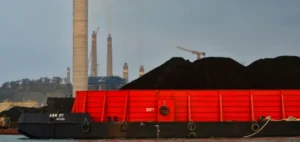
Indonesia plans $31bn in investments by 2030 to decarbonise captive power, but remains constrained by coal dependence and uncertainty over international financing.
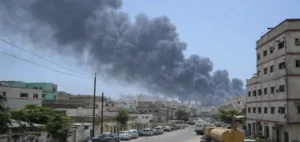
A drone attack on the Al-Muqrin station paralysed part of Sudan's electricity network, affecting several states and killing two rescuers during a second strike on the burning site.
The Bolivian government eliminates subsidies on petrol and diesel, ending a system in place for twenty years amid budgetary pressure and dwindling foreign currency reserves.
Poland’s financial watchdog has launched legal proceedings over suspicious transactions involving Energa shares, carried out just before Orlen revealed plans to acquire full ownership.
The Paris Council awards a €15bn, 25-year contract to Dalkia, a subsidiary of EDF, to operate the capital’s heating network, replacing long-time operator Engie amid political tensions ahead of municipal elections.
Norway’s energy regulator plans a rule change mandating grid operators to prepare for simultaneous sabotage scenarios, with an annual cost increase estimated between NOK100 and NOK300 per household.
The State of São Paulo has requested the termination of Enel Distribuição São Paulo’s concession, escalating tensions between local authorities and the federal regulator amid major political and energy concerns three years before the contractual expiry.
Mauritania secures Saudi financing to build a key section of the “Hope Line” as part of its national plan to expand electricity transmission infrastructure inland.
RESourceEU introduces direct European Union intervention on critical raw materials via stockpiling, joint purchasing and export restrictions to reduce external dependency and secure strategic industrial chains.
The third National Low-Carbon Strategy enters its final consultation phase before its 2026 adoption, defining France’s emissions reduction trajectory through 2050 with sector-specific and industrial targets.
Germany will allow a minimum 1.4% increase in grid operator revenues from 2029, while tightening efficiency requirements in a compromise designed to unlock investment without significantly increasing consumer tariffs.
Facing a structural electricity surplus, the government commits to releasing a new Multiannual Energy Programme by Christmas, as aligning supply, demand and investments becomes a key industrial and budgetary issue.
A key scientific report by the United Nations Environment Programme failed to gain state approval due to deep divisions over fossil fuels and other sensitive issues.
RTE warns of France’s delay in electrifying energy uses, a key step to limiting fossil fuel imports and supporting its reindustrialisation strategy.
India’s central authority has cancelled 6.3 GW of grid connections for renewable projects since 2022, marking a tightening of regulations and a shift in responsibility back to developers.
The Brazilian government has been instructed to define within two months a plan for the gradual reduction of fossil fuels, supported by a national energy transition fund financed by oil revenues.
The German government may miss the January 2026 deadline to transpose the RED III directive, creating uncertainty over biofuel mandates and disrupting markets.
Italy allocated 82% of the proposed solar and wind capacities in the Fer-X auction, totalling 8.6GW, with competitive purchase prices and a strong concentration of projects in the southern part of the country.

All the latest energy news, all the time

Annual subscription

8.25£/month*

*billed annually at 99£/year for the first year then 149,00£/year ​

Unlimited access - Archives included - Pro invoice

Monthly subscription

Unlimited access • Archives included

5.2£/month*
then 14.90£ per month thereafter

*Prices shown are exclusive of VAT, which may vary according to your location or professional status.

Since 2021: 30,000 articles - +150 analyses/week.