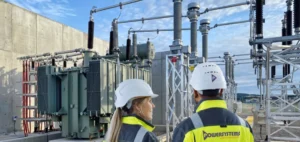
Fuel Shortages Affect Many Critical Sectors

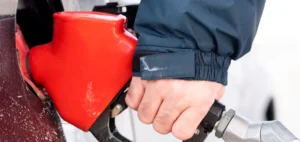
The strike in the energy sector and the resulting fuel shortages or rationing are weighing on operations.

Share:

Comprehensive energy news coverage, updated nonstop

Annual subscription

8.25€/month*

*billed annually at 99€/year for the first year then 149,00€/year ​

Unlimited access • Archives included • Professional invoice

OTHER ACCESS OPTIONS

Monthly subscription

Unlimited access • Archives included

5.2€/month*
then 14.90€ per month thereafter

FREE ACCOUNT

3 articles offered per month

FREE

*Prices are excluding VAT, which may vary depending on your location or professional status

Since 2021: 35,000 articles • 150+ analyses per week

The strike in the energy sector and the resulting fuel shortages or rationing are impacting operations and workers who are heavily dependent on vehicle travel.

This is a burden in addition to the increase in fuel and energy prices, but its impact on the French economy is still difficult to measure.

According to INSEE, 74% of people who travel to work use their car.

“It is a problem of stress but also a problem of cost because it increases the tension on a market that did not need it and it weighs on the purchasing power of employees,” said Fabrice Le Saché, vice-president and spokesman of Medef.

“Panic” among caregivers and firefighters

Certain emergency vehicles (firefighters, police, SAMU or gendarmerie) are considered as priority. Liberal caregivers (doctors, nurses, home care workers, and seniors’ aides) are demanding that they too have this access.

Firefighters in the Rhône region have asked for measures to allow them to buy fuel to reach their fire stations and thus ensure “continuity of service”.

Apart from health and firefighters, other sectors are asking for the release of additional strategic stocks from the State to maintain their activity.

Transportation “very concerned”

“There is a problem for all companies that have vehicle fleets,” summarizes Fabrice Le Saché.

Road hauliers are “on the edge”, according to the professional organization Otre. The companies have their own tanks but “always have difficulties to be delivered” in time and in quantity.

Some gas stations also refuse to serve or restrict access to trucks.

“We have carriers who have mobilized employees and a delivery service to refuel vehicles during the night … to hope to be able to leave the next morning for deliveries,” says François Asselin, president of the Confederation of SMEs, also mentioning difficulties for maintenance services, breakdown services and cabs.

FlixBus long-distance coaches have requested priority access for their area. Several driving schools have also raised the alarm, with instructors forced to wait in line for hours to fill up.

The wholesalers are “very worried” and anticipate “severe disruptions in deliveries” from Friday, most do not have storage tanks. Some companies have moved up their start times early in the morning to find fuel.

“No seedlings” for agriculture

In the north of France, farmers have exhausted their reserves of RNG (non-road diesel) and are seeing their deliveries rationed: no more than 1,000 liters in the Marne or in Flanders.

Several farms are or will be shut down in the coming days, warned the farmers’ federations, denouncing “a hostage situation” at a critical time.

“If we don’t do the sowing of cereals, it will have an impact on the availability of wheat in 2023 and therefore on bread. We are on alert, because the sowing is now, not in ten days or a month,” explained Joel Limouzin, vice president of the majority agricultural union FNSEA.

Another blow for the building industry

Some construction sites have already been suspended, reports François Asselin of the CPME.

“In the construction industry, excavators and machines need a lot of fuel, the places most affected by shortages are the Ile-de-France and the Hauts de France, with also employees who can not reach their sites, “said the president of the building trades (CAPEB) Jean-Christophe Repon.

It asks the government the possibility of obtaining partial activity measures by territory as was the case for Covid-19.

Business and leisure, collateral victims

For Fabrice Le Saché, there is an impact on “leisure, restaurants, shopping centers and trade in general, tertiary activities …

There are people who freeze their weekends and therefore do not consume and do not travel.” “Activity during the week of September 26 was very good (…) but it is down 6% compared to last year during the following week,” especially in outlying areas where consumers drive, added Yohann Petiot, Alliance’s general manager for the
commerce, which includes department stores and clothing and footwear brands.

“The logistics of the brands are under tension and this has the effect of slowing down the activity for some stores (…) For all that, the supply of the stores remains fully assured”, assured the
federation of commerce and distribution.
Amid rising public spending, the French government has tasked two experts with reassessing the support scheme for renewable electricity and storage, with proposals expected within three months.
National operator PSE partners with armed forces to protect transformer stations as critical infrastructure faces sabotage linked to foreign interference.
The Norwegian government establishes a commission to anticipate the decline of hydrocarbons and assess economic options for the country in the coming decades.
Kazakhstan plans to allocate 3 GW of wind and solar projects by the end of 2026 through public tenders, with a first 1 GW tranche in 2025, amid efforts to modernise its power system.
Hurricanes Beryl, Helene and Milton accounted for 80% of electricity outages recorded in 2024, marking a ten-year high according to federal data.
The French Energy Regulatory Commission introduces a temporary prudential control on gas and electricity suppliers through a “guichet à blanc” opening in December, pending the transposition of European rules.
The Carney–Smith agreement launches a new pipeline to Asia, removes oil and gas emission caps, and initiates reform of the Pacific north coast tanker ban.
The gradual exit from CfD contracts is turning stable assets into infrastructures exposed to higher volatility, challenging expected returns and traditional financing models for the renewable sector.
The Canadian government introduces major legislative changes to the Energy Efficiency Act to support its national strategy and adapt to the realities of digital commerce.
Quebec becomes the only Canadian province where a carbon price still applies directly to fuels, as Ottawa eliminated the public-facing carbon tax in April 2025.
New Delhi launches a 72.8 bn INR incentive plan to build a 6,000-tonne domestic capacity for permanent magnets, amid rising Chinese export restrictions on critical components.
The rise of CfDs, PPAs and capacity mechanisms signals a structural shift: markets alone no longer cover 10–30-year financing needs, while spot prices have surged 400% in Europe since 2019.
Germany plans to finalise the €5.8bn ($6.34bn) purchase of a 25.1% stake in TenneT Germany to strengthen its control over critical national power grid infrastructure.
The Ghanaian government is implementing a reform of its energy system focused on increasing the use of local natural gas, aiming to reduce electricity production costs and limit the sector's financial imbalance.
On the 50th anniversary of its independence, Suriname announced a national roadmap including major public investment to develop its offshore oil reserves.
In its latest review, the International Energy Agency warns of structural blockages in South Korea’s electricity market, calling for urgent reforms to close the gap on renewables and reduce dependence on imported fossil fuels.
China's power generation capacity recorded strong growth in October, driven by continued expansion of solar and wind, according to official data from the National Energy Administration.
The 2026–2031 offshore programme proposes opening over one billion acres to oil exploration, triggering a regulatory clash between Washington, coastal states and legal advocacy groups.
The government of Mozambique is consolidating its gas transport and regasification assets under a public vehicle, anchoring the strategic Beira–Rompco corridor to support Rovuma projects and respond to South Africa’s gas dependency.
The British system operator NESO initiates a consultation process to define the methodology of eleven upcoming regional strategic plans aimed at coordinating energy needs across England, Scotland and Wales.

All the latest energy news, all the time

Annual subscription

8.25€/month*

*billed annually at 99€/year for the first year then 149,00€/year ​

Unlimited access - Archives included - Pro invoice

Monthly subscription

Unlimited access • Archives included

5.2€/month*
then 14.90€ per month thereafter

*Prices shown are exclusive of VAT, which may vary according to your location or professional status.

Since 2021: 30,000 articles - +150 analyses/week.