Shell: New CEO, New Strategy

Starting in January, Shell will welcome a new CEO. He will have the difficult task of accelerating the group's energy transition. While oil and gas are still important to the company, it intends to develop renewable energies to catch up.

Share:

Comprehensive energy news coverage, updated nonstop

Annual subscription

8.25$/month*

*billed annually at 99$/year for the first year then 149,00$/year ​

Unlimited access • Archives included • Professional invoice

OTHER ACCESS OPTIONS

Monthly subscription

Unlimited access • Archives included

5.2$/month*
then 14.90$ per month thereafter

FREE ACCOUNT

3 articles offered per month

FREE

*Prices are excluding VAT, which may vary depending on your location or professional status

Since 2021: 35,000 articles • 150+ analyses per week

Shell is making a major strategic shift. Wael Sawan will be the new CEO of Shell as of January 1. It should accelerate the company’s efforts to develop renewable energy. Shell has been able to take advantage of the surge in energy prices, but its renewable energy capacity is limited.

Thus, W. Sawan will have the heavy task of catching up. The company aims to reduce its greenhouse gas emissions by half by 2030. By 2050, Shell aims to be a net zero emitter. It has already launched measures in this direction.

Accelerating the energy transition

Wael Sawan must therefore develop his strategy, the one that will propel Shell on the path of renewable energy and energy transition. According to a company spokesperson, he is expected to continue the strategy he launched in his current role. One thing is for sure, its “implementation will be as dynamic under the new CEO as it has been under the current one”.

Nevertheless, some sources believe that the new CEO will go even faster on the energy transition. W. Sawan should, in fact, expand Shell’s renewable energy portfolio.

The task is then complicated. In fact, his predecessor reaffirmed Shell’s major role in the LNG sector as soon as he arrived. Thus, in 2014, it acquired BG Group for $53 billion. As a result, Shell remains highly dependent on oil and gas. Its renewable energy and energy solutions division accounted for only 6% of the group’s Q2 profits.

Wael Sawan, symbol of Shell’s transition?

Shell has been developing a new strategy for the past few months. In fact, Wael Sawan and Ben van Beurden want to develop wind and solar energy production. Thus, a strategic shift seems to be taking place.

In August, Shell announced theacquisition of Sprng Energy for $1.55 billion. An Indian company specializing in renewable energy, it has a portfolio of over 10 GW of projects. These are in the process of being acquired, or still to be built. This acquisition allows Shell to triple its capacity, overtaking BP.

This acquisition symbolizes the turning point in Shell’s strategy, embodied by the arrival of W. Sawan as CEO. Until now, Shell has simply purchased low-carbon electricity for resale.

Within the company, a source comments:

“It’s a big change for us to say that we now have to get into renewable energy generation. We need a long period of renewable energy generation for our commercial capabilities and to meet our customers’ needs.”

While the task ahead is complicated, Wael Sawan can rely on the group’s strong record. Thus, it can engage in large-scale acquisitions. A source close to Shell adds:

“Shell will be in a strong position to deliver a transformative renewable energy deal in 2023 and beyond.”

An energy transition synonymous with competition

The energy transition is at the heart of the various strategies implemented by the energy sector industries. Shell, like all other companies, intends to accelerate its energy transition. Thus, strong competition is expected for the acquisition of assets. As a result, the cost of the latter should rise.

In addition, Shell is lagging behind its European rivals. In recent years, the company has remained more than cautious about renewable assets.

In fact, prior to the Sprng acquisition, Shell had only 1.1 GW of renewable energy in operation and 4.6 GW under construction. For comparison, by mid-2022, TotalEnergies had more than 9.5 GW of generating capacity (in operation or under construction). BP had 6.4 GW.

According to some sources, Shell’s caution is due to the many internal criteria of the group. Thus, no major company in the sector has met these acquisition criteria.

However, Shell has considered one option: RWE. The market capitalization of the German company is 28 billion euros. However, such an operation is very unlikely. In fact, in addition to renewable energies, RWE is active in the coal and nuclear sectors. Shell would not be interested in these areas.

What strategy for Wael Sawan?

Wael Sawan is expected to present his strategy, focusing on renewable energy, in the middle of next year. A source close to the company says:

“Wael has decided on the current strategy with the board of directors, but if he thinks there is a need for change when he arrives, it will happen quickly.”

The group is still expected to rely on oil and gas production, although Shell’s oil production is expected to decline from its record high in 2019. In addition to oil, it is highly unlikely that W. Sawan will desert the natural gas and LNG business. Especially since, in the context of the energy crisis, demand for gas and LNG is expected to remain high in the years to come.

At the same time, Shell is increasingly allocating resources to renewable energy. One source states:

“There’s a lot of internal activity to build a renewable energy portfolio around the world.”

The company’s main focus is on research and development of new resources.
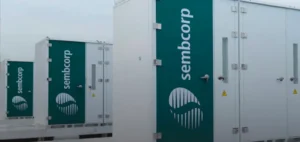
Singapore’s Sembcorp Industries has entered the Australian energy market with the acquisition of Alinta Energy in a deal valued at AU$6.5bn ($4.3bn), including debt.
Potentia Energy has secured $553mn in financing to optimise its operational renewable assets and support the delivery of six new projects totalling over 600 MW of capacity across Australia.
Drax plans to convert its 1,000-acre site in Yorkshire into a data centre by 2027, repurposing former coal infrastructure and existing grid connections.
EDF has inaugurated a synchronous compensator in Guadeloupe to enhance the stability of an isolated power grid, an unprecedented initiative aiming to reduce dependence on thermal plants and the risk of prolonged outages.
NGE and the Agence Régionale Énergie Climat Occitanie form a partnership to develop a heating and cooling network designed to support economic activity in the Magna Porta zone, with locally integrated production solutions.
GEODIS and EDF have signed a strategic partnership to cut emissions from logistics and energy flows, with projects planned in France and abroad.
The American oil group now plans to invest $20 billion in low-emission technologies by 2030, down from the $30 billion initially announced one year earlier.
BHP sells a minority stake in its Western Australia Iron Ore power network to Global Infrastructure Partners for $2 billion, retaining strategic control while securing long-term funding for its mining expansion.
More than $80bn in overseas cleantech investments in one year reveal China’s strategy to export solar and battery overcapacity while bypassing Western trade barriers by establishing industrial operations across the Global South.
Exxaro increases its energy portfolio in South Africa with new wind and solar assets to secure power supply for operations and expand its role in independent generation.
Plenitude acquires full ownership of ACEA Energia for up to €587mn, adding 1.4 million customers to its portfolio and reaching its European commercial target ahead of schedule.
ABB invests in UK-based start-up OctaiPipe to strengthen its smart energy-saving solutions for data centre infrastructure.
Enbridge has announced a 3% increase in its annual dividend for 2026 and expects steady revenue growth, with up to CAD20.8bn ($15.2bn) in EBITDA and CAD10bn ($7.3bn) in capital investment.
Axess Group has signed a memorandum of understanding with ARO Drilling to deliver asset integrity management services across its fleet, integrating digital technologies to optimise operations.
South African state utility Eskom expects a second consecutive year of profit, supported by tariff increases, lower debt levels and improved operations.
Equans Process Solutions brings together its expertise to support highly technical industrial sectors with an integrated offer covering the entire project lifecycle in France and abroad.
Zenith Energy centres its strategy on a $572.65mn ICSID claim against Tunisia, an Italian solar portfolio and uranium permits, amid financial strain and reliance on capital markets.
Ivanhoe Mines expects a 67% increase in electricity consumption at its copper mine in DRC, supported by new hydroelectric, solar and imported supply sources.
Q ENERGY France and the Association of Rural Mayors of France have entered a strategic partnership to develop local electrification and support France's energy sovereignty through rural territories.
ACWA Power, Badeel and SAPCO have secured $8.2bn in financing to develop seven solar and wind power plants with a combined capacity of 15 GW in Saudi Arabia, under the national programme overseen by the Ministry of Energy.

All the latest energy news, all the time

Annual subscription

8.25$/month*

*billed annually at 99$/year for the first year then 149,00$/year ​

Unlimited access - Archives included - Pro invoice

Monthly subscription

Unlimited access • Archives included

5.2$/month*
then 14.90$ per month thereafter

*Prices shown are exclusive of VAT, which may vary according to your location or professional status.

Since 2021: 30,000 articles - +150 analyses/week.