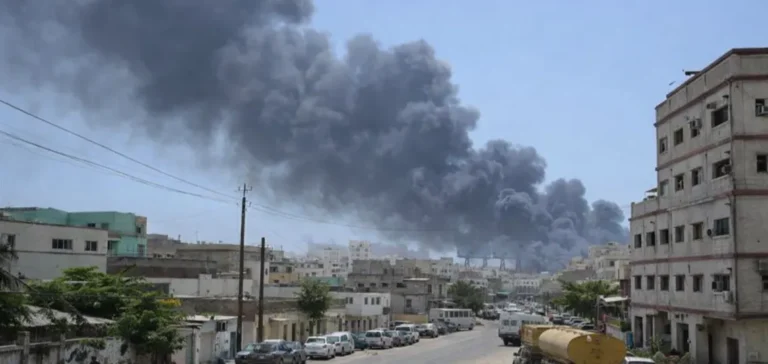

A series of drone strikes targeted the Al-Muqrin power station in Atbara, in Sudan’s Nile State, causing a major disruption to the national electricity network. The fire triggered by the attack led to outages in several major cities, including Khartoum and Port Sudan. Two emergency workers were killed while attempting to extinguish the fire when a second drone hit the area.
A strategic network hub targeted
Al-Muqrin is a key distribution node within Sudan’s electricity transmission network. It receives energy generated by the Merowe hydroelectric dam—the country’s largest facility—for redistribution to multiple regions. According to the national electricity company, the strikes directly hit the transformers, causing an immediate interruption of regional supply.
The Nile State government confirmed the death of the two rescuers, which occurred during the second explosion, minutes after their arrival at the site. No official figures have been released regarding the extent of the damage or the expected duration of the outages.
Power outages spread across several states
Witnesses reported that the regular army activated its air defence systems around 02:00 local time. Flames and thick smoke were visible above the power station. The fire remained uncontrolled several hours after the strikes.
The consequences quickly spread to the Nile and Red Sea States, as well as to the capital, Khartoum. Port Sudan, the coastal city serving as the seat of the army-aligned provisional government, also experienced a blackout. No official statement specified whether critical facilities such as hospitals or military sites had access to backup energy sources.
Energy system under pressure amid conflict
The armed conflict between the Sudanese Armed Forces and the Rapid Support Forces (RSF) began in April 2023. Since then, several civilian infrastructures, including electricity installations, have been regularly targeted. The RSF has been accused of intensifying drone attacks on army-held zones, although no claim has been made regarding this incident.
The vulnerability of energy infrastructure exposes the grid to prolonged disruptions, further complicating administrative and logistical management in regions still under government control. The impact on access to water, healthcare, and transport remains difficult to assess in the absence of full service restoration.