
The Nakhchivan Autonomous Republic now plays a strategic role in Azerbaijan’s national energy plan, focused on expanding renewable capacity and opening access to regional markets. Out of the country’s 9,732.5 megawatts (MW) of installed capacity, 1,829.6 MW, or about 19%, already come from renewable sources. The official goal is to reach 6,000 MW by 2030, with a 38% share in total installed capacity.
A local grid prepared for electricity exports
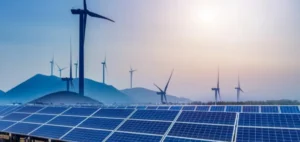
In this context, Nakhchivan shows notable progress. The region draws 44% of its installed capacity and 48% of its total electricity generation from renewable sources, surpassing the national average. These figures are expected to increase with the upcoming launch of a 50-MW solar plant and the Tivi and Ordubad hydropower stations.
This expansion is based on the “Green Energy Zone” framework, which identifies twelve regional priorities for the 2026–2030 period. Integration with the national grid was accelerated by Presidential Decree No. 235, signed on November 23, 2024, which transferred the production and transmission functions to Azerenergy Open Joint-Stock Company (OJSC).
Upgraded infrastructure and centralised control
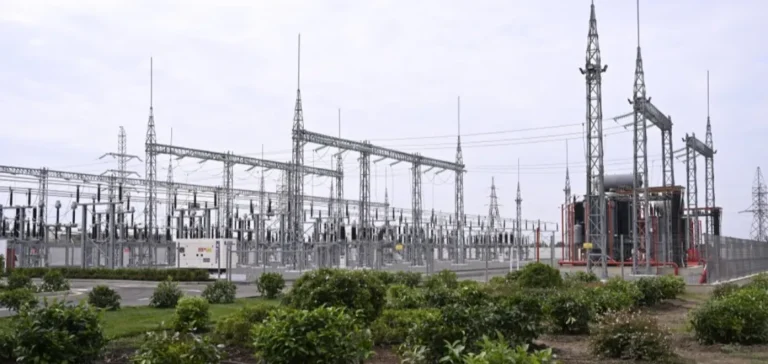
As part of this restructuring, Azerenergy created a subsidiary, Nakhchivan Energy LLC, employing over 400 local technicians. This entity supports the modernisation of the region’s entire electricity infrastructure. Several substations have been renovated, including those in Nakhchivan, Babak and Cheshmebasar, while a new indoor substation—the first of its kind in the country—is nearing completion.
The region is also building a SCADA (Supervisory Control and Data Acquisition) centre, enabling real-time network control. This digital deployment transforms the traditional energy model into an intelligent system, positioning Nakhchivan as a regional energy actor.
Strategic connection to European markets
One of the major pillars of the project is the construction of two high-voltage interconnection lines. The first will link Jabrayil to Nakhchivan (330 kV), and the second will connect Nakhchivan to Türkiye (400 kV), along with a converter station. This infrastructure supports the goal of exporting electricity to Europe via Turkish territory.
This direction marks a fundamental shift in the region’s role, transitioning from an energy consumer to a potential energy exporter. Currently, Nakhchivan operates five hydropower plants, three solar plants, one wind plant and one hybrid plant, generating nearly half of its electricity from renewable sources.
The ongoing investments reflect a long-term state strategy aimed at strengthening energy security, stimulating regional economic development and positioning Nakhchivan as an interconnection platform between Central Asia and Europe.