Vietnam proposes tax refunds to boost domestic bioethanol production

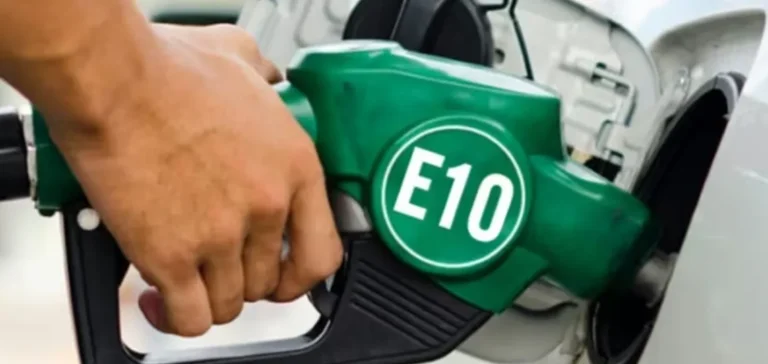
Hanoi is preparing a tax relief plan for biofuel producers to support domestic ethanol output ahead of the E10 mandate rollout planned for 2026.

Share:

Comprehensive energy news coverage, updated nonstop

Annual subscription

8.25$/month*

*billed annually at 99$/year for the first year then 149,00$/year ​

Unlimited access • Archives included • Professional invoice

OTHER ACCESS OPTIONS

Monthly subscription

Unlimited access • Archives included

5.2$/month*
then 14.90$ per month thereafter

FREE ACCOUNT

3 articles offered per month

FREE

*Prices are excluding VAT, which may vary depending on your location or professional status

Since 2021: 35,000 articles • 150+ analyses per week

Vietnam’s Ministry of Finance has proposed a draft regulation that would allow biofuel producers to claim refunds on special consumption tax for non-deducted mineral gasoline used in ethanol production. The measure aims to reduce financial pressure on local operators ahead of the nationwide E10 fuel mandate, scheduled to begin on January 1, 2026.

The draft circular, released for public consultation, outlines procedures for eligible companies to apply for tax refunds or carry forward tax credits related to ethanol blending. It includes administrative simplifications and introduces a clear implementation timeline, in line with the requirement to blend 10% ethanol into all gasoline distributed nationally.

Targeted support for sector players

Under the proposed rules, licensed producers can submit refund applications to local tax authorities if they cannot fully offset the tax against other taxable revenues. Refunds would then be processed by the state treasury based on decisions issued by tax authorities and following current procedures.

The regulation expands on existing frameworks under Decree 14/2019/ND-CP and Circular 80/2021/TT-BTC, while introducing adjustments to clarify documentation requirements and streamline application processing. First-time applicants must submit Form 01a/DNHT along with proof of a biofuel production license.

National capacity falls short of projected demand

Vietnam anticipates ethanol demand between 1.2 mn and 1.5 mn cu m per year once the E10 mandate is in place, while current domestic capacity stands at just 450,000 cu m annually. The shortfall is expected to be filled through imports, exposing the country to price volatility and global supply risks.

Only two out of six national ethanol plants are currently operational. The Dung Quat facility is scheduled to restart in November 2025, and authorities hope that tax incentives will encourage other sites to resume or expand operations to close the supply gap.

Regulatory alignment with energy targets

Producers will also have the option to offset tax credits instead of claiming refunds directly, providing financial flexibility for companies with diversified operations. The government aims to offer a more predictable market framework for sector investors.

Pilot E10 sales have already started in major cities, including Hanoi, Ho Chi Minh City and Hai Phong, with retailers such as Petrolimex and PV Oil involved. The gradual rollout is designed to prepare the market for full compliance with the E10 blending requirement starting in 2026.

The Ministry of Finance has set the end of October as the deadline for public feedback on the draft regulation. If approved, the rules would take effect in parallel with the E10 mandate, aligning fiscal support measures with national energy policy objectives.

Waga Energy has secured $180mn in senior debt over four years to develop its biomethane project portfolio at landfill sites in the United States.
Veolia launches a major project in Pozna aiming to fully replace coal with low-carbon local energy sources in district heating, with a first phase already operational showing 92% efficiency.
Veolia connects its Lapouyade site to RTE's secondary reserve using instant modulation technology, paving the way for rollout across 25 sites.
Erex will end the environmental assessment of a 300MW biomass project developed with ENEOS in Niigata due to rising costs and a weaker yen.
California-based start-up Erg Bio has closed a $6.5mn seed round to industrialise its Aspire™ technology, backed by Azolla Ventures, Chevron Technology Ventures, and Freeflow.
Haffner Energy presents the H6 generation, a biomass‑hydrogen system positioned as competitive against electrolysis, as the company seeks new investors amid financial pressure and a regulatory landscape focused on RFNBO.
Haffner Energy signs its first contract in the United States with OroCarbo to supply two SYNOCA® modules for an integrated biomethanol project scheduled for 2028 in California's Central Valley.
Argentina increased regulated prices for ethanol and biodiesel used in mandatory blending, directly impacting the local industry and domestic fuel market.
80 Mile PLC has completed the full acquisition of Ferrandina in Italy and signed three memorandums of understanding with major energy groups, securing the supply and processing of 120,000 tonnes of biofuels per year.
Fonds Bioénergie acquires a stake in Keridis BioEnergy to accelerate renewable natural gas production from agricultural and food residues across Québec.
The United States recorded a limited 3% increase in its annual biofuels production capacity in 2024, hindered by declining margins and the closure of several facilities.
Enilive aligns conversions in Italy, hubs in Asia and U.S. diversification, with rising HVO margins, integrated pretreatment and HVO/SAF offtakes tied to European requirements, supporting volumes, site utilization and operational guidance.
The Ille-et-Vilaine Departmental Energy Syndicate awarded ENGIE Solutions a €9.5mn ($10.01mn) contract to operate a 4.9 km heating network, scheduled for commissioning in 2027.
Vermont’s energy regulator authorises final review of a 2.2 MW project led by Clean Energy Technologies to convert agricultural waste into renewable electricity.
The increase in Brazil’s biodiesel blend mandate to 15% has reignited calls for stronger regulatory supervision as prices climb and budget constraints limit enforcement.
Waga Energy strengthens its presence in Brazil, betting on a rapidly structuring market where biomethane benefits from an incentive-based regulatory framework and strong industrial investment prospects.
John Cockerill and Axens launch NesaBTF, an industrial torrefaction technology designed to optimise biomass supply, with targeted ambitions in the growing sustainable aviation fuel market.
A R550mn grant enables Johannesburg to launch a waste-to-energy project with a 28 MW capacity under a 25-year public-private partnership model.
ENGIE signs a 15-year agreement with CVE Biogaz for the purchase of biomethane produced in Ludres, under the Biogas Production Certificates mechanism, marking a structuring step for the sector's development in France.
The first phase of a green methanol project in Inner Mongolia has successfully completed biomass gasifier technical tests, marking a key milestone in Goldwind's industrial deployment.

All the latest energy news, all the time

Annual subscription

8.25$/month*

*billed annually at 99$/year for the first year then 149,00$/year ​

Unlimited access - Archives included - Pro invoice

Monthly subscription

Unlimited access • Archives included

5.2$/month*
then 14.90$ per month thereafter

*Prices shown are exclusive of VAT, which may vary according to your location or professional status.

Since 2021: 30,000 articles - +150 analyses/week.