Kandla launches green methanol project to capture flows between Singapore and Rotterdam

Kandla port plans a 150,000-ton-per-year integrated renewable methanol unit, targeting the growing fleet of compliant vessels on the Singapore-Rotterdam maritime route.

Share:

Comprehensive energy news coverage, updated nonstop

Annual subscription

8.25$/month*

*billed annually at 99$/year for the first year then 149,00$/year ​

Unlimited access • Archives included • Professional invoice

OTHER ACCESS OPTIONS

Monthly subscription

Unlimited access • Archives included

5.2$/month*
then 14.90$ per month thereafter

FREE ACCOUNT

3 articles offered per month

FREE

*Prices are excluding VAT, which may vary depending on your location or professional status

Since 2021: 35,000 articles • 150+ analyses per week

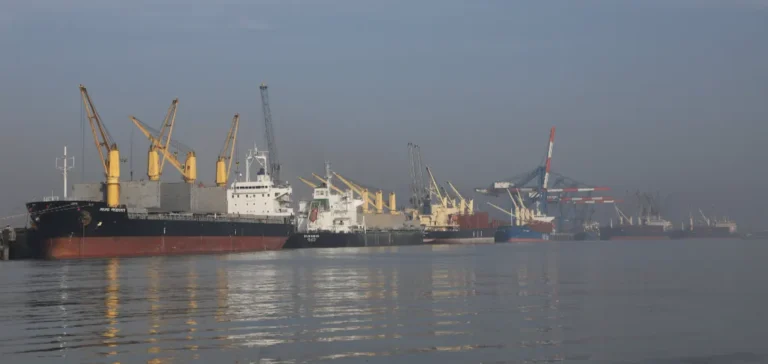
State-run Deendayal Port Authority is accelerating development plans for Kandla Port to establish it as a strategic bunkering hub for renewable methanol on the shipping corridor linking Singapore and Rotterdam. This route, already heavily used in global trade, is expected to see around 200 methanol-compatible vessels in the coming years, according to the port authority’s estimates.

Existing infrastructure and immediate capacity

Kandla already handles methanol as a conventional cargo, enabling a rapid conversion to maritime bunkering. Authority chairman Sushil Kumar Singh stated that the site is equipped with storage tanks, pipelines, and the regulatory infrastructure necessary to begin trials under controlled conditions. A readiness assessment conducted by classification society DNV rated the port between six and seven on the preparedness scale of the International Association of Ports and Harbors.

The authority plans to establish an eMethanol production facility with a capacity of 150,000 tons per year, using hydrogen derived from electrolysis. Singh noted that several industrial stakeholders have expressed interest in financing the project, contingent on securing offtake agreements. This output is expected to meet demand for an initial period of five to six years.

Competitive pricing offer and cross-subsidy model

In response to pricing pressure from major bunkering centres such as Singapore and Rotterdam, Kandla intends to implement a cross-subsidisation strategy. Any local production cost gap versus international prices would be covered through increased handling fees for other cargo transiting through the port. The objective is to offer renewable methanol at internationally competitive rates to attract maritime traffic.

The port authority has signed a memorandum of understanding with the Port of Rotterdam to jointly develop coordinated infrastructure supporting a green shipping corridor between the two ports. Singh added that vessels refuelling with methanol in Kandla would also contribute to diversified cargo flows by loading other goods at the port.

Ammonia expansion and energy access

In addition to methanol, the port aims to produce up to 5.6 million tons of renewable ammonia annually by 2031, using an estimated 1 million tons of electrolytic hydrogen. This dual-fuel strategy targets emerging fleets capable of operating on either very low sulfur fuel oil or alternative fuels.

The proposed infrastructure includes a 300 million litres per day desalination plant to supply electrolysis operations, along with secured access to renewable electricity. A capacity of 4.5 GW has already received initial approval, while the authority anticipates a total requirement of 12 GW to support full-scale ammonia production. Singh stated that necessary permits are currently being finalised.
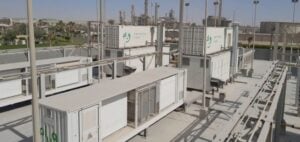

Plug Power has completed the installation of a 5 MW PEM electrolyzer for Cleanergy Solutions Namibia, marking the launch of Africa’s first fully integrated green hydrogen production and distribution site.
Indian group AM Green has signed a memorandum of understanding with Japanese conglomerate Mitsui to co-finance a one million tonne per year integrated low-carbon aluminium production platform.
Next Hydrogen completes a $20.7mn private placement led by Smoothwater Capital, boosting its ability to commercialise alkaline electrolysers at scale and altering the company’s control structure.
Primary Hydrogen plans to launch its initial drilling programme at the Wicheeda North site upon receiving its permit in early 2026, while restructuring its internal exploration functions.
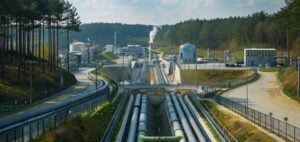
Gasunie and Thyssengas have signed an agreement to convert existing gas pipelines into hydrogen conduits between the Netherlands and Germany, facilitating integration of Dutch ports with German industrial regions.
The conditional power supply agreement for the Holmaneset project is extended to 2029, covering a ten-year electricity delivery period, as Fortescue continues feasibility studies.
HDF Energy partners with ABB to design a multi-megawatt hydrogen fuel cell system for vessel propulsion and auxiliary power, strengthening their position in the global maritime market.
SONATRACH continues its integration strategy into the green hydrogen market, with the support of European partners, through the Algeria to Europe Hydrogen Alliance (ALTEH2A) and the SoutH2 Corridor, aimed at supplying Europe with clean energy.
Operator GASCADE has converted 400 kilometres of gas pipelines into a strategic hydrogen corridor between the Baltic Sea and Saxony-Anhalt, now operational.
Nel ASA launches the industrial phase of its pressurised alkaline technology, with an initial 1 GW production capacity and EU support of up to EUR135mn ($146mn).
Peregrine Hydrogen and Tasmania Energy Metals have signed a letter of intent to install an innovative electrolysis technology at the future nickel processing site in Bell Bay, Tasmania.
Elemental Clean Fuels will develop a 10-megawatt green hydrogen production facility in Kamloops, in partnership with Sc.wén̓wen Economic Development and Kruger Kamloops Pulp L.P., to replace part of the natural gas used at the industrial site.
Driven by green hydrogen demand and state-backed industrial plans, the global electrolyser market could reach $42.4bn by 2034, according to the latest forecast by Future Market Insights.
Driven by mobility and alkaline electrolysis, the global green hydrogen market is projected to grow at a rate of 60 % annually, reaching $74.81bn in 2032 from $2.79bn in 2025.
Plug Power will supply a 5MW PEM electrolyser to Hy2gen’s Sunrhyse project in Signes, marking a key step in expanding RFNBO-certified hydrogen in southern France.
The cross-border hydrogen transport network HY4Link receives recognition from the European Commission as a project of common interest, unlocking access to funding and integration into Europe’s energy infrastructure.
The withdrawal of Stellantis weakens Symbio, which is forced to drastically reduce its workforce at the Saint-Fons plant, despite significant industrial investment backed by both public and private stakeholders.
German steelmaker Thyssenkrupp plans to cut 11,000 jobs and reduce capacity by 25% as a condition to enable the sale of its steel division to India’s Jindal Steel.
Snam strengthens its position in hydrogen and CO₂ infrastructure with EU-backed SoutH2 corridor and Ravenna hub, both included in the 2025 list of strategic priorities for the European Union.
Driven by industrial demand and integration with renewable energy, the electrolyzer market is projected to grow 38.2% annually, rising from $2.08bn in 2025 to $14.48bn by 2031.

All the latest energy news, all the time

Annual subscription

8.25$/month*

*billed annually at 99$/year for the first year then 149,00$/year ​

Unlimited access - Archives included - Pro invoice

Monthly subscription

Unlimited access • Archives included

5.2$/month*
then 14.90$ per month thereafter

*Prices shown are exclusive of VAT, which may vary according to your location or professional status.

Since 2021: 30,000 articles - +150 analyses/week.