India approves siting of four new nuclear reactors in Rajasthan

India’s nuclear regulator has approved the siting of the Mahi Banswara project, which includes four 700 MWe PHWR reactors, reinforcing the country’s strategy of fleet-based deployment.

Share:

Comprehensive energy news coverage, updated nonstop

Annual subscription

8.25$/month*

*billed annually at 99$/year for the first year then 149,00$/year ​

Unlimited access • Archives included • Professional invoice

OTHER ACCESS OPTIONS

Monthly subscription

Unlimited access • Archives included

5.2$/month*
then 14.90$ per month thereafter

FREE ACCOUNT

3 articles offered per month

FREE

*Prices are excluding VAT, which may vary depending on your location or professional status

Since 2021: 35,000 articles • 150+ analyses per week

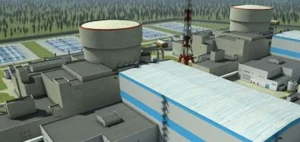
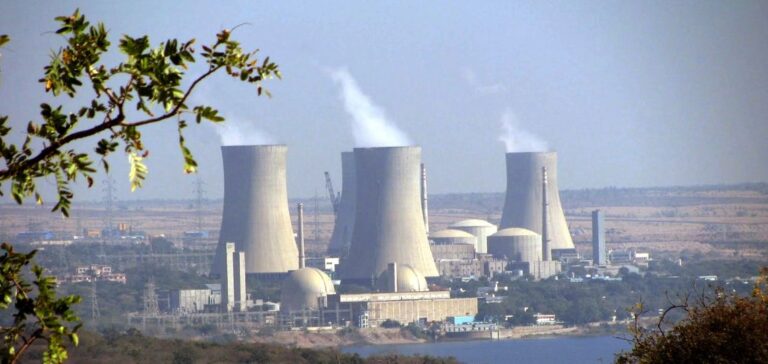
The Atomic Energy Regulatory Board (AERB), India’s nuclear regulatory authority, has granted approval for the siting of four new nuclear reactors in Rajasthan’s Banswara district. The project, known as the Mahi Banswara Rajasthan Atomic Power Project (MBRAPP), involves the construction of Indian-designed pressurised heavy water reactors (PHWRs) with a capacity of 700 megawatts electric each.

A regulatory milestone for nuclear fleet expansion

This siting consent represents the initial formal stage in India’s nuclear facility licensing process. According to AERB, the approval requires extensive technical reviews, including geotechnical, hydrogeological, radiological impact, baseline natural background, and soil assessments. AERB confirmed that the location meets current regulatory standards, while noting that the project is still subject to environmental clearance from the competent authority.

The Mahi Banswara units are part of a fleet-mode development strategy encompassing ten reactors approved by the Indian government. This bundled construction model is aimed at reducing both time and cost. Other reactors in this programme include Kaiga units 5 and 6 in Karnataka, Gorakhpur units 3 and 4 in Haryana, and Chutka units 1 and 2 in Madhya Pradesh.

A project led by a public joint venture

MBRAPP is being developed by Anushakti Vidhyut Nigam Ltd (Ashvini), a joint venture between Nuclear Power Corporation of India Ltd (NPCIL) and National Thermal Power Corporation (NTPC). Approved by the government in 2024, the ownership structure allocates 51% to NPCIL and 49% to NTPC. The joint venture follows a 2016 amendment to the 1962 Atomic Energy Act allowing public-sector joint ownership of nuclear facilities.

Currently, only NPCIL and Bharatiya Nabhikiya Vidyut Nigam Limited (Bhavini) hold legal rights to own and operate nuclear power plants in India. The inclusion of NTPC through Ashvini marks a new financing and development model for future nuclear infrastructure.

Progress in India’s nuclear development plan

Two 700 MWe units at Kakrapar in Gujarat are already commercially operational. Rajasthan unit 7 was connected to the grid in March, and construction is ongoing on unit 8. These projects highlight acceleration in India’s civil nuclear programme, which aims for significant capacity growth in the coming decades.

Under the siting consent terms, the Mahi Banswara site approval is valid for five years. Subsequent regulatory stages, including construction and commissioning permits, are still required before work can begin.

Finland's Ministry of Economic Affairs extends the deadline to June 2026 for the regulator to complete its review of the operating licence for the Olkiluoto spent nuclear fuel repository.
Framatome will replace several digital control systems at the Columbia plant in the United States under a contract awarded by Energy Northwest.
The conditional green light from the nuclear regulator moves Cigéo into its final regulatory stage, while shifting the risks towards financing, territorial negotiations and industrial execution.
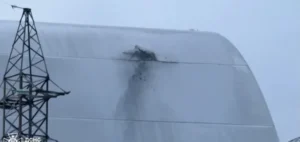
The drone strike confirmed by the IAEA on the Chernobyl site vault exposes Ukraine to a nuclear risk under armed conflict, forcing the EBRD to finance partial restoration while industry standards must now account for drone threats.
Deep Fission is installing a 15 MWe pressurised reactor 1.6 km underground at Great Plains Industrial Park, under the Department of Energy’s accelerated pilot programme, targeting criticality by July 4, 2026.
EDF commits to supply 33 MW of nuclear electricity to Verkor over 12 years, enabling the battery manufacturer to stabilise energy costs ahead of launching its first Gigafactory.
The full-scope simulator for the Lianjiang nuclear project has successfully passed factory acceptance testing, paving the way for its installation at the construction site in China's Guangdong province.
A coalition of Danish industry groups, unions and investors launches a platform in support of modular nuclear power, aiming to develop firm low-carbon capacity to sustain industrial competitiveness.
The United Kingdom and TAE Technologies create a joint venture in Culham to produce neutral beams, a key component of fusion, with strategic backing from Google.
Texas-based developer Natura Resources receives new federal funding to test key components of its 100-megawatt modular reactor in partnership with Oak Ridge National Laboratory.
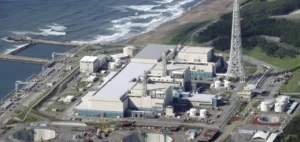
The Niigata regional assembly is deliberating on restarting unit 6 of the world’s largest nuclear plant, thirteen years after operations ceased following the Fukushima disaster.
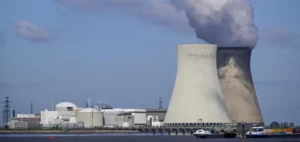
Reactor Doel 2 was taken offline, becoming the fifth Belgian reactor to cease operations under the country’s gradual nuclear phase-out policy.
Rolls-Royce SMR has expanded its partnership with ÚJV Řež to accelerate the deployment of small modular reactors, targeting the construction of several units in the Czech Republic and abroad.
The Indian government aims to amend legislation to allow private companies to participate in civil nuclear development, a move positioned as critical to achieving the country’s long-term energy targets.
The VVER-1200 nuclear reactor at Xudabao 4 in China has completed installation of its final passive water tank, marking the end of modular construction for the second phase of the project.
Ottawa and Edmonton commit to a nuclear production roadmap by 2050, through a memorandum of understanding also covering carbon capture and an Indigenous-led pipeline project.
Niamey asserts control over its uranium resources by authorising open market sales of Somaïr’s production, formerly operated by France’s Orano, amid ongoing legal disputes.
Equinix has signed a strategic agreement with French start-up Stellaria to reserve 500 MWe of advanced nuclear capacity to power its future European AI data centres starting in 2035.
Bishkek plans to host a RITM-200N small modular reactor supplied by Rosatom to address electricity shortages and deepen energy ties with Moscow, despite the risks posed by Western sanctions.
The Niigata prefectural assembly will vote on the restart of Unit 6, potentially marking TEPCO’s first reactor relaunch since the 2011 Fukushima disaster.

All the latest energy news, all the time

Annual subscription

8.25$/month*

*billed annually at 99$/year for the first year then 149,00$/year ​

Unlimited access - Archives included - Pro invoice

Monthly subscription

Unlimited access • Archives included

5.2$/month*
then 14.90$ per month thereafter

*Prices shown are exclusive of VAT, which may vary according to your location or professional status.

Since 2021: 30,000 articles - +150 analyses/week.