EUs Energy Security Strengthened: Gas Storage Surpasses Targets Before Winter

EU’s Energy Security Strengthened: Gas Storage Surpasses Targets Before Winter

Share:

Comprehensive energy news coverage, updated nonstop

Annual subscription

8.25$/month*

*billed annually at 99$/year for the first year then 149,00$/year ​

Unlimited access • Archives included • Professional invoice

OTHER ACCESS OPTIONS

Monthly subscription

Unlimited access • Archives included

5.2$/month*
then 14.90$ per month thereafter

FREE ACCOUNT

3 articles offered per month

FREE

*Prices are excluding VAT, which may vary depending on your location or professional status

Since 2021: 35,000 articles • 150+ analyses per week

The European Union (EU) enters the winter season with comfortable gas reserves, marking a success in its energy strategy. Storage levels currently exceed 95% of capacity, according to EU Energy Commissioner Kadri Simson. This performance surpasses the set goal of 90% storage by November 1, providing a safety margin for the upcoming cold months.

In a statement on October 31, Simson highlighted the efforts made to diversify energy sources and reduce dependency on Russian fossil fuel imports. This strategy, accelerated by the war in Ukraine, has allowed Europe to prepare more effectively for potential supply shocks. She added that the Union is now in a better position to ensure stable prices and regular supplies.

An Early Target Achievement

The EU reached its 90% storage target as early as August 19, eleven weeks ahead of the deadline. Data from the association Gas Infrastructure Europe (GIE) show that storage levels continued to rise, despite temporary disruptions due to Norwegian maintenance work. This maintenance reduced gas deliveries to Europe in September, but reserves managed to stabilize around 95% in mid-October.

As of October 29, EU gas reserves represented around one-third of Europe’s annual consumption, or nearly 100 billion cubic meters (Bcm). This storage capacity provides support for European markets in the event of supply fluctuations.

Rising Prices Despite a Favorable Situation

Despite high stock levels, gas prices reached peaks in 2024, fueled by concerns over winter supplies. The Dutch TTF futures price, a European benchmark, reached €43.47 per megawatt-hour (MWh) on October 25, before slightly retreating to €41.03 on October 30. This situation underscores the persistent market volatility, exacerbated by external factors and increased winter demand.

To address this volatility, the EU continues to promote renewable energy and energy efficiency. This approach aims to reduce pressure on gas reserves and ensure a sustainable long-term energy transition.

Exceptions Within the Union

Almost all EU member states achieved the 90% target, with the notable exception of Denmark and Latvia. Denmark recently informed the European Commission that it would be technically impossible to reach this threshold by November 1, though a secondary goal for December remains possible. Delays in restarting the Tyra gas field and maintenance work on the Baltic Pipe limited Danish gas injections. As of October 29, Danish storage sites were filled to only 74.5% of capacity.

This specific situation is also observed in Latvia, where regulations limit storage obligations to avoid disproportionate impacts on member states with significant storage capacities. These exceptions do not significantly affect the overall gas supply security of the EU.
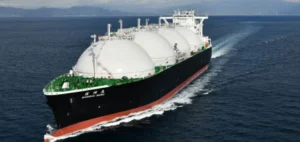
By mobilising long-term contracts with BP and new infrastructure, PLN is driving Indonesia’s shift toward prioritising domestic LNG use, at the centre of a state-backed investment programme supported by international lenders.
TotalEnergies, TES and three Japanese companies will develop an industrial-scale e-gas facility in the United States, targeting 250 MW capacity and 75,000 tonnes of annual output by 2030.
Argentinian consortium Southern Energy will supply up to two million tonnes of LNG per year to Germany’s Sefe, marking the first South American alliance for the European importer.
The UK government has ended its financial support for TotalEnergies' liquefied natural gas project in Mozambique, citing increased risks and a lack of national interest in continuing its involvement.
Faced with a climate- and geopolitically-constrained winter, Beijing announces expected record demand for electricity and gas, placing coal, LNG and UHV grids at the centre of a national energy stress test.
The Iraqi government and Kurdish authorities have launched an investigation into the drone attack targeting the Khor Mor gas field, which halted production and caused widespread electricity outages.
PetroChina internalises three major gas storage sites through two joint ventures with PipeChina, representing 11 Gm³ of capacity, in a CNY40.02bn ($5.43bn) deal consolidating control over its domestic gas network.
The European Union is facilitating the use of force majeure to exit Russian gas contracts by 2028, a risky strategy for companies still bound by strict legal clauses.
Amid an expected LNG surplus from 2026, investors are reallocating positions toward the EU carbon market, betting on tighter supply and a bullish price trajectory.
Axiom Oil and Gas is suing Tidewater Midstream for $110mn over a gas handling dispute tied to a property for sale in the Brazeau region, with bids due this week.
Tokyo Gas has signed a 20-year agreement with US-based Venture Global to purchase one million tonnes per year of liquefied natural gas starting in 2030, reinforcing energy flows between Japan and the United States.
Venture Global accuses Shell of deliberately harming its operations over three years amid a conflict over spot market liquefied natural gas sales outside long-term contracts.
TotalEnergies ends operations of its Le Havre floating LNG terminal, installed after the 2022 energy crisis, due to its complete inactivity since August 2024.
Golar LNG has completed a $1.2bn refinancing for its floating LNG unit Gimi, securing extended financing terms and releasing net liquidity to strengthen its position in the liquefied natural gas market.
Woodside Energy and East Timor have reached an agreement to assess the commercial viability of a 5 million-tonne liquefied natural gas project from the Greater Sunrise field, with first exports targeted between 2032 and 2035.
In California, electricity production from natural gas is falling as solar continues to rise, especially between noon and 5 p.m., according to 2025 data from local grid authorities.
NextDecade has launched the pre-filing procedure to expand Rio Grande LNG with a sixth train, leveraging a political and commercial context favourable to US liquefied natural gas exports.
Condor Energies has completed drilling its first horizontal well in Uzbekistan, supported by two recompletions that increased daily production to 11,844 barrels of oil equivalent.
WhiteWater expands the Eiger Express pipeline in Texas, boosting its transport capacity to 3.7 billion cubic feet per day following new long-term contractual commitments.
The challenge to permits granted for the NESE project revives tensions between gas supply imperatives and regulatory consistency, as legal risks mount for regulators and developers.

All the latest energy news, all the time

Annual subscription

8.25$/month*

*billed annually at 99$/year for the first year then 149,00$/year ​

Unlimited access - Archives included - Pro invoice

Monthly subscription

Unlimited access • Archives included

5.2$/month*
then 14.90$ per month thereafter

*Prices shown are exclusive of VAT, which may vary according to your location or professional status.

Since 2021: 30,000 articles - +150 analyses/week.